Polycarbonate windshields are popular in racing and off-road builds for one simple reason: impact resistance and weight. But for a street driven truck or muscle car, the questions that matter are different.
Street driving means wipers, dust, UV exposure, long nights, glare, and the kind of day to day cleaning that slowly destroys visibility if the material is not built for it. This guide breaks down polycarbonate versus laminated automotive glass in plain English so you can make the right call for your build.
The quick verdict for street builds
- If the vehicle is street driven: laminated automotive glass is the correct choice for long term clarity and compliance.
- If the vehicle is track only: polycarbonate can make sense depending on rules and how the car is used.
- If you want trimless, clean fitment: flush mount laminated glass gives the modern look without compromising visibility.
What polycarbonate really is and why people buy it
Polycarbonate is a tough plastic glazing material. Many people call it Lexan, but Lexan is a brand name. In motorsports, polycarbonate is used because it can take impacts that would crack glass, and it reduces weight.
The problem is that street use is brutal on plastics. Wipers, dust, and frequent cleaning create a constant abrasion cycle. Over time, that turns into haze, fine scratching, and sometimes yellowing depending on coatings and exposure.
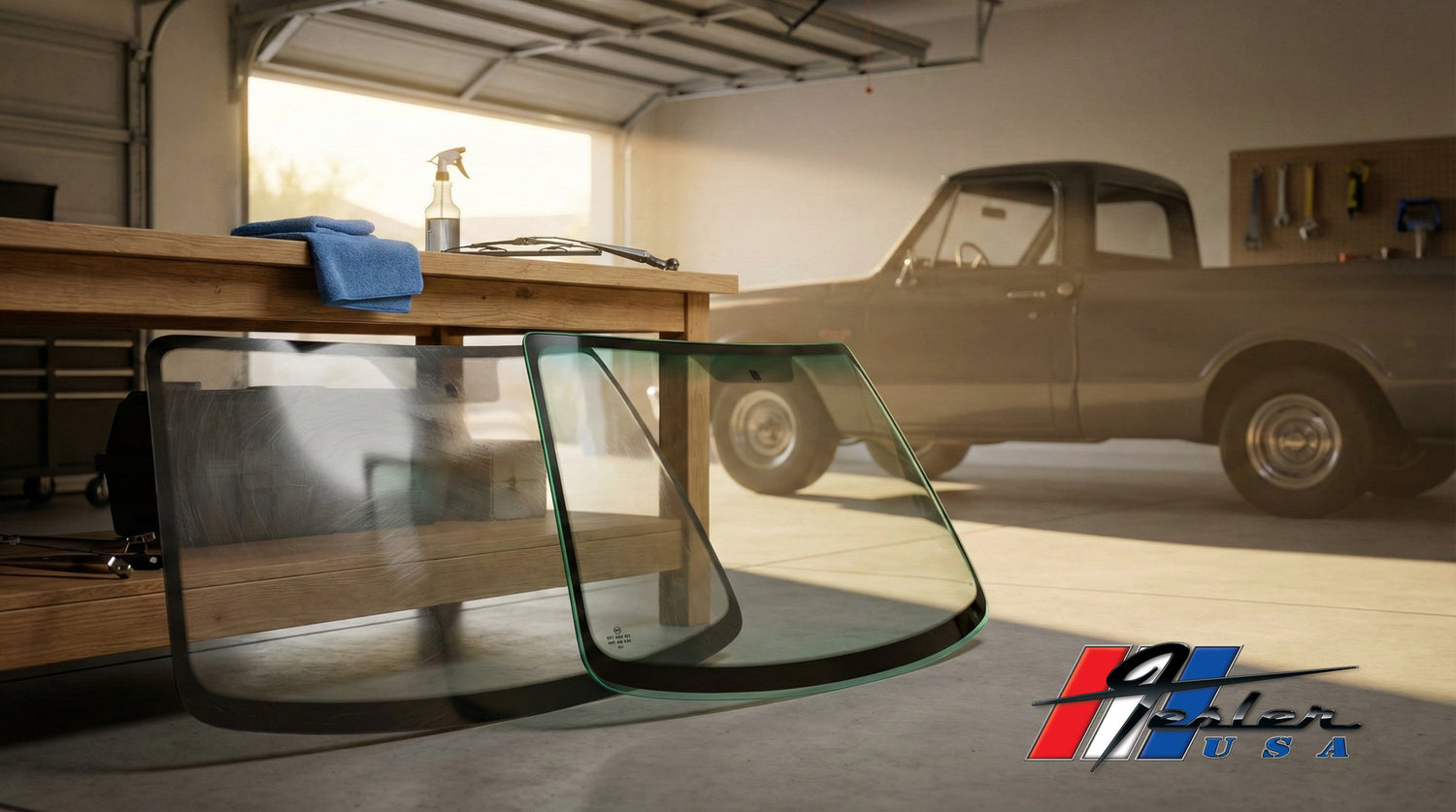
What laminated automotive glass is and why it is used for windshields
Laminated automotive glass is made from two layers of glass bonded with a plastic interlayer. In a windshield, this structure matters because it is built to crack in a controlled way and stay together rather than shatter into loose pieces.
More importantly for a street build, laminated glass is designed to hold optical clarity under real world conditions. It stands up to wiper use, dust, and UV exposure far better than polycarbonate in the same daily environment.
Performance comparison that actually matters on the street
1) Clarity over time
Polycarbonate: Can look fine on day one, but micro-scratching and wiper haze build slowly. That is when glare at night gets worse, headlights bloom more, and the windshield starts to feel older than the rest of the build.
Laminated glass: Holds optical clarity far longer in normal use. For most street driven builds, this is the biggest difference you will feel.
2) Wipers, dust, and cleaning
If you live in the Southwest, you already know the deal. Fine dust behaves like sandpaper. Add wipers, and you have a repeat abrasion process that happens thousands of times.
Polycarbonate: Wiper cycles and dust can etch the surface. Even with coatings, you are fighting the material’s weak point.
Laminated glass: Better suited for constant wiper contact and routine cleaning without developing the same haze pattern.
3) Heat and UV exposure
Polycarbonate: Can degrade visually over time if the UV protection and coating are not top tier or if the windshield sees constant direct sun.
Laminated glass: Typically more stable long term in harsh sun conditions.
4) Noise and feel
On a street build, the windshield is part of the car’s overall refinement. Laminated glass generally delivers a more OEM-like feel.
Safety and compliance: the street legality issue explained simply
In the United States, windshields used on road vehicles are expected to meet federal glazing requirements. You will often hear people reference FMVSS 205 and markings like AS1 for windshield applications.
Here is what matters at a practical level:
- Laminated automotive windshield glass is the standard for street vehicles and is commonly manufactured and marked to meet automotive glazing requirements.
- Many aftermarket polycarbonate windshields are marketed for race use and do not carry the markings and approvals expected for windshield street use.
That is why polycarbonate is often described as not street legal for windshield use. It is less about the idea of plastic and more about compliance, visibility, and the reality of day to day driving.
Common myths that cost people money
Myth: “Hard-coated polycarbonate is basically the same as glass.”
Coatings help, but they do not change the basic truth that wipers plus dust create wear over time. If your build sees regular street miles, you are signing up for ongoing risk of haze and glare.
Myth: “I will just replace it if it gets bad.”
Replacement is not just cost. It is downtime, install risk, and the frustration of realizing the windshield aged faster than the rest of your build.
Myth: “It is street legal if it fits.”
Fitment is not the same as compliance. Street legality is tied to glazing standards, not just whether the panel bolts in.
When polycarbonate does make sense
There are valid use cases:
- Track only builds where rules or weight savings matter more than long term visibility
- Off-road rigs where impact resistance is the priority
- Short-term applications where the windshield is treated as a consumable
If that is your situation, polycarbonate can be a rational choice. Just be honest about how the vehicle will be used.
Why Fesler builds around laminated automotive glass
For street driven classics, the windshield is not a place to compromise. Our goal is a modern, trimless look with OEM-like drivability: clear visibility, stable performance, and a clean finished install.
If you are building a truck or muscle car you will actually drive, laminated automotive glass is the material that supports the experience you want after the build is finished.
Browse glass options:
FAQ
Are polycarbonate windshields street legal?
Many are not, because they are marketed for race use and do not meet the glazing requirements typically expected for windshields on road vehicles. Always verify compliance and markings for your specific application.
Why do polycarbonate windshields get hazy?
Wipers, dust, and cleaning create micro-abrasions. Over time, that looks like haze, glare, and reduced nighttime clarity.
Is laminated glass safer than polycarbonate?
For windshield applications on street vehicles, laminated glass is the standard because it is designed to crack in a controlled way and stay together, maintaining a barrier and visibility characteristics expected of automotive windshields.
What markings should I look for on a street windshield?
People commonly look for automotive glazing markings such as AS1 on windshields, along with DOT style identifiers. Requirements vary by application and manufacturer, so confirm what applies to your vehicle.
Does polycarbonate scratch even with coatings?
Coatings help, but wiper cycles and dust still wear the surface over time. The more street miles you drive, the more likely you will notice it.
Final recommendation
If your classic is a street build, choose laminated automotive glass. It is the best long term answer for clarity, confidence, and a finished, OEM-like driving experience.
If you want the modern trimless look, explore flush mount glass options built for real street use.

Leave a comment
This site is protected by hCaptcha and the hCaptcha Privacy Policy and Terms of Service apply.