

Q1 Build Plan: Get Your Classic Dialed Before Spring Hits
Spring is coming. The weather turns, the garage door stays open longer, and suddenly you want your truck or car back on the road. The problem is Q2 is when everyone else has the same idea. Shops book out, lead times stretch, and the parts you planned to order “soon” become the parts you are waiting on in April.
This guide is a simple Q1 build plan you can follow right now. It is written for builders who care about the details that make a classic feel finished: tight fitment, clean interior, quiet cabin, and glass that looks modern. We will lean into Fesler interior and Fesler flush mount glass because those are two of the biggest “this build is dialed” upgrades, but we will also be realistic about the other long lead items that can stall momentum.
If you only do one thing this week, do this: build your parts list around lead times and sequence, not impulse.
Quick takeaway: Order the parts that lock in fitment and packaging first. Glass and interior are usually the biggest dominoes.
Why Q1 matters for classic car builds
Q1 is when you can still make clean decisions without pressure. Once spring hits, the build turns into a scramble: you rush orders, you compromise on parts, or you skip steps that you regret later. Planning now helps you avoid:
- Rework because parts were ordered out of sequence.
- Missed shop windows because you did not order long lead items in time.
- Death by backorder where one missing part holds up ten tasks.
Step 1: Define the outcome in one sentence
This sounds simple, but it controls everything. Pick one primary goal:
- Driveable and comfortable: quiet cabin, good visibility, solid sealing, modern feel.
- Show clean: fitment, alignment, consistent lines, finished transitions.
- Pro touring style: stance, confidence at speed, interior comfort, functionality.
Your one sentence goal becomes your filter for what to order first and what to delay.
Step 2: The Q1 long lead checklist (what to order early)
If any of the items below are part of your plan, do not wait. These are common build bottlenecks because of production time, shipping size, install scheduling, or shop calendar availability.
1) Glass and finishing fitment
Glass is not just “glass.” It affects the way your vehicle looks, seals, and sounds. If you want a tight, modern finish, plan your glass early so it is not an afterthought.
Fesler focus: If flush mount glass is part of your build, plan around it. It is one of the clearest “finished build” upgrades because it cleans up the profile and modernizes the exterior. Done right, it also supports a quieter cabin and a tighter overall feel.
Explore Fesler glass options (swap this link to your dedicated flush mount glass page when ready)
2) Interior foundations
Interior is where people instantly decide if the build is dialed or not. It is also where fitment matters. When foundational interior components fit correctly, everything downstream installs cleaner.
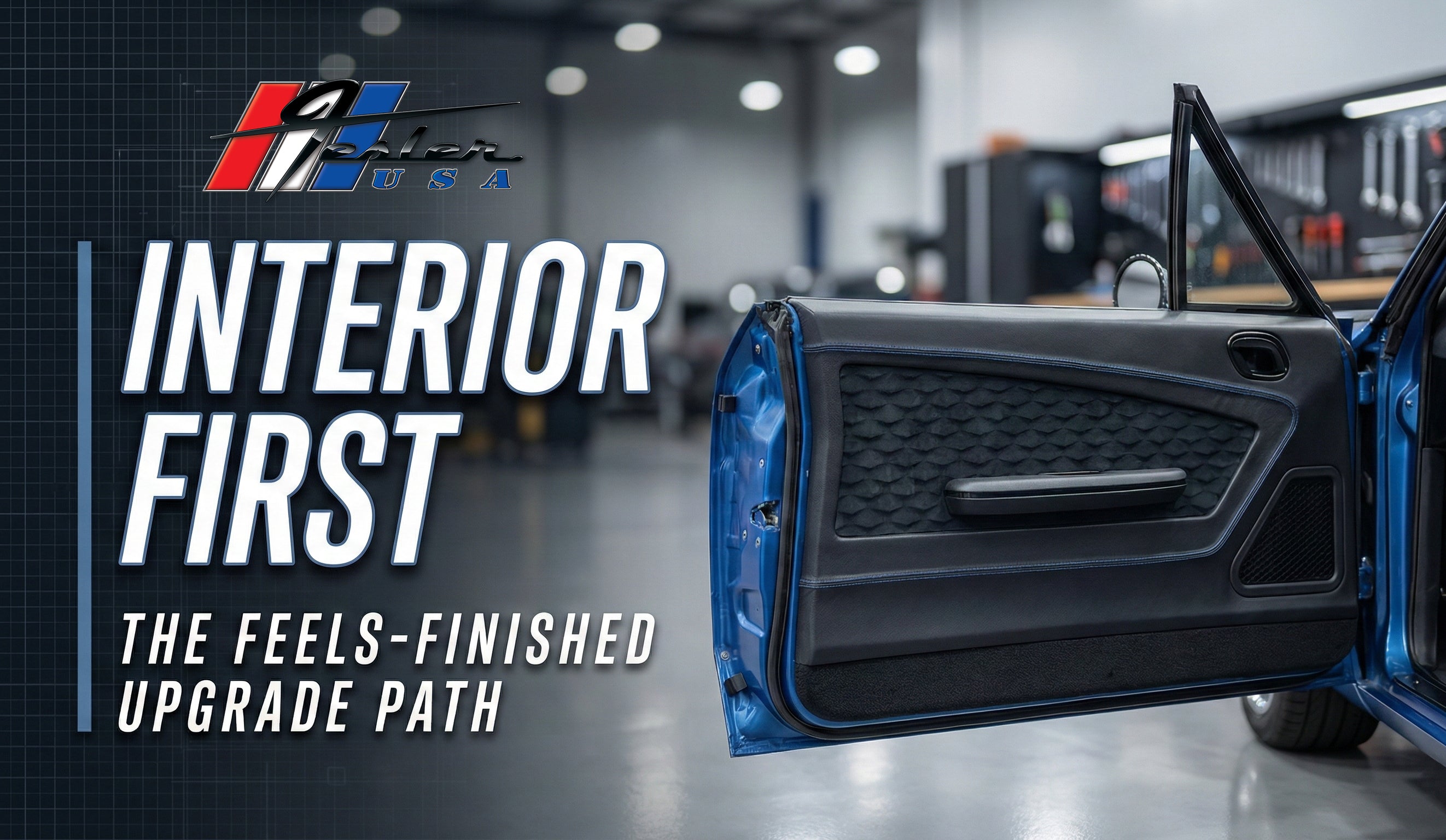
Fesler focus: Start with the components that define the cabin, like door panels and the interior structure pieces that control alignment and mounting. Fesler interior parts are designed with fitment and finish in mind, which is exactly why they are a strong early order in Q1.
3) Upholstery and seat scheduling
If you plan to do seats, stitching, custom panels, or anything upholstery-related, Q1 is your friend. Upholstery schedules stack up fast once spring starts. Order materials and get on the calendar early.
4) Wiring, controls, and gauge planning
Wiring is one of the most common sources of rework. The goal is not just “new wiring.” The goal is a clean plan for routing, grounds, switch locations, and serviceability so the interior installs without drama.
5) HVAC and heat management
Even if you are not touching HVAC yet, your plan should. HVAC packaging impacts firewall work, dash layout, and under-dash space. This is especially important if you are upgrading the interior and want a clean finish.
Builder truth: If you wait to plan wiring and HVAC until after interior parts arrive, you are setting yourself up for delays and compromises.
Step 3: The smart order sequence (avoid rework)
This is the sequence that keeps builds moving. It also helps you avoid ordering parts twice.
Phase A: Lock the look and the sealing
- Decide your glass plan and timing.
- Confirm seals, trim strategy, and any fitment details that affect finishing.
- If flush mount glass is in the plan, treat it like a primary milestone.
Phase B: Build the interior foundation
- Pick interior components that control mounting and alignment first.
- Make sure you know where switches, gauges, and controls will live.
- Plan any audio, lighting, or accessories before panels become “final.”
Phase C: Route the invisible stuff
- Wiring routing and grounding plan.
- HVAC packaging and under-dash clearance.
- Serviceability. Future you will thank you.
Phase D: Finish and refine
- Trim, small details, finishing hardware, and the parts that make the cabin feel complete.
- Cosmetic upgrades that rely on everything fitting correctly.
Step 4: Your Q1 ordering list (simple categories)
Here is a clean way to organize your list so you buy once and build once.
Must order now (long lead)
Glass plan, interior foundations, upholstery scheduling, wiring and HVAC planning items.
Order next (supports install)
Seals, mounting hardware, brackets, sound control basics, small install supplies.
Order later (after mockup)
Finishing trim pieces and cosmetics that depend on final fitment.
Step 5: Book the install window now
If any part of your build involves an install shop, the calendar is often the real bottleneck. Q1 is when you can still get good time slots. Once spring hits, you are competing with everyone.
- Glass: confirm timeline and install availability.
- Interior: if upholstery is involved, lock a date before schedules fill.
- Paint and body: confirm shop timelines early if this is on the roadmap.
Quick Q1 checklist (copy and use this)
- Write your one sentence build goal.
- Decide if flush mount glass is part of the finish.
- Choose interior foundations first, not last.
- Plan wiring, switches, gauges, and HVAC before panels are final.
- Order long lead categories in Q1.
- Schedule install windows now.
- Keep one organized parts list by phase.
Want a clean parts sequence for your exact build?
If you send a few photos and your one sentence goal, we can point you to a clean sequence of what to order first, including interior and glass priorities, so you are not waiting when spring shows up.
Start here: Fesler Interior
Then here: Fesler Glass (swap in your flush mount glass link)
Spring is coming. The builds that feel finished are the ones that planned in Q1.
FAQ: Q1 build planning for classic trucks and muscle cars
What should I order first for a spring-ready classic build?
Start with parts that drive fitment and scheduling: glass plans, interior foundations, upholstery timing, and wiring or HVAC planning components. Those items create the biggest domino effects if delayed.
Why does glass matter so early in the build?
Glass and the surrounding fitment influence sealing, wind noise, trim alignment, and the finished exterior profile. If you plan flush mount glass, treat it as a milestone and plan around it.
How do I avoid delays once spring hits?
Order long lead items in Q1, keep a phased parts list, and book install windows early. Most spring delays happen because one key component was ordered too late.
What is the simplest way to plan my interior upgrade?
Choose the interior pieces that control mounting and alignment first, then plan wiring, controls, and HVAC packaging before any panels become final.


Leave a comment
This site is protected by hCaptcha and the hCaptcha Privacy Policy and Terms of Service apply.