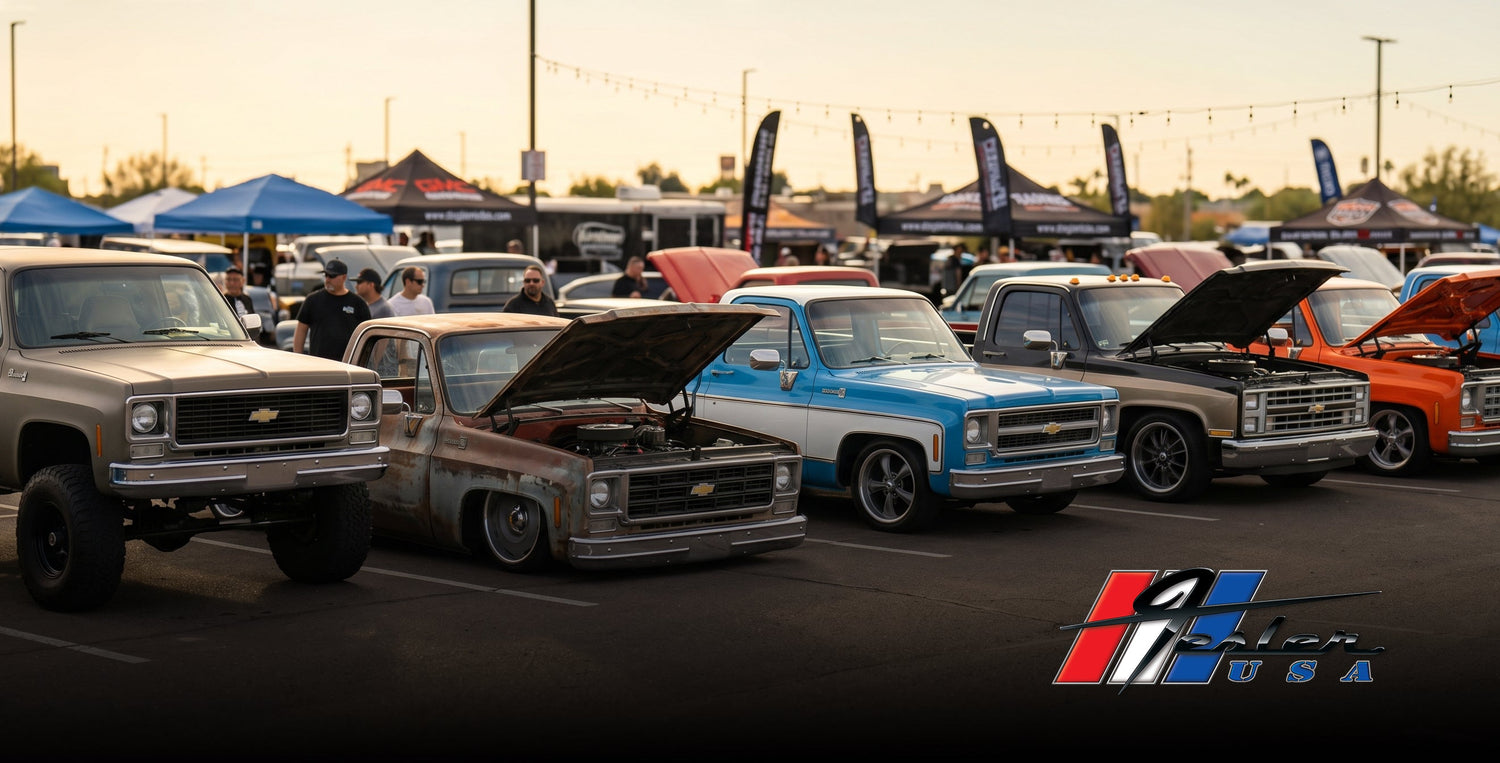
The Chevy Squarebody is one of the most recognized truck silhouettes in American automotive history. You see one at a car show, on the highway, in a field, or in someone's garage and you know exactly what it is. No other truck looks like it. No other truck lasted as long. And no other truck became an icon by accident.
GM designed the 1973 C/K as a routine generational refresh. Five to seven years on the market, then move on to the next platform. That was the standard lifecycle. But the oil crisis, the emissions crackdown, corporate budget fights, and three canceled replacement programs kept pushing the next generation further and further out. The Squarebody ran for 15 model years as the C/K, and some variants continued through 1991 under the R/V designation. It is the longest-running truck body style General Motors ever produced.
This is the full story.
Development: 1968 to 1972
Development of the third-generation C/K trucks began in 1968, four full years before the first production models rolled off the line. GM used computer simulation to test vehicle components before building physical prototypes, a first for GM's truck division. The cab was refined in a wind tunnel, which is why GM internally designated the new trucks the "Rounded Line." The engineering team focused on airflow, reduced drag, and a cab shape that was smoother than anything else in the truck market.
Enthusiasts took one look at the straight body lines, the flat hood, and the rectangular proportions and called it the Squarebody. The name stuck. GM's official "Rounded Line" designation was forgotten almost immediately.
The new trucks debuted in late 1972 as 1973 models. They were wider, longer, and roomier than the Action Line trucks they replaced. The cab was completely new: a rounded dashboard with a cushioned pad, available air conditioning, improved sound insulation, and an interior that felt closer to a sedan than any truck before it.
Year One: Over a Million Sold
The Squarebody was an immediate hit. Over one million units sold in the first year of production. By 1975, Chevrolet alone was moving 750,000 trucks annually. The truck buying public responded to a vehicle that could haul lumber on Saturday and take the family to church on Sunday without feeling like a compromise in either direction.
The 1973 launch introduced several body styles and configurations that had never existed in the GM truck lineup:
- Crew cab: A four-door cab for the first time on a GM pickup. Available as a "3+3" seating six, or a "bonus cab" that deleted the rear seat for lockable storage.
- Big Dooley: GM's first dual-rear-wheel pickup, built on the one-ton C30/K30 platform. This body style is now standard across the industry. It started here.
- Fleetside and Stepside beds: The Fleetside (called Wideside on GMC) was a full-width double-wall bed. The Stepside (Fenderside on GMC) was a narrow-body bed with exposed fenders and side steps. Both were available in short and long wheelbase configurations.
Then the World Changed
In October 1973, just months after the Squarebody launched, the OPEC oil embargo hit. Gas prices doubled. Lines at the pump stretched around the block. Overnight, GM's corporate priorities flipped from trucks to fuel economy. The engineering budget and the design resources that would have funded a next-generation truck got redirected to downsizing GM's passenger car lineup to meet new federal CAFE fuel economy standards.
Then came the EPA emissions regulations. More engineering resources consumed. More budget reallocated. The Squarebody replacement program got pushed back. And pushed back again. By the late 1970s, the truck was approaching its planned end of life with no successor anywhere close to production.
GM made a strategic decision: instead of rushing a replacement, they would keep improving the existing truck. That decision, born out of budget constraints and corporate politics, accidentally created an icon.
The Firsts
Because the Squarebody stayed in production so long, it accumulated an incredible list of industry firsts that no other single truck generation can claim:
First diesel pickup in America (1978). The Squarebody was the first American full-size pickup truck offered with a diesel engine, a 5.7-liter Oldsmobile diesel V8. A 6.2-liter diesel V8 followed in 1982, offering better reliability and fuel economy for commercial buyers and long-haul drivers.
First use of the "Silverado" nameplate (1975). The Silverado debuted as a top-tier trim package on the Squarebody, replacing the Cheyenne Super. Today, Silverado is the name of Chevrolet's entire full-size truck line. The badge that defines the brand started on the Squarebody.
One of the first GM trucks designed using computer simulation. The third-generation C/K was developed with computer-simulated component testing before physical prototypes were built, a significant leap in GM's truck engineering process.
First GM crew cab and first dual-rear-wheel truck. The four-door crew cab and the Big Dooley dually were both introduced on the Squarebody platform. Two body styles that are now standard across the entire truck industry trace their GM origins to this generation.
Trim Levels and the Rise of the Luxury Truck
The Squarebody's trim level evolution tells the story of how American trucks transformed from work vehicles into personal transportation.
At launch in 1973, the trim hierarchy was Custom (base), Custom Deluxe (mid), Cheyenne (luxury), and Cheyenne Super (top). GMC used its own naming: Custom, Super Custom, Sierra, and Sierra Grande.
In 1975, GM restructured the lineup: Custom Deluxe (base), Scottsdale (mid), Cheyenne (luxury), and the new Silverado (top). On the GMC side: Sierra, Sierra Grande, High Sierra, and Sierra Classic. These names held through the rest of the Squarebody's life.
The Silverado trim came with power windows, power door locks (from 1978), full carpet, chrome bumpers, woodgrain dash accents, upgraded upholstery, and a level of refinement that made it competitive with many passenger sedans. A fully loaded 1985 Silverado with a 305 V8, automatic, air conditioning, tilt wheel, cruise control, and AM/FM cassette was a luxury vehicle that happened to have a bed on the back.
Engine Options Through the Years
The Squarebody was offered with a wide range of engines over its 15-year run:
- 250 cubic-inch inline six: The base engine for most of the production run. Reliable, economical, and adequate for light-duty use.
- 292 cubic-inch inline six: A larger, torquier six-cylinder available on heavier-duty models. A workhorse engine favored by commercial buyers.
- 305 cubic-inch V8: Introduced in the late 1970s as the standard V8. Smooth, reliable, and emissions-compliant. The most common engine in surviving Squarebodies.
- 350 cubic-inch V8: The go-to performance option for most buyers. More power than the 305 with broad aftermarket support.
- 400 cubic-inch V8: Available in early Squarebody years. More torque for towing and heavy loads.
- 454 cubic-inch V8: The big-block option. Replaced the 402 (which had replaced the original 396) starting in 1973. Serious power for towing, hauling, and anyone who wanted the biggest engine available.
- 5.7L diesel V8 (1978-1985): The Oldsmobile-sourced diesel. Offered fuel economy advantages but earned a mixed reputation for reliability.
- 6.2L diesel V8 (1982-1987): A more robust diesel option that addressed many of the 5.7L's issues. Popular with commercial fleets and military applications.
The 1981 Facelift: New Face, Same Bones

By 1981, the Squarebody was eight years old and GM still hadn't approved a full replacement. The solution was a mid-cycle facelift that gave the truck a noticeably updated look while sharing roughly 90% of its structure with the 1973 original.
The 1981 changes were significant enough that many enthusiasts consider the Squarebody two distinct trucks: the "early" (1973-1980) and the "late" (1981-1987).
Key 1981 updates included:
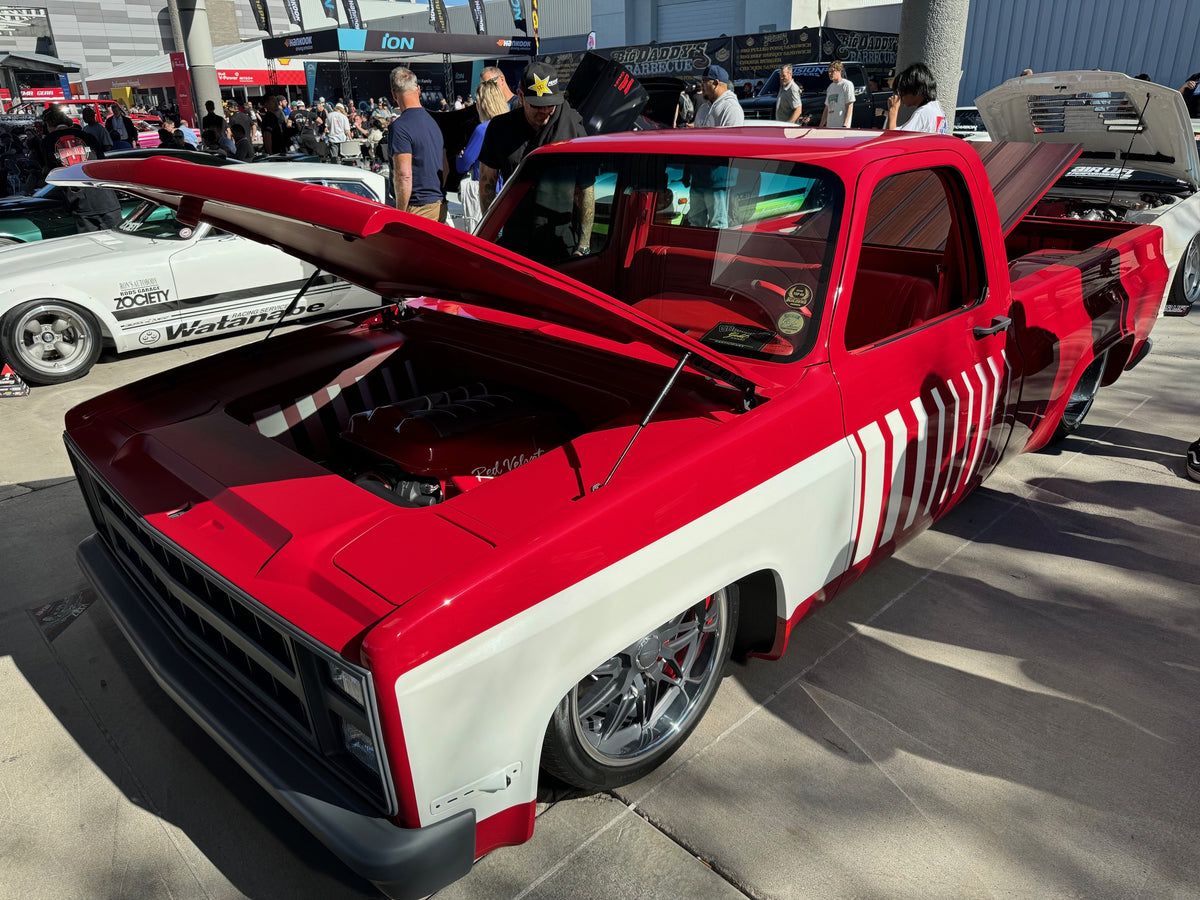
- New front sheet metal with a flatter, more angular grille design
- Optional quad (four) headlights replacing the previous dual round headlights
- A sloped hood replacing the flatter earlier design
- Windshield wipers moved from behind the hood to the top of the cowl
- Redesigned fenders and hood hinges
- Elimination of vent windows
- New interior with updated instrument panel, seats, and dash shape
- Approximately 300-pound weight reduction across the lineup
- Horizontal side markers replacing the previous vertical units
- Updated bumpers with less chrome detailing
The facelift worked. The refreshed Squarebody looked modern enough to compete for another six years, and the weight reduction improved both fuel economy and performance.
Year-by-Year Quick Reference: 1973-1987
1973: Launch year. Egg-crate grille. Round headlights. 454 big-block replaces the 402. First crew cab and Big Dooley. Over one million sold.
1974: Rain gutters added above doors. Minor grille updates. New "High Energy Ignition" (HEI) system on V8 engines.
1975: Trim levels restructured. Silverado nameplate debuts. Catalytic converters added. Nearly 750,000 trucks sold this year.
1976: Dual front lap-and-shoulder belts with emergency locking retractors become standard.
1977: Rectangular headlights become available on some models. Minor interior updates.
1978: First diesel option (5.7L Oldsmobile V8). Power windows and door locks available on Silverado trim. 25th anniversary of the Corvette is celebrated, but the Squarebody is the sales volume leader.
1979: Engine lineup adjustments for emissions compliance. The 305 V8 becomes the volume seller.
1980: Last year of the "early" front end. Emissions regulations continue to reduce engine output across the lineup.
1981: Major mid-cycle facelift. New front sheet metal, sloped hood, quad headlights, new interior, 300-pound weight reduction. Vent windows eliminated.
1982: 6.2L diesel V8 introduced. Chrome grille and bumper become standard on all trucks. Four-speed overdrive manual transmission available with diesel.
1983: S-10 compact pickup launches, giving Chevy a two-truck lineup for the first time. Squarebody continues as the full-size offering.
1984: Minor updates. The Squarebody is now 11 years old and still selling strong.
1985: Throttle body fuel injection (TBI) begins appearing on some V8 engines, replacing carburetors.
1986: Fuel injection spreads across more of the engine lineup. Center high-mounted stop lamp (CHMSL) added to comply with new federal regulations.
1987: Final year of the Squarebody as the primary C/K truck. The GMT400 replacement launches alongside it for the 1988 model year. The Squarebody is renamed "R/V" to avoid confusion with the new C/K.
The Long Goodbye: 1988-1991
The Squarebody didn't die when the GMT400 launched. GM kept building R/V versions for the body styles the new platform didn't initially cover: one-ton crew cab pickups (built at the Janesville, Wisconsin plant through 1991), the K5 Blazer, and the Suburban (built at Flint, Michigan through 1991). Some Squarebody variants ran for 18 model years total on the same basic platform.
By the time the last R/V Suburban rolled off the line in 1991, the Squarebody had been in continuous production for nearly two decades. No GM truck before or since has matched that record.
Chevy vs. GMC: Same Truck, Different Personality
Chevy C/K trucks and GMC trucks shared the same frame, cab, and bed throughout the Squarebody era. Under the skin, they were essentially the same vehicle. But GM positioned the two brands differently.
Chevrolet was the consumer brand. Better interiors, more comfort features, more lifestyle marketing. The Silverado and Scottsdale trims leaned into the "truck as personal vehicle" positioning that GM had been building since the Action Line era.
GMC was the professional brand. Heavier-duty positioning, commercial fleet sales, and trim names (Sierra, Sierra Grande, High Sierra, Sierra Classic) that emphasized capability over comfort. GMC trucks were often ordered with fewer options and more heavy-duty components.
The practical difference for buyers: Chevy trucks had slightly better standard interior trim and a wider range of comfort options. GMC trucks were more commonly found with heavy-duty cooling, heavier suspension, and work-oriented configurations. Both were excellent trucks. The brand you chose said something about what you planned to do with it.
Why the Squarebody Matters Today
The Squarebody is the second-most-popular pro-touring truck platform in America, right behind the 1967-1972 C10. And the reasons are straightforward:
Volume. Millions were built over 15 years. They're everywhere. Parts trucks, project trucks, clean survivors, and barn finds are still turning up regularly. The supply of starting points is enormous compared to rarer platforms.
Affordability. Because so many were built, entry prices remain accessible. A solid, running Squarebody can still be found for significantly less than a comparable-condition 1967-72 C10.
Mechanical simplicity. Carbureted small-block V8s, Turbo-Hydramatic transmissions, and conventional suspension with no computers or complex electronics. These trucks are easy to work on, easy to modify, and easy to maintain with basic hand tools.
Suspension foundation. The Squarebody inherited the same independent front suspension architecture that made the C10 great. Coil-spring IFS with a short-long arm design up front. When you drop a Squarebody on modern coilovers or air ride, the geometry works because the foundation was right from the factory.
Aftermarket depth. The LS swap community, the air ride community, the patina community, the restomod community, and the stock restoration community all have deep Squarebody support. Whatever you want to build, someone has already done it and documented the process.
Finish Your Squarebody
Fesler USA manufactures DOT-certified flush-mount glass kits and hand-built fiberglass interior components for the 1973-1986 Squarebody platform. Every piece is designed, prototyped, and built in our Phoenix, Arizona shop.
Glass
- Squarebody Flush-Mount Glass Kit (Front + Rear) - $1,899. DOT-certified, Pilkington glass, no sanding required. Windshield also fits 1973-1989 K5 Blazer, 1973-1991 Jimmy, 1973-1991 Suburban.
Interior
- Squarebody Door Panels - Fiberglass, speaker-ready, billet handle fit. Hand-built in Phoenix.
- Shop All Squarebody Parts - Full interior kits, dash overlays, kick panels, and more.
More Fesler Resources
- Squarebody Upgrade Guide: Flush Glass and Interior Build Sequence
- What Is Flush-Mount Glass? The Complete Guide
- The Complete Leather Guide for Classic Car and Truck Interiors
- Your C10 Was Designed to Drive Like a Cadillac
- Sound Deadening for Classic Cars and Trucks
Questions about your Squarebody build? Contact us or call/text 480-748-2000. Monday through Thursday, 8am to 5pm.
Frequently Asked Questions
What years are considered Squarebody trucks?
The Squarebody refers to the 1973-1987 Chevrolet and GMC C/K pickups. Some variants (K5 Blazer, Suburban, crew cab one-ton trucks) continued production through 1991 under the R/V designation.
Why is it called the Squarebody?
Despite GM officially naming this generation the "Rounded Line," the truck's straight body lines, flat hood, and rectangular proportions earned it the nickname "Squarebody" from enthusiasts. The name stuck and is now universally used.
How many Squarebody trucks were built?
Exact total production figures across all 15 model years are not compiled in a single public source, but GM sold over one million units in the first year alone and moved approximately 750,000 Chevrolet trucks in 1975. Total production across the full run is estimated in the millions.
What is the difference between a 1973-1980 and 1981-1987 Squarebody?
The 1981 mid-cycle facelift introduced new front sheet metal, a sloped hood, optional quad headlights, wipers moved to the top of the cowl, eliminated vent windows, a new interior, and a roughly 300-pound weight reduction. Pre-1981 trucks have round headlights, a flatter hood, and vent windows. Post-1981 trucks have square headlights and updated styling.
What was the first year for the Silverado trim?
The Silverado nameplate debuted in 1975 as the top-tier trim package on Chevrolet C/K trucks, replacing the Cheyenne Super. Today, Silverado is the name of Chevrolet's entire full-size truck line.
Did the Squarebody have a diesel option?
Yes. The Squarebody was the first American full-size pickup offered with a diesel engine. A 5.7-liter Oldsmobile diesel V8 was introduced in 1978. A more reliable 6.2-liter diesel V8 followed in 1982.
What is the difference between C10 and K10?
"C" designates two-wheel drive and "K" designates four-wheel drive in GM's naming system. C10/K10 are half-ton, C20/K20 are three-quarter ton, and C30/K30 are one-ton.
Why is the Squarebody so popular for builds?
Millions were built, making them affordable and accessible. They use simple, carbureted small-block V8s and conventional suspension with no computers. The independent front suspension provides a solid foundation for modern upgrades. And the aftermarket support is enormous across every build style from stock restorations to LS-swapped restomods.
What is the most desirable Squarebody year?
The 1973-1974 trucks with the egg-crate grille and round headlights are popular with purists. The 1981-1987 trucks with the updated front end and square headlights appeal to the restomod crowd. For pro-touring builds, any year works because the frame and suspension architecture is consistent across the full run.
Does Fesler make parts for Squarebody trucks?
Yes. Fesler manufactures DOT-certified flush-mount glass kits ($1,899 for front and rear), fiberglass door panels, dash overlays, kick panels, and full interior kits for the 1973-1986 Squarebody platform. The windshield also fits the K5 Blazer (through 1989), Jimmy, and Suburban (through 1991). All parts are hand-built in Phoenix, Arizona.


Leave a comment
This site is protected by hCaptcha and the hCaptcha Privacy Policy and Terms of Service apply.