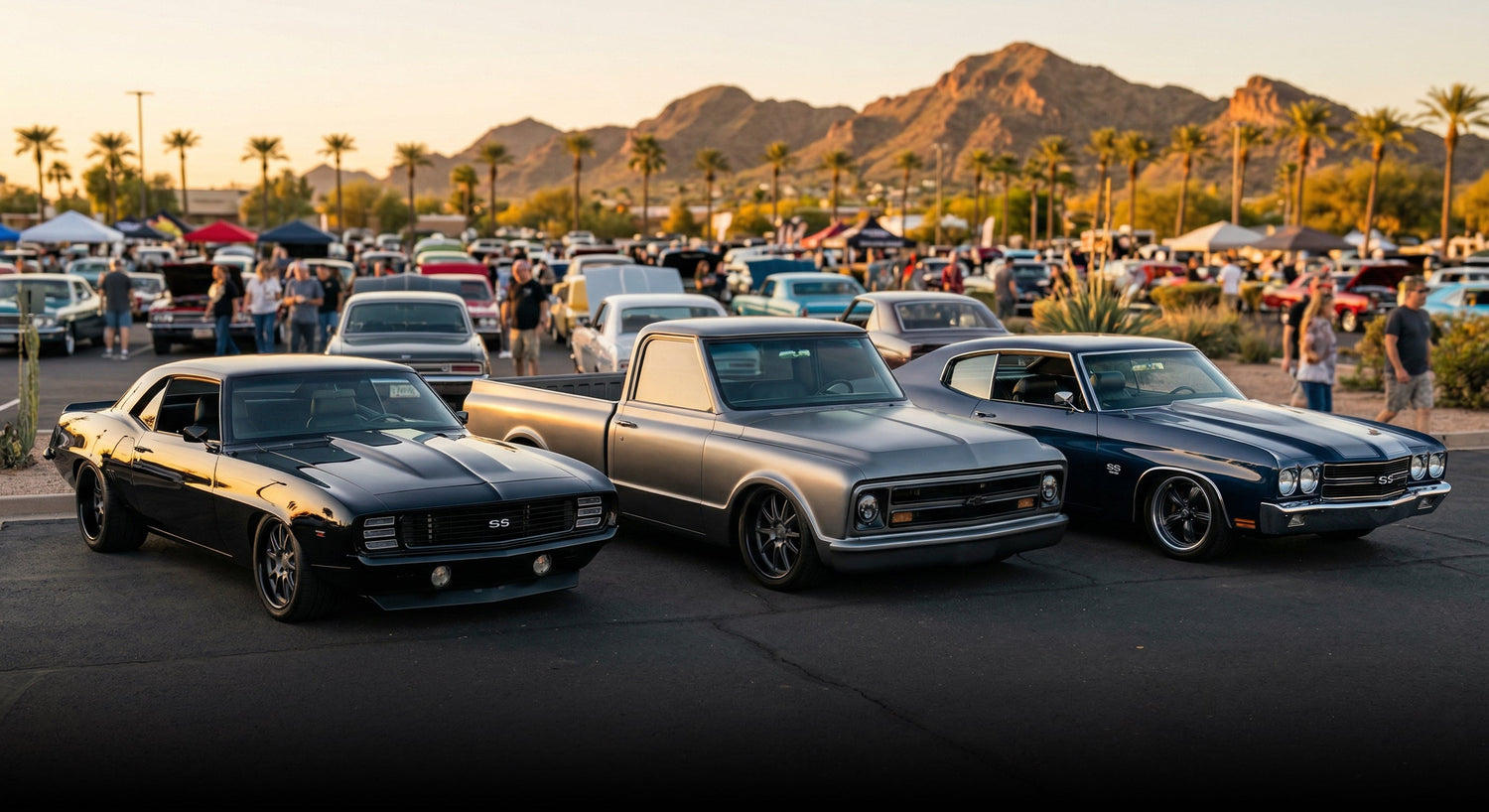
There are a lot of upgrades you can do to a classic car or truck. Suspension. Engine. Paint. Interior. But if you had to pick one that changes the entire look of the vehicle from every single angle, it's the glass.
Flush-mount glass is the single biggest visual transformation you can make to a classic build. It modernizes the profile, cleans up every sightline, and separates a casual project from a serious one. If you've ever seen a first-gen Camaro or a C10 at a show and thought "something about that car just looks right," there's a very good chance you were looking at flush-mount glass.
This guide covers everything: what flush-mount glass actually is, how it's different from stock glass, which platforms it fits, why polycarbonate windshields are not street legal, and how to get the right kit for your build.

What Is Flush-Mount Glass?
Flush-mount glass is an automotive glass installation method where the windshield and rear glass sit level with the body panels instead of recessed behind chrome trim or rubber gaskets. The glass is bonded directly to the body opening using high-strength automotive urethane, a FRIT band (the dark tinted border around the perimeter), and primer. No exterior trim. No rubber weatherstrip. No chrome molding.
The result is a clean, modern profile that makes the entire car look like it was designed yesterday. Paint reflections roll unbroken from the fender across the A-pillar and over the roof. The chunky rubber border that interrupts the bodyline on every factory classic car is gone.
This is the same bonding method used on modern production vehicles. When you look at a 2025 truck or sedan, the windshield sits flush with the body. Flush-mount glass brings that same technology to classic platforms.
Flush-Mount Glass vs. Stock-Style Glass
Every classic car and truck left the factory with its glass set in rubber gaskets and held in place with chrome or stainless trim. That was the standard installation method of the era. There's nothing wrong with it for a period-correct restoration. But for pro-touring builds, restomods, and customs, the factory rubber-and-trim setup creates a visual break in the bodyline that looks dated.
Stock-style glass
- Glass sits recessed behind rubber gaskets and chrome trim
- Visible rubber border around the entire perimeter
- Chrome or stainless molding frames the glass
- Correct for concours restorations and period-accurate builds
- Rubber ages, shrinks, and can leak over time
Flush-mount glass
- Glass sits level with the body panels
- No visible rubber, no chrome trim, no exterior molding
- Bonded with urethane for a weathertight seal
- Modern, clean look that transforms the entire profile
- Better seal than rubber (reduces dust, water, and wind noise)
- Adds structural rigidity to the body
The choice between flush-mount and stock-style glass depends entirely on the vision for your build. If you're building a numbers-matching restoration, stock glass is the right call. If you're building anything else, flush-mount glass is the upgrade that changes everything.
Why Polycarbonate Windshields Are Not Street Legal
This comes up constantly, so let's address it directly. Some companies sell polycarbonate (plastic) windshields marketed as "lightweight" alternatives to real glass. They are not DOT-certified. They are not street legal for road use. Here's why:
- No DOT certification. Federal Motor Vehicle Safety Standard 205 requires windshields to be made of laminated safety glass. Polycarbonate does not meet this standard.
- Scratches easily. Polycarbonate is significantly softer than glass and scratches from wiper use, car washes, and everyday debris.
- Yellows over time. UV exposure causes polycarbonate to discolor, haze, and lose optical clarity. In Arizona and other sun-heavy climates, this happens fast.
- Not safe in a collision. Laminated glass is designed to remain intact on impact, preventing occupants from being ejected. Polycarbonate does not provide this protection.
- Insurance issues. A vehicle with a non-DOT windshield may not be covered in an accident.
Fesler flush-mount glass is real laminated safety glass (front) and tempered glass (rear), manufactured by Pilkington, a global OEM glass supplier trusted by major automakers. Every Fesler kit is DOT-certified for street use.
How Fesler Flush-Mount Glass Is Made
Every Fesler flush-mount glass kit starts with Pilkington OEM-grade float glass, manufactured in North America using the original float glass process. The glass is then engineered specifically for each platform through a multi-step process:
- Prototype development. Each glass shape is designed from scratch for the specific vehicle platform, not modified from an existing piece.
- Mold creation. Precision molds are built to produce the exact dimensions needed for flush fitment in the factory body opening.
- Test fitting. Prototype glass is test-fitted on multiple vehicles to verify fitment across normal body variations.
- Manufacturing. Production glass is manufactured to the verified spec.
- Final test fitting. Production glass is test-fitted again before being approved for sale.
This prototype, mold, test-fit, manufacture, test-fit process is why Fesler glass fits as delivered. No sanding required. Some competitors have their factories make stock glass "a little bit larger all around" and expect you to sand it down to fit. That's not engineering. That's guessing.
Which Platforms Does Fesler Cover?
Fesler currently manufactures flush-mount glass kits for the following platforms. Each kit includes a laminated front windshield and tempered rear glass (unless noted).
1967-1969 Chevrolet Camaro (1st Gen)

The #1 selling Fesler glass kit. Front windshield and rear glass for the 1967, 1968, and 1969 Camaro hardtop. Also fits the 1967-1969 Pontiac Firebird. DOT-certified, trim-delete design with FRIT band edge. No sanding required.
Price: $2,099 | Shop 1st Gen Camaro Glass
1970-1974 Chevrolet Camaro (2nd Gen)

Flush-mount glass for the 1970-1974 Camaro coupe and hardtop. Also fits 1970-1974 Pontiac Firebird. Same prototype-to-production engineering process. Trim-delete, urethane-bonded, DOT-certified.
Price: $2,099 | Shop 2nd Gen Camaro Glass
1975-1981 Chevrolet Camaro / Pontiac Firebird
Flush-mount glass for late second-gen F-bodies. Front windshield and rear glass. DOT-certified, trimless, rubberless. No sanding required.
Price: $2,099 | Shop 1975-81 Camaro/Firebird Glass
1967-1972 Chevrolet C10

The C10 body has perfect lines until the factory rubber gasket interrupts the view. Fesler solves that with a flush-mount kit that bonds the glass straight to the cab, just like a modern truck. Front windshield and rear glass. Rubberless, DOT-certified.
Price: $1,899 | Shop C10 Glass
1973-1986 Chevrolet/GMC Squarebody
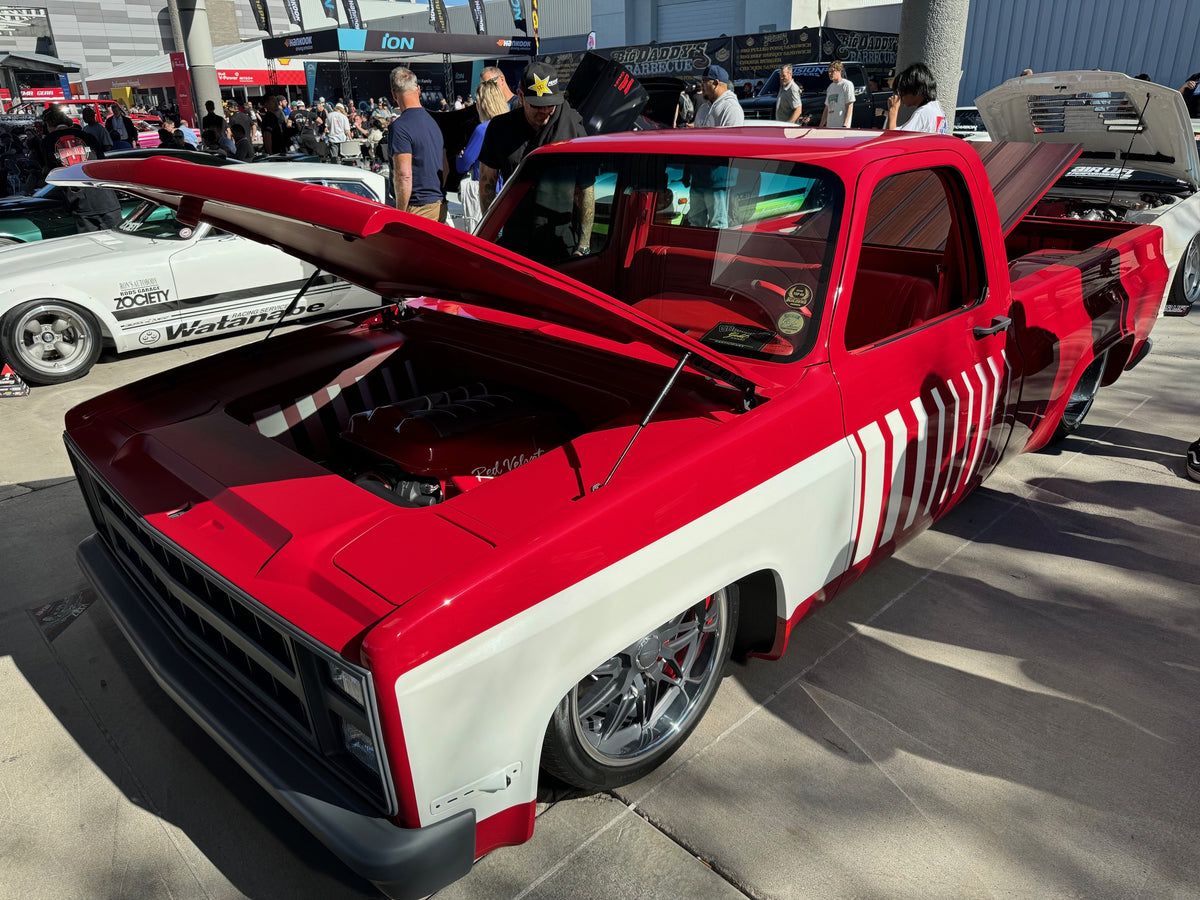
Front windshield and rear glass for 1973-1986 C/K Squarebody pickups. The windshield also fits 1973-1989 Blazer (2-door), 1973-1991 Jimmy (2-door), 1973-1991 Suburban, and 1973-1991 R/V pickups as a windshield-only application. DOT-certified, trimless.
Price: $1,899 | Shop Squarebody Glass
1968-1972 Chevrolet Chevelle

Flush-mount glass for the 1968-1972 Chevelle. Front windshield and rear glass. Trimless, American-made, DOT-certified. The Chevelle's long hood and fastback roofline look dramatically different with the trim deleted.
Price: $2,099 | Shop Chevelle Glass
1967-1968 Ford Mustang

Flush-mount glass for the 1967-1968 Mustang in both Fastback and Coupe configurations. Front windshield and rear glass. DOT-certified, trimless, American-made.
Price: $2,099 | Shop Mustang Glass
1968-1970 Dodge Charger

Flush-mount glass for the 1968-1970 Charger. Front windshield and rear glass. DOT-certified. The Charger's tunnelback roofline and recessed rear glass are transformed by a flush-mount installation.
Price: $2,099 | Shop Charger Glass
Additional platforms are in development, including OBS trucks and early Broncos. For the most current list, visit the Fesler Flush-Mount Glass collection.
Finish the Interior While You're At It

Flush-mount glass does not affect your interior garnish moldings or headliner trim. The glass bonds to the outside of the body opening, and the interior clips and trim panels install the same way they always did. No upholstery work is required.
That said, if you're pulling the windshield and rear glass for a flush-mount upgrade, it's the perfect time to tackle interior upgrades at the same time. Fesler manufactures fiberglass door panels, dashes, consoles, kick panels, A-pillars, headliners, and package trays for most of the platforms listed above. All fiberglass components are hand-built in our Phoenix, Arizona shop.
Interior bundles save 10% when you order a full kit. Available for 1st Gen Camaro, 2nd Gen Camaro, C10, Chevelle, Squarebody, and Nova.
A Note on Dynacorn Bodies
On Dynacorn reproduction bodies, substantial metal work may be required to meet proper glass geometry for flush-mount installation. Fesler does not recommend flush-mount glass for Dynacorn shells without body modifications. Other shell manufacturers (original GM bodies, AMD bodies, etc.) generally do not present these issues. If you're working with a Dynacorn body and considering flush-mount glass, contact us before ordering so we can discuss what's involved.
Shipping and Installation
All Fesler flush-mount glass kits ship via LTL truck freight due to size and weight. Commercial address delivery is recommended for cost and ease. We ship anywhere in the world. Freight is quoted after checkout. You can use our carrier or arrange your own.
Fesler recommends professional installation for flush-mount glass. The bonding process requires proper surface preparation, primer application, urethane placement, and curing time. A qualified glass installer or a shop experienced with flush-mount systems will ensure a clean, weathertight result.
Adhesives, primers, clips, and installation labor are not included in the kit. The glass comes ready to install with the FRIT band and correct dimensions. Your installer provides the bonding materials and labor.
Frequently Asked Questions
What is flush-mount glass?
Flush-mount glass is an installation method where the windshield and rear glass sit level with the body panels, bonded with urethane instead of sitting behind rubber gaskets and chrome trim. It gives classic cars and trucks a clean, modern, trimless profile.
Is flush-mount glass DOT-certified?
Yes. All Fesler flush-mount glass kits use DOT-certified laminated safety glass (front windshield) and tempered glass (rear), manufactured by Pilkington. They are street legal.
Does flush-mount glass add weight to the car?
Glass thickness matches factory spec, so the weight change is negligible. What you remove (rubber gasket, chrome trim, clips) roughly offsets any minor dimensional difference.
Will my wipers still work?
Yes. Flush-mount glass does not affect wiper arm geometry or function.
Does flush-mount glass reduce wind noise?
Yes. The urethane bond creates a tighter, more complete seal than factory rubber weatherstrip. This eliminates the wind whistle that's common on classic cars with aged rubber seals and adds structural rigidity to the body.
Can I go back to stock glass after installing flush-mount?
Yes. The process is reversible. A glass installer can remove the flush-mount glass and reinstall stock glass with rubber gaskets if you choose to go back.
Are polycarbonate windshields street legal?
No. Polycarbonate windshields are not DOT-certified, do not meet Federal Motor Vehicle Safety Standard 205, scratch easily, yellow in UV, and are not safe in a collision. They should only be used on track or display vehicles. Fesler uses real laminated safety glass from Pilkington.
Does flush-mount glass require sanding to fit?
Not with Fesler glass. Each kit is prototype-built, mold-formed, test-fitted on multiple vehicles, manufactured, and test-fitted again. The glass fits as delivered. Some competitors sell oversized glass that requires sanding. Fesler does not.
Which classic cars does Fesler make flush-mount glass for?
Fesler currently makes flush-mount glass kits for the 1967-69 Camaro, 1970-74 Camaro, 1975-81 Camaro/Firebird, 1967-72 C10, 1973-86 Squarebody, 1968-72 Chevelle, 1967-68 Mustang, and 1968-70 Charger. Additional platforms are in development.
How much does flush-mount glass cost?
Fesler flush-mount glass kits (front windshield and rear glass) range from $1,899 to $2,099 depending on the platform. C10 and Squarebody kits start at $1,899. Camaro, Chevelle, Mustang, and Charger kits are $2,099.
Does flush-mount glass work on a Dynacorn body?
Fesler does not recommend flush-mount glass for Dynacorn reproduction bodies without body modifications. Dynacorn shells may require substantial metal work to achieve proper glass geometry. Other shell manufacturers generally do not have this issue. Contact Fesler before ordering if you are working with a Dynacorn body.
Can I install flush-mount glass myself?
Fesler recommends professional installation. The bonding process requires proper surface preparation, primer, urethane placement, and curing time. A qualified automotive glass installer or experienced builder will ensure a clean, weathertight result.
How long does shipping take?
Typical ship window is approximately 15 to 20 business days after Fesler receives your signed credit card authorization. Your card is not charged until the glass is ready to ship.
Do you ship internationally?
Yes. If you're willing to pay for it, we're willing to ship it. That policy applies worldwide.
Get Started
If you're ready to make the one upgrade that changes everything, start here:
- Shop All Flush-Mount Glass Kits
- Shop Interior Bundles (Save 10%)
- Contact Fesler for fitment questions, install referrals, or build planning
Call or text us at 480-748-2000, Monday through Thursday, 8am to 5pm. We'll help you pick the right kit and point you to a qualified installer in your area.


Leave a comment
This site is protected by hCaptcha and the hCaptcha Privacy Policy and Terms of Service apply.