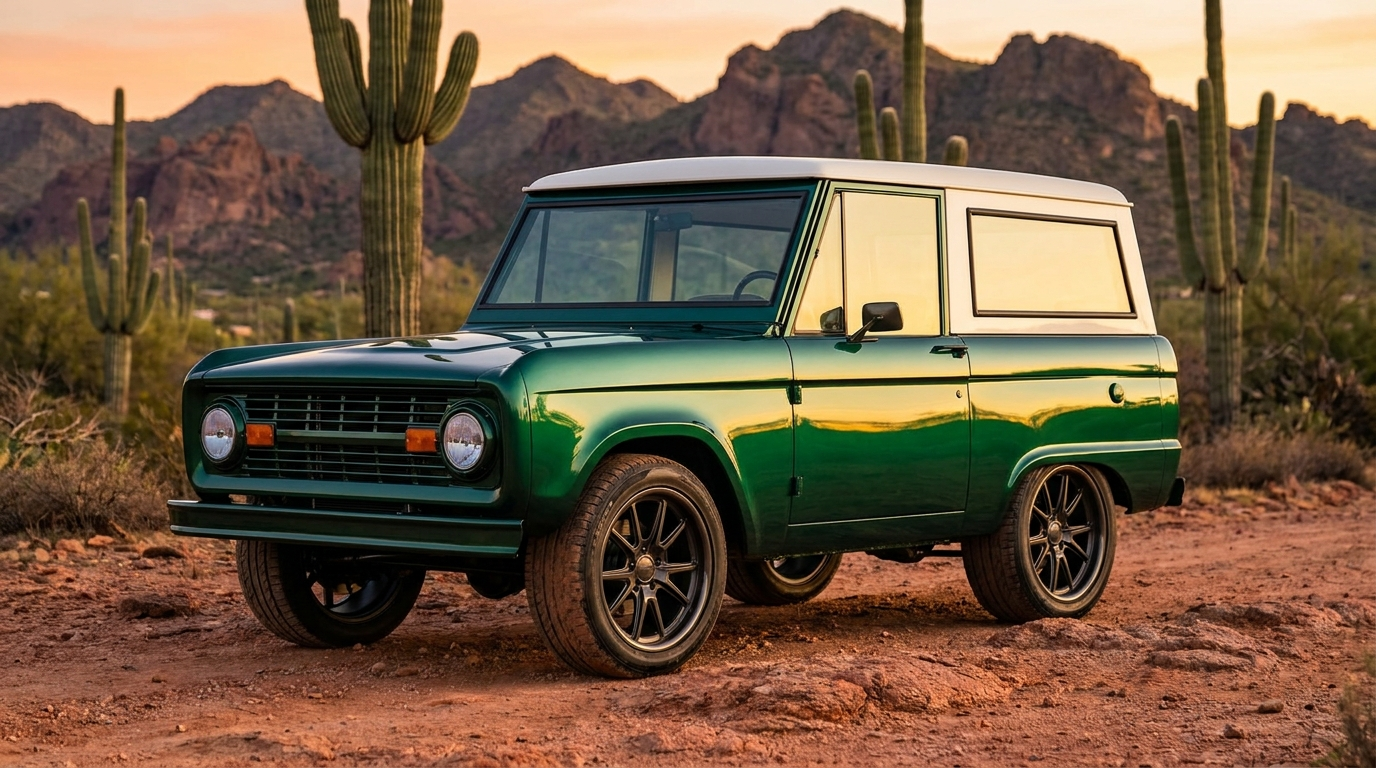
The early Bronco might be the most valuable restomod platform in America right now. Clean 1966-76 builds regularly cross the block at six figures, and an entire industry has grown up around chassis swaps, Coyote power, and modern interiors for these trucks. Yet on most of those builds, one detail still gives the era away: the windshield sits in a thick rubber gasket surrounded by chrome trim, exactly the way it left the factory in 1966.
This guide covers everything a builder needs to know about going flush on an early Bronco: what the glass actually is, what changes on the body, whether it is street legal, and how to plan the work so it happens once.
What flush-mount glass does for an early Bronco
The Bronco's upright, boxy glasshouse is part of its charm, but the factory glass treatment interrupts every line on the truck. The gasket adds a black rubber border around the windshield, the trim adds a chrome border around the rubber, and both trap dust and water against the paint. Delete them and bond the glass directly to the body, and the front of the truck reads as one continuous surface. It is the same visual language as a modern vehicle, applied to a 60 year old body, and it is why judges and photographers gravitate to flush-glass builds.
On a Bronco specifically, the effect is stronger than on most cars because the windshield frame is so prominent. A flat, nearly vertical windshield with no trim looks intentional and machined. If you have seen a high-end Bronco build in person and could not figure out why it looked so clean, this was probably the answer. We covered the general principle in The One Upgrade That Changes Everything; this is what it looks like applied to Ford's original SUV.
What is in the Fesler Bronco kit
The Fesler 1966-76 Bronco flush-mount glass kit is DOT-certified laminated glass, made in America, cut and shaped for the early Bronco windshield opening. Like every Fesler flush kit, it is engineered as a trim-delete system: the glass bonds to the pinch weld with automotive urethane, the same structural adhesive method used on every modern vehicle on the road.
That DOT certification matters more than most builders realize. Laminated glass with the correct markings is what makes the truck legal, insurable, and safe. If you want the full background on what those etched markings mean and why uncertified glass is a liability, read our DOT certified glass explainer.
Body prep: where Bronco builds are won or lost
The windshield frame is the whole job
Early Bronco windshield frames rust. Fifty years of water sitting in the gasket channel means most frames have at least surface corrosion at the lower corners, and many have rot. Urethane bonds to clean, primed steel, not to flaking rust, so the frame must be repaired and sealed before glass day. This is not unique to Broncos, and our pinch weld checklist walks through the exact repair sequence. Budget for this while the truck is in paint, not after.
Plan it during bodywork, not after
The right time to commit to flush glass is before final paint. The trim clips and gasket channel details can be smoothed during bodywork, and the painter can finish the opening as a clean surface. Going flush after a fresh gasket-style paint job means reworking finished paint, which nobody enjoys paying for twice. The same buy-it-once logic applies across the whole build, which is why we wrote The Build Order: What To Buy First.
Does it leak? Does it crack? The questions everyone asks
Bonded glass seals better than any gasket, full stop. Urethane forms a continuous structural bead with no seams, no shrinkage, and no channels for wind-driven rain. It also adds rigidity to the Bronco's flat windshield frame rather than letting the glass float in rubber. We answered every version of the durability question, including desert heat cycling and body flex, in Does Flush-Mount Glass Leak? The short version: the failure stories you hear come from cut-down tempered glass and amateur installs, not from DOT laminated kits bonded properly.
Finishing the rest of the truck
Flush glass pairs naturally with the rest of a clean Bronco interior. Fesler builds a molded carpet kit for 1966-77 Broncos, and our billet hardware and custom interior work finish the cabin to the same standard as the glass. If you are mapping the full project, the Bronco Restoration Playbook covers year-by-year differences and the decisions that matter most.
Early Bronco glass FAQ
Does the Fesler kit fit all 1966-76 Broncos?
Yes. The early Bronco windshield opening stayed consistent across the first generation, so one kit covers the full 1966-76 run.
Can I keep my fold-down windshield function?
Flush bonding is designed for a fixed windshield. Most restomod builds fix the frame anyway for rigidity and sealing. If keeping the fold-down feature matters to your build, talk to us before ordering and we will walk through the options.
Is flush glass street legal on a Bronco?
Yes. The glass is DOT-certified laminated safety glass with the required markings. It meets the same federal standard as the windshield in a new truck.
What about the rear and side glass?
The windshield is the highest-impact change and the focus of the kit. For the rest of the glasshouse, options depend on your top configuration. Call the shop and we will spec the truck as a whole.
Early Broncos are being built at a higher level every year, and the market rewards the ones with nothing left to point at. The 1966-76 flush-mount kit is available now. If your Bronco is in bodywork this summer, this is the moment to decide.

Leave a comment
This site is protected by hCaptcha and the hCaptcha Privacy Policy and Terms of Service apply.