
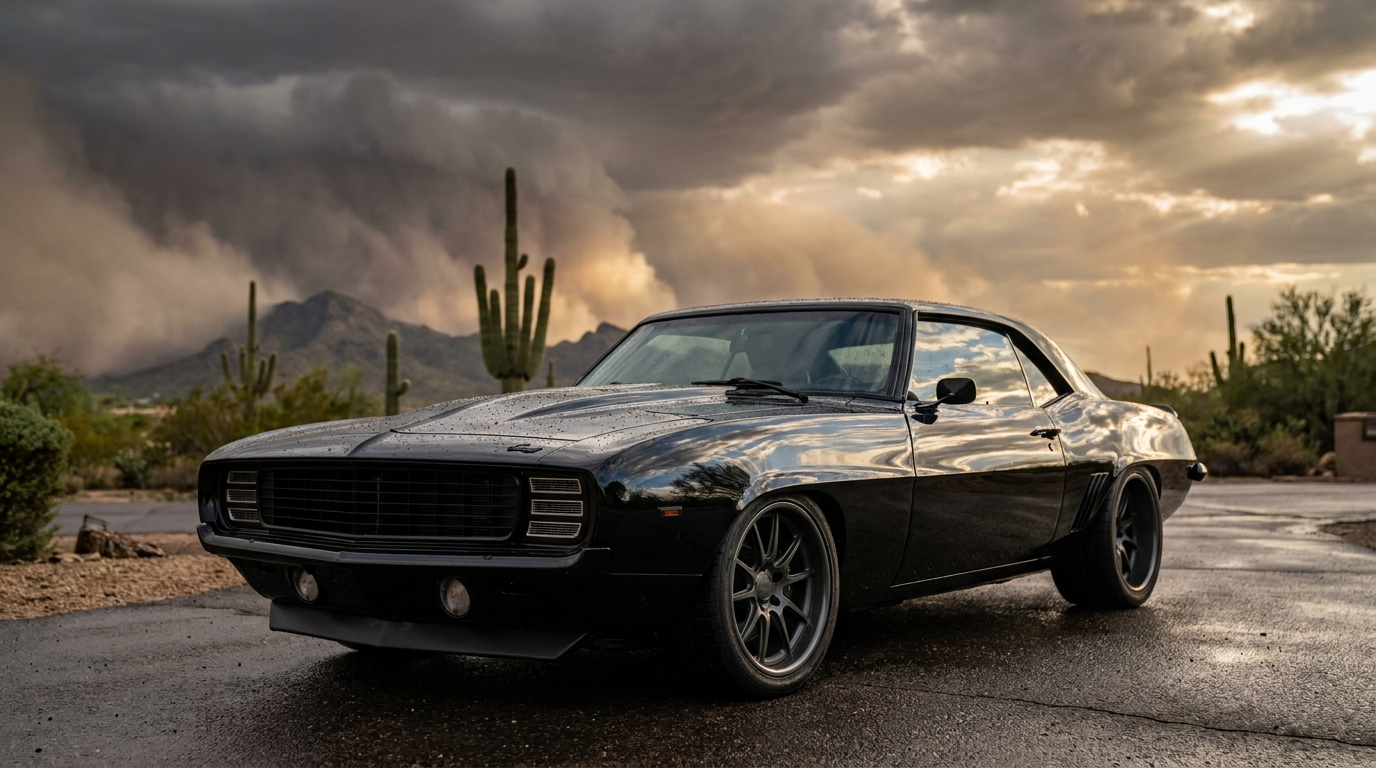
Every summer it happens the same way. The first real monsoon cell rolls across the Valley around mid July, drops an inch of rain in forty minutes, and the next morning half the classic car owners in Phoenix are pulling up wet carpet and wondering where the water came from.
Here is the truth most shops will not tell you: the storm did not cause the leak. The leak was already there. Monsoon season just found it. A classic that sat through eight months of dry desert air has seals that shrank, urethane that was never right, and rust that quietly spread under the trim. The good news is that every one of those failure points can be tested in your driveway before the first storm hits, with a garden hose and about an hour.
Why monsoon season is brutal on classic cars specifically
Phoenix rain is not like rain anywhere else. Monsoon storms arrive fast, hit hard, and often come in sideways on 40 mph outflow winds. Water gets driven into gaps that a gentle rain would never reach. Add the dust that arrives ahead of the storm, and you get wet grit packed into cowl vents, drain channels, and window tracks.
Modern cars handle this because their glass is bonded to the body with urethane and their drainage is engineered. Most classics rely on 50 year old rubber gaskets that were marginal when new. Desert heat accelerates the problem: rubber that bakes at 170 degrees F on a dashboard-level surface all summer loses its elasticity, shrinks, and cracks. By the time the first storm arrives, that gasket is a decorative item.
The one-hour driveway test, in order
1. Start low, work up
Water tests only work bottom to top. If you soak the whole car at once and find a wet floor, you have learned nothing about where it entered. Start with a low-pressure stream at the base of the windshield for five minutes, then check the carpet and kick panels. Move up to the A-pillars, then the roofline, then the rear glass. One zone at a time, with a helper inside holding a flashlight.
2. Check the cowl before you blame the windshield
On C10s, Camaros, Chevelles, and most GM classics, the cowl plenum under the wiper grille collects decades of debris. When its drains clog, water rises inside the plenum and pours through the fresh air vents onto the floor. It looks exactly like a windshield leak. It is not one. We wrote a full diagnostic on telling the two apart in Windshield Leak vs. Cowl Leak. Run that test first. It saves people a glass job they did not need every single year.
3. Inspect the pinch weld
If the windshield really is the entry point, the glass itself is almost never the problem. The steel under it is. Bubbling paint or brown staining at the corners of the windshield opening means the pinch weld is rusting, and no gasket or urethane will seal to flaking metal. Our pinch weld repair checklist covers exactly what to fix before glass goes back in.
4. Squeeze the rubber
Press a fingernail into your windshield gasket, door seals, and vent window rubber. Healthy rubber gives and springs back. Desert-baked rubber feels like plastic and may crack under your nail. If the gasket has pulled away from the corner of the glass even slightly, wind-driven monsoon rain will find that gap.
5. Clear the drains you forgot you have
Door bottoms, rocker panels, and tailgate seams all have drain holes, and Phoenix dust plugs them. A door that cannot drain fills like a bucket during a storm, then rusts from the inside out. Probe every drain hole with a zip tie until it flows.
The permanent fix: get rid of the gasket entirely
You can re-seal a 50 year old rubber gasket every few seasons, or you can solve the problem once. This is exactly why we developed our flush-mount glass systems. Fesler flush glass is DOT-certified laminated glass bonded to the body with modern urethane, the same method every new vehicle uses, because it works. There is no gasket to shrink, no trim to trap water, and no channel for wind-driven rain to migrate through. It also happens to transform the look of the car, which is why you see it on the builds that win at Barrett-Jackson.
If your truck or car is one we build for, the kit exists right now: 1967-72 Chevy C10, 1967-69 Camaro, 1968-72 Chevelle, and more across the full catalog. Every kit is American made and engineered for the exact body it fits.
If water already got in
Do not just let it dry. Phoenix humidity during monsoon season is high enough that soaked jute padding under carpet can hold moisture for weeks, and that means mildew and floor pan rust. Pull the carpet, dry the pan completely, treat any surface rust, and if the padding was soaked, replace it. Our molded carpet kits come with proper padding and fit C10s, Camaros, Chevelles, Novas, Mustangs, and OBS trucks, so a water incident can at least end with a nicer interior than you started with.
Monsoon season FAQ
When is monsoon season in Phoenix?
Officially June 15 through September 30, with the heaviest storm activity typically mid July through August. If you are reading this in early July, you have days, not weeks, to test your car.
Can I daily drive a classic during monsoon season?
Yes, if it seals. A water-tested classic with sound glass installation and functioning drains handles a monsoon fine. The cars that suffer are the ones that never get tested because they never see rain the other nine months.
Should I use silicone sealer on a leaking windshield gasket?
As a temporary patch only. Silicone contaminates the surfaces, which makes a proper repair harder later, and it usually just moves the leak somewhere else. If the gasket is failing, budget for a real fix.
Does hail from monsoon storms break laminated glass?
Phoenix monsoon hail is usually small, and DOT laminated glass is built to take impacts without shattering. Tempered side glass is more vulnerable. A carport or garage during storm warnings is cheap insurance either way.
An hour with a hose this week beats a soaked interior in August. And if the test tells you the glass is the problem, read why flush-mount glass is the one upgrade that changes everything, or call the shop. We are in Phoenix. We know exactly what these storms do to these cars.

Leave a comment
This site is protected by hCaptcha and the hCaptcha Privacy Policy and Terms of Service apply.