
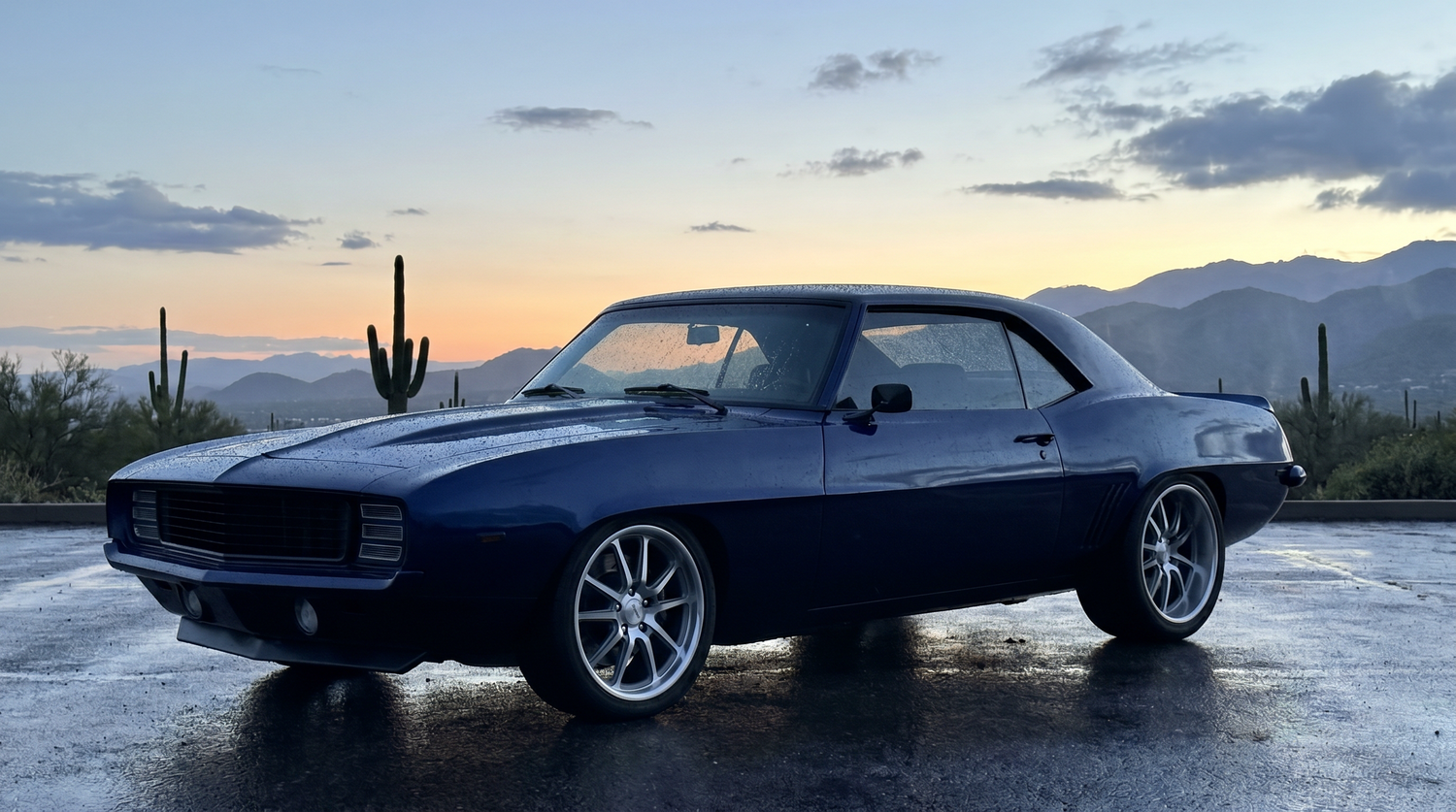
Every week the shop phone rings with some version of the same three questions. Does flush-mount glass leak? What does it sound like at 75? And what happens when a rock finds it on the freeway?
Fair questions, all of them. The classic car world earned its glass skepticism honestly. Most people asking have lived with fifty-year-old gaskets that wept every monsoon, or they watched a buddy fight a cheap flat-glass kit that never sealed right from the day it went in. When your reference points are old rubber and bad kits, suspicion is just pattern recognition.
So this post answers everything straight. The leaks question, the noise question, the rock chip question, the replacement question, the legal question, the insurance question, and the parts that are not flattering. If you are deciding whether flush-mount glass belongs on your build, this is the whole conversation in one place.
The quick answer
Properly engineered, properly installed flush-mount glass does not leak. It seals with bonded urethane, the same method every car and truck built in the last few decades uses, which is why your daily driver has never once leaked through the windshield perimeter. The leak stories in the classic world come from two real places: aging factory gasket glass, and cheap conversion kits that force flat glass into openings it was never shaped for. Neither of those is what we are talking about here.
Where the fear comes from
It helps to name the two villains, because they are real.
Villain one: the factory gasket, fifty years later. Original glass on these cars and trucks sits in a rubber gasket. Rubber shrinks, hardens, and cracks with age and Arizona sun. The channel under it traps water against bare steel and rusts from the inside out. If you have ever chased a mystery puddle across your floor pan, you know the drill, and our guide to windshield leaks vs cowl leaks exists because so many of you have lived it. Decades of that experience taught the hobby that classic glass leaks. It does, when the seal is older than the owner.
Villain two: the cheap flat-glass kit. The other source of horror stories is the budget conversion. Flat polished glass cut to roughly the right shape, set into a curved opening, sealed with hope. We wrote up exactly how those fail in the truth about cheap flush-mount glass kits, and the short version is that geometry always wins. A flat pane against a curved body leaves gaps, gaps let in water and wind, and the owner blames flush glass as a category instead of the kit that earned it.
So when somebody tells you flush glass leaks, ask which glass they mean. The answer is almost always one of those two.
How flush-mount glass actually seals
A real flush-mount kit seals the way a modern vehicle does, because it uses the same engineering.
The glass is bonded to the body with a continuous bead of automotive urethane adhesive around the full perimeter. There is no gasket to shrink, no channel for water to travel, no mechanical joint at all. The urethane cures into a permanent flexible bond between glass and steel. Water hitting the glass has exactly one option, which is to run off the surface, because the perimeter is a sealed, continuous connection rather than a rubber lip pressed against paint.
This is not exotic. It is how your 2026 truck, your wife's crossover, and every rental car you have ever driven holds its glass. The auto industry moved to bonded glass decades ago precisely because gaskets leak and bonds do not. A bonded windshield even adds rigidity to the body, which we covered in the structural benefits of flush-mount glass. Our kits bring that same standard to classic bodies, with glass engineered for each specific application and produced with Pilkington, certified and marked. The full story on the certification side is in what DOT certified glass actually means.
With that foundation laid, here are the questions, one at a time.
Does flush-mount glass leak?
Not when the glass is shaped for the opening and the install is done right. The bonded perimeter is the same sealing system that keeps every modern vehicle dry through car washes, pressure washers, and ten years of weather. There is simply no path for water to take.
The honest caveat is prep. Urethane bonds to clean, sound, primed metal. If the pinch weld under your old gasket is rusty, that rust has to be repaired before glass day, because no adhesive on earth bonds permanently to corrosion. A quality kit installed over bad prep can still cause trouble, and that is an installation failure, not a glass failure. Fix the metal first, bond to good steel, and the seal outlasts the paint.
What about wind noise?
Flush glass is quieter than what you have now, and it is not close.
Think about what the wind hits on a stock classic at 75. Chrome trim standing proud of the body. A rubber gasket lip. The step where glass sits recessed below the surrounding sheet metal. Every one of those edges grabs air and makes noise. A flush install removes all of them. The glass sits level with the body, air flows across one continuous surface, and the whistle and flutter that classic owners accept as normal simply are not there. Builders tell us the cab noise difference at highway speed is one of the first things passengers notice, right after the look.
What happens if a rock chips it?
The same thing that happens on your daily, because it is the same kind of glass.
Flush-mount windshields are laminated safety glass, two layers bonded over a plastic interlayer. A stone chip in laminated glass can usually be resin-repaired by any windshield repair service, exactly like a modern car, as long as you deal with it before it spreads. Side and rear glass is tempered, which does not chip in the usual sense. Tempered glass either shrugs off the hit or, in a severe impact, granulates into small dull pieces by design. Driving a classic with flush glass carries the same rock risk profile as driving anything else on the road, which is to say manageable and repairable.
Can the glass be replaced if it breaks?
Yes, and this is a point where flush glass actually beats original glass.
Original glass for a fifty-plus-year-old vehicle means hunting NOS stock or settling for whatever reproduction exists. Our flush kits are in ongoing production with Pilkington, so replacement glass for any kit we sell is a phone call to the shop at 480-748-2000. An installer removes the broken pane, preps the opening, and bonds the new one in, the same procedure as replacing a modern windshield. When the new glass ships, give it a proper once-over on arrival using our receiving and inspection guide so any freight issue gets caught at the door.
Will it pass inspection? Is it street legal?
Yes. Every pane we sell is DOT-approved safety glass with the certification etched right into it: AS-1 laminated glass for windshields, AS-2 tempered glass for side and rear positions, plus the DOT manufacturer number. Those markings are what an inspector, an insurer, or a state referee looks for, and they are the difference between certified automotive glass and cut flat stock. Inspection requirements vary by state, but certified, marked glass is the standard everywhere, and it is the only kind we will put our name on. The deep dive is in our DOT certification guide.
Is it safe in a crash?
Safer than what the car left the factory with, by a wide margin.
You get laminated glass up front that holds together on impact instead of shattering. You get tempered glass on the sides that granulates instead of producing blades. And you get urethane retention, which means the windshield stays bonded to the body in a collision and keeps doing its structural job rather than popping out of a gasket. Modern vehicles count on the bonded windshield as part of the body structure, and a flush-converted classic inherits that benefit. More on that in the structural benefits post.
Can I daily drive it? Car washes? Monsoons?
Drive it. That is the entire point.
We are in Phoenix. Our glass lives through 115 degree summers, parking lot heat soak, monsoon downpours that drop an inch of rain in an hour, and the temperature swings of desert nights. Bonded glass takes all of it, because flexible urethane was engineered for exactly this duty cycle on hundreds of millions of vehicles. Once the adhesive reaches full cure after installation, car washes, pressure rinses, and weather are non-events. Builds wearing our glass have crossed auction blocks, sat outdoors at shows through storms, and racked up real highway miles. Glass should never be the reason a build stays in the garage.
Will my installer know what to do?
If they set bonded windshields on modern vehicles, they already have the core skill, because it is the same job: prep the opening, prime, run the urethane bead, set the glass, respect the cure time.
We make it easier on them anyway. Our flush-mount install overview and install tips page cover the process, and installers are welcome to call the shop directly with questions before or during the job. The one non-negotiable is patience on cure. Urethane has a safe drive-away time, and respecting it is the cheapest insurance in the whole project.
What happens to my trim and moldings?
They come off, and the holes get filled. That is the look.
Flush-mount glass is a trim-delete conversion. The stainless and the clips go away, the body gets smoothed, and the glass meets paint with nothing in between. If you love your brightwork and want to keep it, that is a different conversation, and we wrote it up in flush-mount vs trim ring glass. Just know going in that flush is a commitment to the smooth look, not a weekend-reversible accessory.
Will insurance cover it?
Yes, if you insure the build like a build.
A standard policy values your vehicle as a stock classic, which means a claim check that ignores every dollar of your glass, paint, and interior. The fix is an agreed value policy backed by documentation of the modifications, ideally with a professional appraisal. We covered the whole process, including how appraisers value custom work, in our appraisal and agreed value guide. Declare the glass, document the build, and a broken pane or a bigger loss becomes a covered event instead of an argument.
Three kinds of classic glass and how they behave
| Factory gasket glass | Cheap flat-glass kit | Engineered flush-mount kit | |
|---|---|---|---|
| Seal | Rubber gasket, ages and shrinks | Improvised around flat glass | Bonded urethane perimeter |
| Leak risk | Grows every year the rubber ages | High from day one | Sealed like a modern vehicle |
| Wind noise | Trim edges and rubber lips in the airstream | Gaps whistle at speed | One smooth surface |
| Certification | Original AS markings, decades old | Often unmarked flat stock | DOT-approved, AS marked, current |
| Replacement | NOS hunt or reproduction roulette | Depends who cut it | Current production, call the shop |
| Fitment | Designed for the body in period | Flat pane, curved opening | Engineered per application |
The honest downsides
Nothing on a build is free, and flush glass asks four things of you.
It costs more than rubber. Engineered curved glass, certification, and real sealing hardware cost more than a reproduction gasket. You are buying a permanent solution, and permanent solutions price like it.
It demands honest prep. Rust in the pinch weld or channel has to be repaired before installation. If your glass openings are crusty, budget the metal work first. Bonding over corrosion is how good kits get bad reputations.
It wants a professional set. The urethane process rewards experience. Most builders have a glass shop do the set, and the cure time means the vehicle sits patiently afterward. Plan for it.
It is a commitment. Trim holes get filled and the body gets smoothed. If your car is a numbers-matching survivor headed for a concours lawn, keep it original and enjoy it that way. Flush glass is for builds, and we will tell you that to your face.
If those four trade-offs sound reasonable, the upside is everything above: sealed, quiet, certified, replaceable, and the cleanest visual change you can make to a classic body.
Quick answers
Does flush-mount glass leak?
No. Engineered flush glass bonds to the body with a continuous urethane perimeter, the same sealing method as every modern vehicle. Leak stories trace back to aged factory gaskets or flat-glass kits with fitment gaps.
Is flush-mount glass loud on the highway?
The opposite. Removing trim edges, gasket lips, and the recessed glass step gives the wind one smooth surface, so cabs get noticeably quieter at speed.
Can a chipped flush-mount windshield be repaired?
Usually, yes. The windshield is laminated safety glass, so standard resin chip repair works just like on a modern car if you catch the chip early.
What if a pane breaks completely?
Replacement glass for Fesler kits is in ongoing production, so a new pane is a call to the shop and a standard bonded-glass install, no NOS treasure hunt required.
Is it street legal?
Yes. Fesler glass is DOT-approved with AS-1 and AS-2 certifications and the DOT manufacturer number etched in the glass, which is exactly what inspections look for.
Can I daily drive it?
Yes. Bonded glass handles Phoenix heat, monsoon rain, car washes, and highway miles, because that is the duty cycle it was engineered for on modern vehicles.
Who installs it?
Any glass professional who sets bonded modern windshields. Fesler provides install guides and takes installer calls directly at 480-748-2000.
Will insurance pay if something happens?
With an agreed value policy and documented modifications, yes. Declare the build, get it appraised, and the glass is covered like the rest of your work.
Ready when you are
Every question above has the same root: people want to drive their builds without babying them, and they want to know the glass can take it. It can. Browse the full flush-mount DOT glass lineup to find your application, from the 1967 to 1972 C10 kit to first gen Camaro, second gen Camaro, Squarebody trucks, and beyond. And if your question is not on this page, call us at 480-748-2000. We are in the shop, we drive this glass every day, and we would rather answer it before you buy than after.

Leave a comment
This site is protected by hCaptcha and the hCaptcha Privacy Policy and Terms of Service apply.