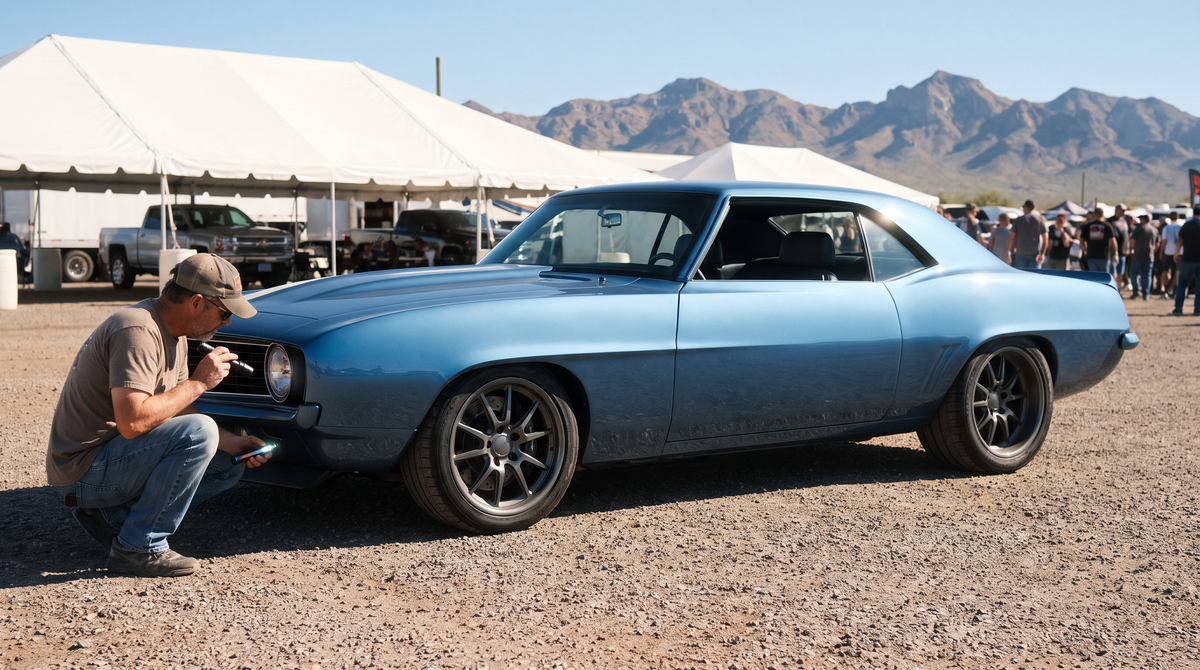
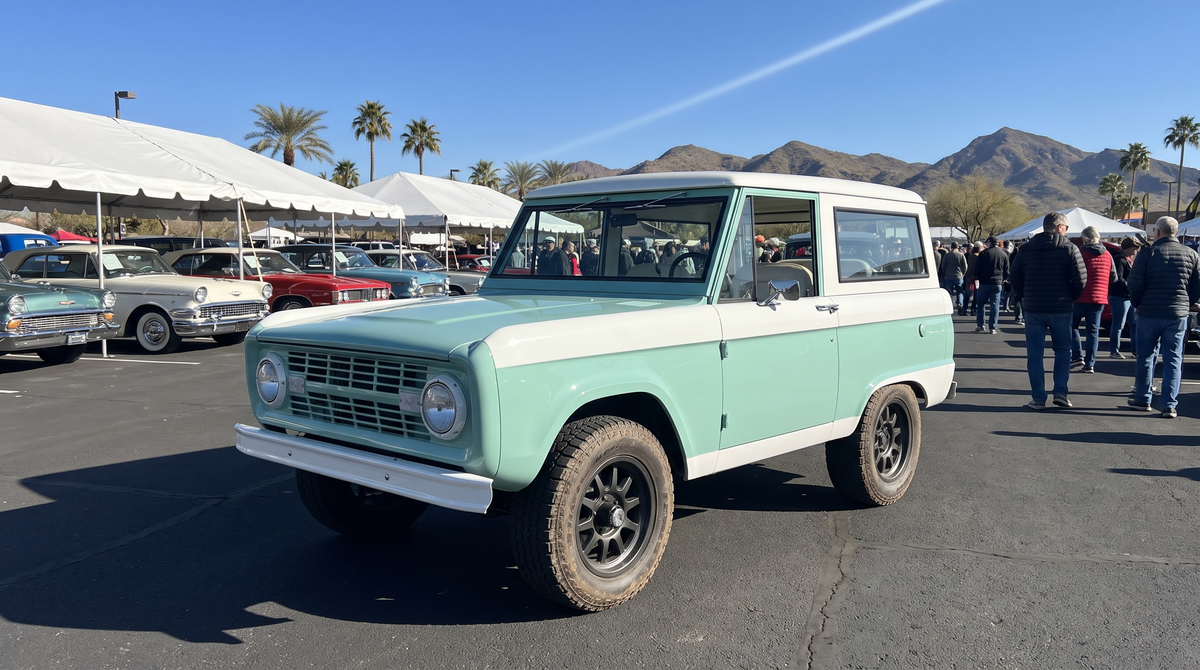
To inspect a restomod before buying, check the paperwork first, then the glass, body, interior, wiring, drivetrain and chassis, in that order, and write down what you find before you ever raise a hand. At Barrett-Jackson Scottsdale, which runs January 23 to 31, 2027 at WestWorld, most cars cross the block at No Reserve, so the inspection you do on the grounds before the car rolls is the one that counts.
This is the checklist we would use ourselves. It is written for pro-touring and restomod builds, where the parts list matters as much as the paint, and it points out the places where a fast look can fool you. If you are shopping for glass or interior parts after the auction, our flush-mount DOT glass collection is a good place to see what a finished, certified kit looks like.
How buying at Barrett-Jackson works
Barrett-Jackson sells cars that their owners consign to the auction. Whatever a listing says, the job of checking the car is yours. Read the current bidder terms before you register so you know exactly what you are agreeing to.
A few process facts worth knowing before you go, from Barrett-Jackson's own site:
- Registration. You have to register as a bidder before you can bid. Questions go to Barrett-Jackson customer service at 480-421-6694, Monday through Friday, 8 a.m. to 5 p.m. Arizona time. Check its bidder page for the current registration requirements.
- Ways to bid. In person, online, by phone, or by proxy through a Barrett-Jackson representative.
- No Reserve. Barrett-Jackson became known as one of the first auction houses to offer most of its vehicles at No Reserve, meaning they sell to the highest bidder.
- Fees. Expect a buyer's premium, fees and taxes on top of the hammer price. Get the current rates from Barrett-Jackson's bidder terms and build them into your limit.
- Listings. Read the online listing for any car you like, then verify every claim in it on the car itself. A seller's description is not an inspection report.
How to inspect a restomod before buying: the paperwork
Start with documents, because a perfect car with a bad title is a bad car.
- VIN match. Find the VIN on the car and compare it to the title or docket listing, character by character. On a restomod with a new chassis or a replacement body, ask how the car is titled and registered.
- Vehicle history. The federal National Motor Vehicle Title Information System (NMVTIS) exists to protect buyers from fraud and unsafe vehicles and to keep stolen vehicles from being resold. It is worth running before you bid.
- Build records. Ask for receipts, a parts list, the shop that built it, photos from teardown, and any dyno sheet or alignment printout. A builder who kept records usually built carefully.
- Glass and part documentation. If the listing says the car has certified glass, a specific chassis, or a named interior, the paperwork or the parts themselves should back that up.
How do you check the glass on a classic or restomod?
Glass is one of the fastest ways to read the quality of a build, and one of the most expensive things to get wrong. Here is what to look at on each pane.
Read the bug
Every legal piece of automotive safety glass carries a permanent marking, usually in a lower corner. A windshield should be marked AS1, and every pane should carry a DOT manufacturer number. If a windshield has no marking at all, or reads AS2, treat it as a question for the consignor. Fesler flush-mount kits, made in North America with our partner Pilkington USA, carry these markings on every pane, so a car with our glass should read the same way. We break down every field in how to read the bug on your windshield, and explain what the federal standard actually requires in DOT certified glass for classic cars.
Look for delamination and damage
Sight along the edges of the windshield in good light. Cloudy or milky edges, bubbles, or a haze in the driver's line of sight are reasons to budget for new glass. Note any chips or cracks, and check side and rear glass for scratches from old window felts.
Check the seal
On flush-mount or bonded glass, the perimeter should look even all the way around, with no gaps, lifted corners, or messy adhesive smeared onto paint. Bonded glass needs clean, sound metal underneath, so rust bubbling at the edge of the glass opening is a warning sign. On gasket glass, look for cracked, shrunken or hard rubber and any staining below the corners. If you want the full story on how bonded glass seals and why prep matters, read does flush-mount glass leak.
Look inside for water
Lift a corner of the carpet near the kick panels and feel for damp padding. Check the headliner above the windshield for stains. Water marks inside a fresh build tell you the glass or cowl was not sealed right.
Body and paint
- Gaps. Walk the car and compare door, hood and trunk gaps side to side. Uneven gaps can mean a tired body, a rushed assembly, or old damage.
- Panels. Look down the sides at an angle for waves. Check for overspray on rubber, glass edges and under-hood wiring.
- Rust. Check rocker panels, the bottoms of doors, the trunk floor, and around the front and rear glass openings.
- Underneath. Bring a flashlight and look at the floors and frame rails if the car is positioned so you can. A great top side with a neglected underside tells you where the money went.
Interior: fit, seats and wiring
A restomod interior should look finished up close, not just from ten feet away.
- Panel fit. Door panels, kick panels and dash pieces should line up with the body, sit tight, and not flex or rattle when you press on them.
- Seats. Sit in them. Check that tracks slide, recliners work, and covers are tight at the seams. Ask what is under the cover, because a fresh cover on a tired frame and foam will not last.
- Gauges and switches. With permission, turn the key and confirm gauges sweep and lights work. Test power windows, wipers, lights and the horn.
- Wiring. Look under the dash. You want a tidy, secured harness with a real fuse panel, not loose splices, tape and mystery relays.
- AC. If the car has air conditioning, ask whether it blows cold and when it was last charged. In Arizona that matters on day one.
If the interior is the weak spot, it is also one of the more fixable ones. Our Fesler interior collection includes fiberglass door panels, dashes and consoles that are made in America by Fesler and hand-built in our Phoenix shop.
Drivetrain and chassis
- Engine. Ask for the engine and transmission details in writing and look for matching receipts. Look for fluid leaks, chafed wiring near headers, and a clean, secured fuel system.
- Cold start. If the car is started for staging, listen to it. Note smoke, rough idle, and any warning lights.
- Brakes and suspension. Identify the brake and suspension brands, check for leaks at the calipers, and look for torn bushings or boots.
- Tires. Read the DOT code on each sidewall. Per NHTSA, the last four digits are the week and year the tire was made. Old tires on a fresh build are a cost you will pay right away.
- Stance. A low car should still have room to move. Look for tire rub marks inside the fenders and scrapes on the oil pan, headers and crossmember.
Restomod inspection checklist at a glance
| Paperwork | VIN on car matches title and docket, NMVTIS report, receipts, builder name, clean title |
|---|---|
| Glass | AS1 and DOT number on the windshield, no delamination, even perimeter seal, no rust at the openings |
| Body and paint | Even gaps, straight panels, no overspray, rockers and floors solid |
| Interior | Tight panel fit, seats that work and feel solid, clean wiring under the dash, working gauges |
| Drivetrain | Specs in writing, no leaks, clean start, no warning lights |
| Chassis and stance | Known brake and suspension brands, tire date codes, no rub or scrape marks |
| Comfort | AC blows cold, windows, wipers and lights work |
Set your number before the car rolls
Write your maximum on paper after the inspection, not in the arena. Add the buyer's premium, fees and taxes, then add what you found: glass, tires, interior work, a wiring cleanup. That total is what the car really costs. Nobody else is going to hold that line for you.
After the hammer: appraisal and insurance
A restomod is not a stock classic, and a standard policy may not see it that way. If you want to insure the car for what it is, an agreed value policy backed by documentation is the usual path. Fesler offers certified appraisals for Phoenix and the Valley, with an Auto Appraisal Network appraiser who inspects the car nose to tail and produces an insurer-ready PDF report. See Fesler appraisals to request one, and read Chris Fesler's guide to build cost, fair market value and agreed value insurance before you call your insurer.
Frequently asked questions
How much time should I spend inspecting a car at Barrett-Jackson?
Give every serious candidate an unhurried look, ideally on more than one day. With nine auction days in 2027, there is more room in the schedule to come back to a car before it rolls toward the block.
Can I bid if I cannot be at WestWorld?
Yes. Barrett-Jackson offers online, phone and proxy bidding in addition to bidding in person. You still have to do the homework, so have someone you trust inspect the car for you if you cannot see it yourself.
Does Barrett-Jackson sell cars at No Reserve?
Most of them. Barrett-Jackson says it became known as one of the first auction houses to offer most of its vehicles at No Reserve, which means a car sells to the highest bidder. That puts the weight on your inspection and your limit.
How do I check the glass on a restomod?
Find the permanent marking, usually in a lower corner of each pane. A windshield should read AS1 and carry a DOT manufacturer number. Then look for milky or cloudy edges, cracks, chips in the driver's view, and a clean, even seal at the perimeter with no rust bubbling at the edge.
Should I budget for more than the hammer price?
Yes. Plan on a buyer's premium, fees and taxes on top of the hammer price. Get the current rates from Barrett-Jackson's bidder terms before you set your limit.
Should I get an appraisal after I buy?
If you plan to insure the car for agreed value, yes. Specialty insurers generally want documentation of what the car is, and a certified appraisal puts the build, the photos and the comparable sales on paper.
Ready for the next build
Bought a car that needs glass, an interior, or both? Browse our flush-mount DOT glass, made in North America with our partner Pilkington USA, or call us at 480-748-2000 and we will talk through what your new car needs.
Sources: Barrett-Jackson (bidding options, customer service contact, company history and No Reserve); Experience Scottsdale and WestWorld of Scottsdale (2027 Scottsdale auction dates and venue); Old Cars Weekly (2027 nine-day schedule); eCFR, FMVSS 205 (glazing marks); NMVTIS, U.S. Department of Justice (vehicle history reports); NHTSA (tire date codes).

Leave a comment
This site is protected by hCaptcha and the hCaptcha Privacy Policy and Terms of Service apply.