
The Fesler Way
The best builds look calm. No handles, no levers, no trim rings, nothing for the eye to argue with. That calm is not an accident. It is engineered, one deleted seam at a time.
The best compliment a finished build gets is not what you would expect. It is not "look at that." It is a pause, a squint, and then "wait, where did everything go?" No door handles breaking up the body. No vent window cutting into the door. No parking brake lever sticking up out of the floor. No chrome trim ring around the glass. The eye scans the car looking for a seam that says factory, comes up empty, and reports back that the car simply looks expensive without being able to explain why.
That calm is the entire point of how we build, and it is the opposite of how most people think about upgrading a classic. The instinct is to add. Add wheels, add power, add a screen. The real move, the one that separates a clean build from a busy one, is subtraction. This is a look at the Fesler way of building a car that looks quiet: what we make to delete the factory clutter, why every piece matters, and what is on the bench next.
Clutter is the tell
Every classic left the factory covered in necessary mechanical clutter. Exposed door handles because that is how you opened a door in 1969. A vent window because that is how you moved air before air conditioning was standard. A parking brake lever bolted to the floor or hanging under the dash. A chrome reveal trim framing every piece of glass. None of it was wrong. All of it was the best solution available at the time.
But all of it also dates the car the instant you look at it. Those details are the visual fingerprints of the era, and they are the first thing that tells your eye "this is old." Deleting them is, quietly, the single biggest modernizing move you can make to a classic. Bigger than the wheels. Bigger than the paint. Strip the clutter and even a familiar shape suddenly reads like it belongs in this decade.
Anyone can add parts to a car. Building one that looks like nothing was added is the hard part.
Deleting the frame around your view
Start with the most visible clutter of all: the trim around the glass. Factory glass is framed by a stainless or chrome reveal that traces every window, and it is one of the loudest old-car signals there is. Flush-mount glass deletes that frame entirely. The glass sits down into the body with no external trim, the way it does on every current production car, and the face of the car instantly goes from restored to modern.
This is core Fesler. Our flush-mount DOT glass is real Pilkington laminated glass, certified for the street, engineered to fit the opening without grinding the body to force it. It is the cleanest first move in a clutter-free build, because it changes the largest surfaces on the car and sets the standard for everything else. Once the glass is frameless, the trim rings on the next car you see will bother you forever.
The vent window question, and what is coming next
The vent window is a perfect example of clutter that solved a real problem the car no longer has. Those little pivoting front windows existed to move air through the cabin in an era before air conditioning was common. Today they do two things: they cut a hard line into the door glass and they break up the side profile of the car. Delete them and you get a single, clean piece of door glass and a much smoother side view.
The catch has always been that doing it right is hard. Most one-piece conversions out there leak, bind, or need a helping hand to close, which is exactly the kind of compromise we refuse to ship. So we built our own, to the same no-sanding fit standard behind every Fesler glass kit.
On the bench right now: our one-piece door glass conversion for the 1967 to 1972 C10 is in development. DOT-approved, made with Pilkington, and engineered to delete the vent window without the leaks and the fight that plague most kits. It is the same precision-fit philosophy applied to one of the cleanest mods you can make to a classic truck.
Get on the C10 one-piece pre-order list, or read how the conversion actually works in our C10 vent window delete guide.
That is the direction the whole shop is pointed: find the next piece of factory clutter, and figure out how to delete it without creating a new problem.
The parking brake nobody needs to see
Inside the cabin, the same logic applies. The factory parking brake, a lever poking up out of the floor or hanging under the dash, is pure visual clutter in a clean interior. It is one of the last pieces of factory hardware standing between you and a truly uncluttered cabin. Converting it to an electronic system tucks the whole mechanism away and replaces the lever with a simple button, freeing up the console and floor for a clean, intentional design. We walk through exactly how that works in our guide to electronic parking brake conversions. It is a small change with an outsized effect on how finished the cabin looks.
Hardware you feel before you see it
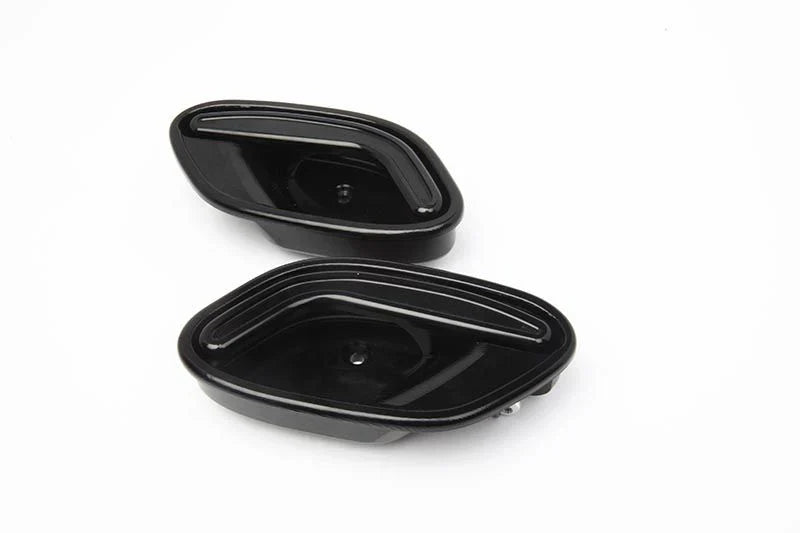
Here is where the difference gets physical. When you do keep a piece of hardware in view, like a door release or interior trim, the quality of that piece sets the tone for the entire build. There is a real gap between cast pot-metal parts and machined billet aluminum, and you feel it before you even notice it with your eyes. Billet hardware is cut from solid aluminum, so the surfaces are crisp, the fit is tight, and the finish holds up. Cast parts feel soft and approximate. Billet feels engineered.
This is the heart of Fesler fabrication. We design and build CNC-machined billet pieces and hand-laid components in Phoenix because the hardware is where a build either feels custom or feels like a parts catalog. The clean cabin those pieces live in, the door panels, the consoles, the dash, is the canvas, and the billet is the jewelry that tells you the whole thing was built on purpose. You can see the full range across our interior collection.
Built for builders, not bolt-on shoppers
One honest note about all of this. Fesler parts are engineered for builders, not designed as plug-and-play consumer accessories. Deleting clutter the right way takes real work, proper fitment, and a build planned in the correct order. That is by design. The reason the result looks clean is that the parts were made to a builder's standard rather than a lowest-common-denominator one. If you are new to building, or new to us, start with our builder's guide to Fesler glass, interiors, and hardware so you know exactly what to expect before you order.
It all has to agree
The reason a clean build looks like a single idea instead of a pile of parts is that every deletion was planned to work with every other one. The flush glass, the deleted vent window, the hidden parking brake, the billet hardware, and the interior all have to be planned together. Decide them piece by piece, after the fact, and you get a car that is improved but busy. Plan them as one system and you get the result you actually wanted: a car the eye reads as calm, finished, and intentional, with nothing left over to argue with. The materials and the sequence behind that kind of cabin are exactly what we cover in why interior material matters.
We are never done deleting clutter
That is the whole project, and it does not really end. There is always one more seam, one more lever, one more piece of trim that can be cleaned up without losing anything the car needs. The C10 one-piece conversion on the bench is the current chapter. There will be a next one. The goal never changes: a classic that keeps everything that makes it beautiful and quietly deletes everything that makes it look old.
Build something quiet. It is the loudest statement a classic can make.
Build a classic that looks calm
Flush glass, billet hardware, and clean interiors, engineered and hand-built in Phoenix. Start deleting the clutter.
Shop flush-mount glass Shop Fesler interior C10 one-piece pre-orderRelated reading: C10 vent window delete explained · Electronic parking brake conversions · Before you order. The C10 one-piece door glass conversion is in development. Pre-order and availability details are on the product page.



Leave a comment
This site is protected by hCaptcha and the hCaptcha Privacy Policy and Terms of Service apply.