
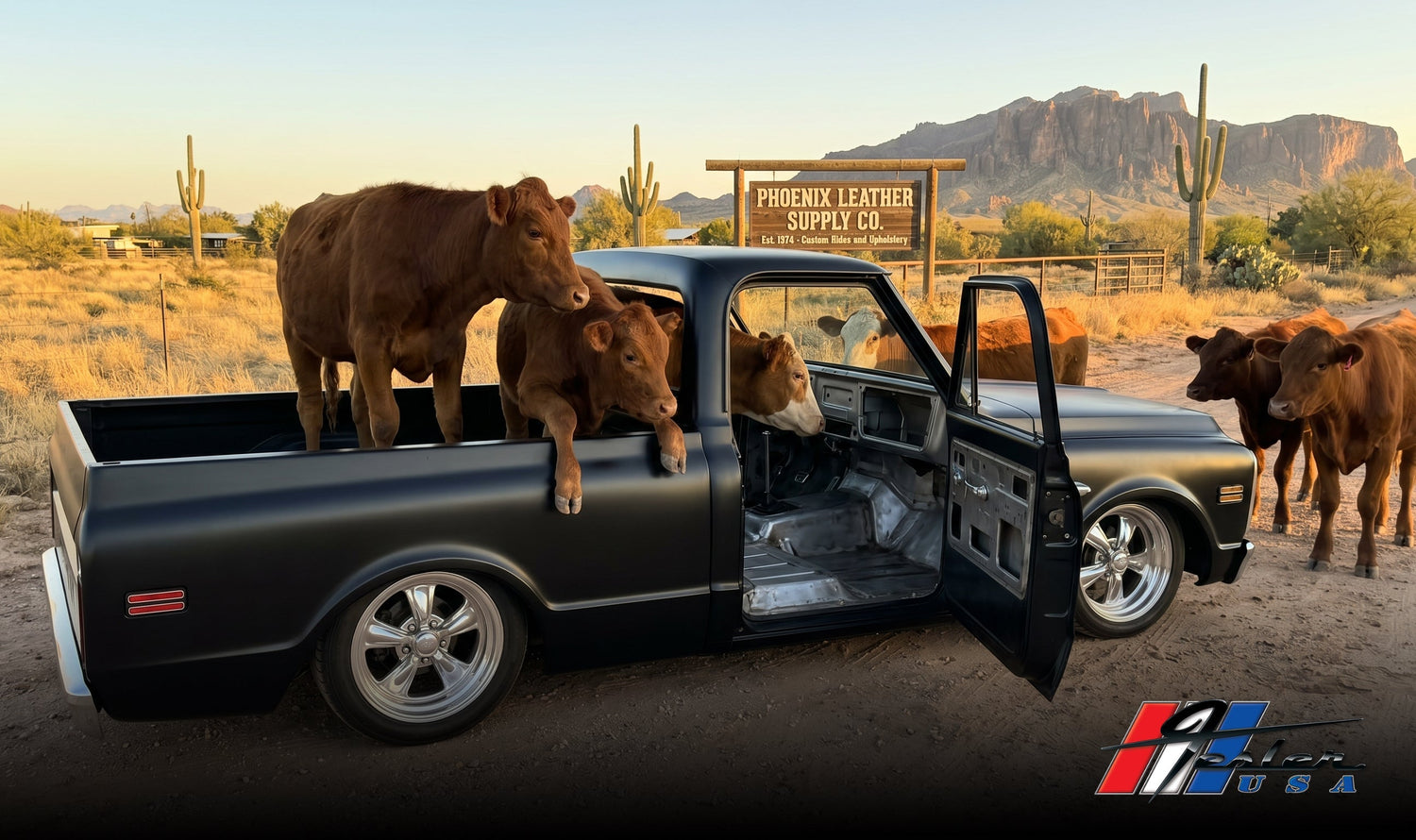
You can spend $80,000 on a build. You can run the perfect stance, the right wheels, the cleanest paint. But the second someone opens the door and sees cracked vinyl, faded carpet, and a bench seat from 1971, the whole thing falls apart.
The interior is where you spend 100% of your time in the car. Paint gets compliments from ten feet away. The interior gets judged the second someone sits down.
Leather is the single biggest factor in whether a classic car interior feels finished or feels like a project. And choosing the wrong leather, the wrong grade, the wrong finish, or the wrong care routine can cost you thousands and years of frustration.
This guide covers everything. Whether you're building a Camaro, C10, Chevelle, Mustang, Nova, Squarebody, Charger, Firebird, Bronco, or any other classic, this is the leather resource you'll come back to throughout your build.
Leather Grades Explained: The Hierarchy
Not all leather is the same. The word "leather" on a product listing tells you almost nothing about what you're actually getting. Here's the real breakdown, from best to worst.
Full Grain Leather
Full grain is the top of the food chain. The natural surface of the hide is completely intact. No sanding, no buffing, no artificial grain stamped on top. You're looking at the actual skin of the animal, with all its natural texture, character, and strength.
Full grain develops a patina over time, which means it gets better looking the more you use it. The natural pores remain open, so it breathes better than any other grade. It's the strongest leather you can buy because the outer fiber structure hasn't been compromised.
The tradeoff: full grain is the most expensive, it shows marks and wear more readily, and it requires more careful selection because each hide has natural variations. Best for show builds, weekend cruisers, and interiors where the leather itself is the statement.
Top Grain Leather
Top grain is the sweet spot for most classic car builds. It comes from the same part of the hide as full grain, but the surface has been lightly sanded to remove natural imperfections, then finished with a protective coating for consistency.
The result is a cleaner, more uniform look that's still genuine, high-quality leather. It's easier to work with for upholsterers, easier to match across multiple panels (critical when you're wrapping door panels, a dash, a console, and seats from the same batch), and significantly more forgiving in daily use.
Top grain is the most common grade in quality aftermarket classic car interiors. When a shop says "leather interior" without specifying the grade, they're usually talking about top grain.
Corrected Grain Leather
Corrected grain starts the same way as top grain, but the surface is sanded more aggressively to remove imperfections, then stamped with an artificial grain pattern and coated with a pigmented finish. The result is a very uniform, very consistent look.
It's real leather. It's more affordable than full grain or top grain. And for daily drivers where you care more about durability and stain resistance than natural character, corrected grain is a perfectly legitimate choice. Just know what you're getting.
Nappa Leather
Nappa is not a grade. It's a finish. The term describes leather that has been processed to be exceptionally soft and smooth, with a fine, consistent grain. Nappa can be full grain or corrected grain underneath.
Luxury automakers like Porsche, BMW, and Mercedes use the term "Nappa" to describe their premium leather interiors. In the classic car world, Nappa refers to any soft, smooth, high-quality automotive leather with that refined hand feel.
The term has been used loosely in marketing for decades, so always ask what's underneath the "Nappa" label. A full grain Nappa is a premium product. A corrected grain Nappa is still good leather, but it's not the same thing.
Bonded Leather
Avoid it. Bonded leather is the hot dog of leather. Manufacturers take shredded leather scraps and dust, mix them with vinyl and polyurethane adhesive, spread the mixture on a fiber backing, and stamp it with a leather-look pattern. Some bonded leather contains as little as 20% actual leather fibers.
It peels. It cracks. It doesn't age gracefully. It has no place in a classic car interior.
"Genuine Leather"
This is a marketing term, not a quality indicator. "Genuine leather" can mean anything from excellent top grain to the lowest usable split hide with a painted surface. When you see "genuine leather" on a product listing without a specific grade called out, be cautious. Ask for the actual grade, the finish type, and the thickness. A reputable supplier will tell you exactly what you're getting.
Finishes That Actually Matter
The grade tells you what part of the hide you're working with. The finish determines how the leather looks, feels, performs, and ages in your car. This is where most builders get confused, because two leathers can look identical on a small sample swatch and perform completely differently on a door panel that bakes in the Arizona sun for five years.
Aniline
Aniline is a fully transparent dye with no protective topcoat. The natural surface of the leather is completely visible. You can see every pore, every grain line, every subtle variation in color. It's the most natural, most luxurious finish available.
The tradeoff: aniline leather stains easily, fades in UV exposure, and shows every mark. It's beautiful in a climate-controlled showroom. It's a liability in a car that sits outside in Phoenix. Best reserved for garage-kept show builds that see limited seat time.
Semi-Aniline
Semi-aniline is the luxury sweet spot. It uses transparent dyes like aniline, but adds a thin protective topcoat that provides some stain resistance and UV protection without completely masking the natural grain. You still get the rich, natural look and soft hand feel, but with real-world durability that makes daily driving practical.
Most premium OEM interiors from brands like BMW, Lexus, and Porsche use semi-aniline finishes on their highest trim levels. For a classic car that you actually want to drive, semi-aniline is the best balance of beauty and performance.
Pigmented
Pigmented leather has an opaque coating applied to the surface. The finish covers the natural grain with a consistent, uniform color layer. It's the most durable finish available, with the highest UV resistance, the best stain protection, and the easiest cleaning.
Pigmented finishes are the smart choice for daily drivers, hot climates, trucks, and any build where the interior is going to see real use. The leather underneath is still real. The coating just gives it armor.
How to Tell the Difference
The water drop test: place a small drop of water on the leather surface. If it absorbs quickly and darkens the leather, it's aniline. If it sits on top for a few seconds before slowly absorbing, it's semi-aniline. If it beads up and doesn't absorb at all, it's pigmented.
The fingernail test: press your fingernail lightly into the surface. If the leather changes color temporarily where you pressed (called "pull-up"), it's aniline or semi-aniline. If the color doesn't change, it's pigmented.
Leather vs. Vinyl vs. Alcantara vs. Suede
Leather isn't always the right answer. Here's an honest comparison.
Vinyl
Modern marine-grade vinyl has come a long way. It's waterproof, UV-resistant, extremely durable, and available in textures that genuinely look like leather at a fraction of the cost. For a budget build, a utility truck, a work vehicle, or any seats that are going to get rained on, vinyl is a perfectly valid choice. Don't let anyone shame you for it.
Where vinyl falls short: it doesn't breathe. In a hot climate, vinyl seats get sticky and uncomfortable in direct sun. It doesn't develop a patina or improve with age. And up close, it never quite feels like the real thing.
Alcantara and Suede
Alcantara (a branded synthetic microfiber) and genuine suede add texture and contrast to an interior. They work well on headliners, seat bolsters, steering wheel wraps, and door panel inserts where you want grip and visual interest without the full leather look.
They're not ideal for primary seating surfaces because they stain more easily and wear differently than smooth leather. Best used as accents and contrast materials in a leather-dominant interior.
When Leather Is the Only Answer
If you're building a show car, a pro-touring build, or anything where the interior is supposed to make a statement, leather is the material. Nothing else ages the same way, feels the same way, or communicates the same level of craftsmanship. A well-done leather interior is the difference between "nice truck" and "who built that?"

Choosing Leather for Your Climate
If you're building a classic car in Arizona, Texas, Florida, Nevada, or anywhere in the Sun Belt, leather selection is a different conversation than it is for someone in Michigan or Oregon.
UV exposure is the number one killer of automotive leather. The sun doesn't just fade the color. It breaks down the chemical structure of the dye and the finish, causing cracking, peeling, and hardening over time. Aniline finishes are the most vulnerable. Pigmented finishes are the most resistant.
Heat is the second factor. Dark-colored leather absorbs significantly more heat than light-colored leather. A black leather seat in a Phoenix parking lot in July can reach surface temperatures above 150 degrees Fahrenheit. That kind of heat accelerates the breakdown of dyes, adhesives, and thread.
Hot climate recommendations:
- Pigmented or semi-aniline finishes over aniline
- Lighter colors where practical (tan, saddle, cream, gray)
- Quality window tint on every piece of glass
- Sunshade on the windshield when parked
- Garage storage whenever possible
- Quarterly conditioning with a UV-protective leather conditioner
Fesler builds interiors in Phoenix, Arizona. Every material recommendation we make is informed by what we see perform in real desert heat, not what looks good in a climate-controlled sample room.
Colors, Stitching, and Design Decisions
This is where the interior becomes yours. The leather grade and finish determine performance. The color, stitching, and pattern determine personality.
Classic Color Combinations by Platform
Some combinations just work. Here are proven pairings that builders come back to over and over:
- Camaro: Black on black with red contrast stitching. Tan on black for a vintage feel. All red for the bold.
- C10: Tan on white or cream truck. Saddle brown on a patina build. Black on satin black for the pro-touring crowd.
- Chevelle: Dark red leather on a black Chevelle. Black with white stitching for clean contrast. Two-tone gray for a modern feel.
- Mustang: Saddle on Wimbledon White. Black on Highland Green. Parchment on dark blue.
- Squarebody: Tan on anything. Black on black for the slammed builds. Gray with orange stitching for modern utility.
- Charger: Black on black, full stop. Or saddle tan on a dark green or black body for that 1968 vibe.
Stitching Matters More Than You Think
Contrast stitching (a thread color that differs from the leather) adds visual depth and a custom look. Tone-on-tone stitching (matching thread) gives a cleaner, more subtle finish. Neither is wrong. It depends on whether you want the stitching to be a detail people notice or a detail that disappears into the design.
Thread type matters too. Bonded nylon thread is the standard for automotive upholstery. It resists UV, moisture, and abrasion better than polyester. If your upholsterer is using regular sewing thread, ask questions.
Patterns
Diamond quilting is the most popular pattern in the custom classic car world right now. It adds dimension and texture to flat panels, and it photographs well (which matters at shows and on Instagram). French seams create a cleaner, more OEM-inspired look. Horizontal pleats are the classic hot rod approach. Vertical pleats lean more European.
Perforated leather inserts look incredible on seat centers and door panel inserts, but they need proper backing material underneath to prevent dust and debris from working through the perforations. Talk to your upholsterer about backing strategy before committing to perforated panels.
How to Communicate with Your Upholsterer
Send photos, not adjectives. "I want a modern, clean, aggressive look" means something different to every upholsterer. A photo of an interior you like gives them a concrete reference point. Save 10 to 15 photos of interiors that match your vision and share them before any material is ordered.

How Much Does a Custom Leather Interior Cost?
Real numbers. These are approximate ranges based on what we see in the industry. Your actual cost depends on the material grade, complexity of design, number of panels, shop labor rate, and your location.
- Door panels only (wrapped): $800 to $2,000 depending on material and complexity
- Seats only (recovered or custom): $1,500 to $4,000 depending on style and material
- Full interior (doors, dash, console, kicks, headliner, seats): $3,000 to $10,000+ depending on scope
- Show-level full interior with premium leather and complex stitching: $10,000 to $20,000+
One way to reduce cost: order Fesler panels pre-wrapped. Fesler wraps door panels, dashes, consoles, and interior kits in-house at our Phoenix shop. When you order pre-wrapped, the panels arrive ready to install. You skip the upholstery shop step entirely, and the price is often lower than buying raw panels plus paying a local shop separately.
What Your Upholsterer Won't Tell You
This section exists because we see the same mistakes destroy builds every year.
Furniture leather is not automotive leather.
Furniture-grade leather is not treated with UV stabilizers. It's the wrong thickness for automotive use (usually too thick or too thin). It doesn't have the dimensional stability needed for seats and panels that flex every time someone sits down. Furniture leather in a car will crack, fade, and fail faster than automotive-grade material. Always specify automotive-grade leather with UV inhibitors and abrasion resistance.
Not all "automotive grade" leather is the same.
A $6 per square foot hide from an overseas supplier can look identical to a $15 per square foot hide from a reputable tannery on a 4x4 inch sample swatch. The difference shows up 18 months later when the cheap hide cracks, fades, or delaminates. Ask your supplier for the tannery source, the finish type, and the UV and abrasion test results.
The panel structure matters more than the leather on top of it.
You can put $20 per square foot leather on a flimsy, poorly shaped panel and it will look terrible. Wrinkles, sags, uneven tension, and visible seams in the wrong places. The fiberglass panel underneath is the foundation. Fesler panels are CAD-modeled, hand-laid from extra-strength fiberglass, and finished in smooth gel-coat specifically because they need to hold a leather wrap cleanly. Smooth faces, strong edges, and consistent geometry give the upholsterer a surface they can actually work with.
Always get a physical swatch.
Digital photos on a screen do not accurately represent leather color, texture, or sheen. A sample card in your hand, held against the actual paint and trim of your car, is the only way to make a confident material decision. Any reputable supplier will send samples.

Leather Care and Maintenance
Good leather lasts decades with minimal care. Neglected leather cracks in years. Here's the routine that works.
Cleaning
Use a pH-balanced leather cleaner and a soft microfiber cloth. Wipe surfaces gently. Don't scrub. Don't use household cleaners, Windex, baby wipes, or anything with alcohol or ammonia. These strip the finish and dry the leather.
Conditioning
Condition semi-aniline and full grain leather quarterly. Pigmented leather can go every six months. Use a conditioner designed specifically for automotive leather. Apply a thin coat, let it absorb for 10 to 15 minutes, then buff off the excess with a clean cloth.
What NOT to Use
Armor All and silicone-based dressings leave a greasy film that attracts dust, accelerates drying, and can cause long-term damage to the leather finish. Household cleaners (409, Lysol, bleach) will strip dye and destroy protective coatings. Saddle soap is too harsh for automotive interiors. Coconut oil and olive oil are not leather conditioners no matter what the internet says.
UV Protection
Tint every piece of glass. Use a windshield sunshade when parked. Garage the car whenever possible. UV damage is cumulative and irreversible. Prevention is cheaper than replacement.
Spills
Blot immediately with a clean, dry cloth. Never rub. Rubbing pushes the liquid into the leather grain and can spread stains. For stubborn stains, use a pH-balanced cleaner and blot again. If the stain persists, consult a professional detailer before trying anything aggressive.
The "Less Is More" Rule
Over-conditioning is almost as bad as neglecting leather. Too much conditioner saturates the hide, softens it beyond its designed flexibility, and can cause premature sagging. A thin coat every three to six months is all you need. If the leather still feels supple, it doesn't need conditioning yet.
Fesler's Approach to Leather Interiors
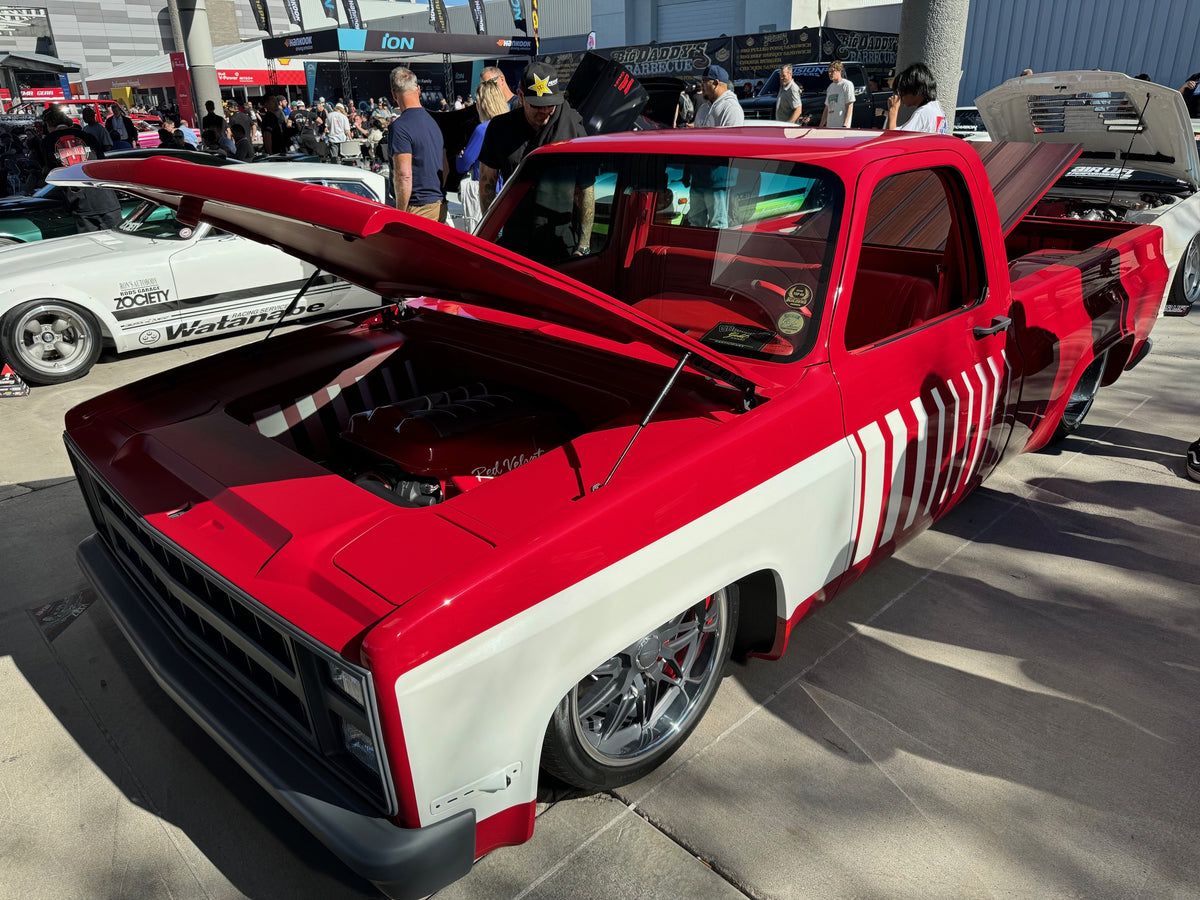
Fesler builds fiberglass interior components and wraps them in-house at our shop in Phoenix, Arizona. Door panels, dashes, consoles, kick panels, A-pillars, headliners, package trays, and custom bench seats. Every piece is CAD-modeled, hand-laid from extra-strength fiberglass, and finished in smooth gel-coat.
You have two paths with Fesler panels:
Raw gel-coat: Panels ship to you (or your upholsterer) with a smooth, consistent surface ready for wrapping in leather, vinyl, suede, or Alcantara. Your upholsterer handles material selection, stitching, and install.
Pre-wrapped: Panels arrive wrapped and finished, ready to install straight out of the box. You choose the material, color, and stitch pattern. Fesler handles the rest. This skips the upholstery shop step entirely.
Fesler offers custom upholstery in any color combination, any material, any stitch pattern. Want black leather with red diamond quilting? Done. Tan leather with French seams and tone-on-tone stitching? Done. Two-tone saddle and cream with contrast piping? Done. Send us photos of what you're after and we'll help you get there.
Platforms We Cover
- 1967-69 Camaro (1st Gen)
- 1970-74 Camaro (2nd Gen)
- 1975-81 Camaro/Firebird
- 1967-72 C10
- 1973-86 Squarebody
- 1968-72 Chevelle
- 1966-67 Nova
- 1968-72 Nova
- 1964.5-70 Mustang
- 1966-76 Bronco
- 1988-2000 OBS Trucks
Full interior bundles save 10% when you order a complete kit. Available for Camaro, C10, Chevelle, Squarebody, and Nova.
For more on how Fesler specifically approaches leather selection and custom wrapping, read our in-depth guide: Automotive Leather for Classic Cars: How It's Made, How to Choose, and What Matters.
Frequently Asked Questions
What type of leather is best for a classic car interior?
For most classic car builds, top grain leather with a semi-aniline or pigmented finish is the best balance of look, feel, and durability. Full grain is the premium choice for show builds and garage-kept vehicles. Corrected grain works well for daily drivers on a budget.
Can I use furniture leather in my car?
No. Furniture leather is not treated with UV stabilizers or abrasion-resistant finishes. It's the wrong thickness for automotive panels and seats, and it will crack and fade significantly faster than automotive-grade leather when exposed to sunlight and temperature swings.
What is Nappa leather?
Nappa describes a soft, smooth leather finish with a fine, consistent grain. It's a processing term, not a quality grade. Nappa can be made from full grain or corrected grain hides. Always ask what's underneath the Nappa label before making a purchasing decision.
Is Nappa leather worth the extra cost?
If you value a soft hand feel and a refined grain texture, yes. Full grain Nappa is a premium product that ages beautifully. Corrected grain Nappa is more affordable and still provides the smooth texture and consistent appearance. Both are legitimate choices depending on your budget and build goals.
What is the best leather for Arizona heat?
Pigmented or semi-aniline finishes with UV-resistant topcoats perform best in hot, sunny climates. Lighter colors absorb less heat. Proper window tint, sunshade use, and garage storage extend leather life significantly. Aniline finishes are not recommended for vehicles exposed to regular Arizona sun.
How long does automotive leather last?
With proper care, automotive-grade leather can last 10 to 20 years or more. Factors that shorten lifespan include UV exposure, heat, neglected conditioning, and using household cleaners instead of pH-balanced leather products.
What is the difference between leather and marine vinyl?
Leather is natural animal hide that breathes, develops a patina, and improves with age. Marine vinyl is a synthetic material that's waterproof, UV-resistant, and less expensive. Vinyl is practical for utility and budget builds. Leather is the choice for builds where feel, character, and craftsmanship matter.
How much does a custom leather interior cost for a classic car?
Costs range widely. Door panels alone run $800 to $2,000. Full seat recovering is $1,500 to $4,000. A complete interior (doors, dash, console, kicks, headliner, and seats) typically runs $3,000 to $10,000 or more depending on material grade and design complexity.
What is the difference between aniline and pigmented leather?
Aniline leather uses transparent dye with no topcoat, showing the natural grain but offering minimal stain and UV protection. Pigmented leather has an opaque coating that provides maximum durability, UV resistance, and stain protection. Semi-aniline sits between the two, offering natural look with moderate protection.
Can Fesler match my paint color on the interior?
Yes. Fesler offers custom upholstery in any color combination. Send us photos or a paint code and we'll help match the interior to your build. Contact us at 480-748-2000 or through the contact page.
Should I get my panels pre-wrapped or wrap them locally?
Pre-wrapped panels from Fesler arrive ready to install, saving you the time and cost of a separate upholstery shop visit. Local wrapping makes sense if you have a trusted upholsterer with a specific vision in mind, or if you want to supply your own material. Both paths work. Pre-wrapped is typically faster and often less expensive total.
What thread should my upholsterer use?
Bonded nylon thread is the industry standard for automotive upholstery. It resists UV, moisture, and abrasion significantly better than polyester or cotton thread. If your upholsterer is using regular sewing thread, that's a red flag.
How do I care for leather seats in a classic car?
Clean with a pH-balanced leather cleaner and a soft cloth. Condition every three to six months with an automotive leather conditioner. Avoid silicone-based products, household cleaners, and over-conditioning. Tint your windows, use a sunshade, and garage the car whenever possible.
Does Fesler sell leather by the yard?
Fesler does not sell raw leather by the yard. We manufacture fiberglass interior panels and offer in-house wrapping in your choice of leather, vinyl, or suede. Panels can also be ordered in raw gel-coat for your upholsterer to wrap locally.
Get Started
Whether you're choosing leather for the first time or upgrading from a previous interior, the right material on the right foundation is what separates a good build from a great one.
- Shop Interior Bundles (Save 10%)
- Custom Bench Seats
- Read: Automotive Leather for Classic Cars
- Contact Fesler for custom upholstery quotes, color matching, and build planning
Call or text us at 480-748-2000, Monday through Thursday, 8am to 5pm. We'll help you pick the right material, plan the right sequence, and get the interior finished.


Leave a comment
This site is protected by hCaptcha and the hCaptcha Privacy Policy and Terms of Service apply.