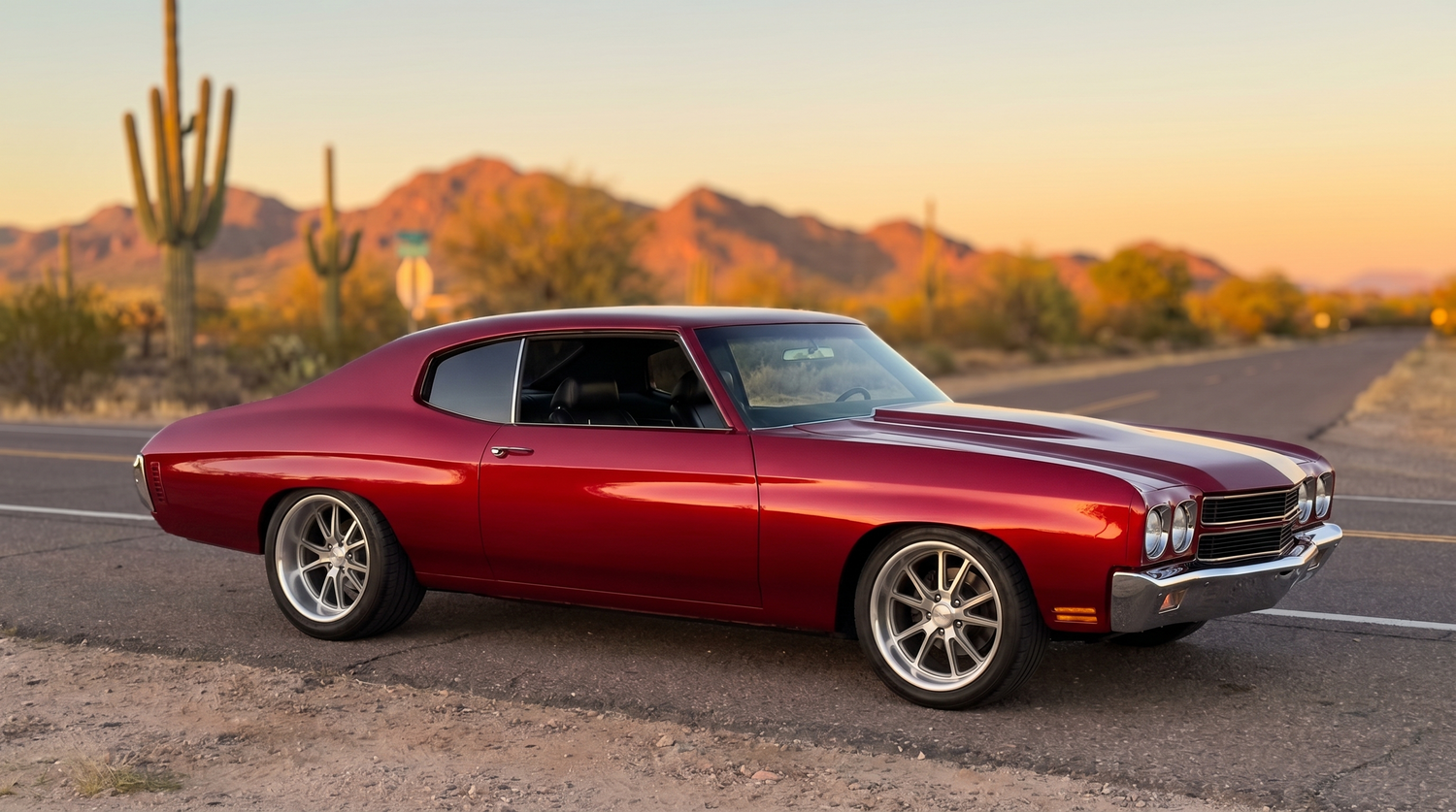
The 1968 to 1972 Chevelle might be the best-proportioned body GM ever drew. Long hood, low roof, hips over the rear wheels, and a stance that looks fast sitting still. It is also a body that came from the factory wearing a lot of jewelry. Stainless trim around the windshield, more around the backlight, chrome strips, gaskets, and clips holding it all to the steel.
Pull all of that off and bring the glass out flush with the body, and the Chevelle stops looking restored and starts looking designed. That is the conversion this guide covers: what flush-mount glass actually changes on an A-body, what the body styles and years mean for your glass, where to get the kit, and what to plan around it.
The quick answer
Flush-mount glass replaces the gasket-set, trim-wrapped factory glass on your Chevelle with DOT-certified glass bonded directly to the body, sitting level with the sheet metal the way glass does on a modern car. The trim comes off, the holes get filled, and the body reads as one continuous surface. Best of all, this is an off-the-shelf order: the 1968 to 72 Chevelle flush-mount glass kit and the 1966 to 67 Chevelle flush-mount glass kit are both in the store right now, DOT certified, trimless, front and rear, American made. Everything else you should know is below.
Why the A-body wears flush glass so well
Some cars need brightwork to break up slab sides. The Chevelle is not one of them. The 68 to 72 body already has its drama built into the metal: the kicked-up quarter line, the tucked bumpers on later cars, the wide rear shoulders. Factory trim does not add to those lines. It interrupts them, the same way a picture frame interrupts a mural.
Flush glass removes the interruptions. The windshield meets paint. The backlight meets paint. Light travels across the roof and down the pillars without snagging on a single chrome edge, and the car picks up the smooth, intentional quality you see on concept cars and seven-figure builds. There is a reason the highest-end A-body builds in the country have been going this direction for years. Once you see a Chevelle with flush glass next to one with stock trim, the stock car looks unfinished.
We did not come to this conclusion theoretically. Our own shop car, the MALIBLU, is a Chevelle built to exactly this philosophy, and the glass treatment is one of the first things people comment on in person. The look works because it is honest to what the body wanted to be.
Know your body style before you order glass
The 1968 to 1972 run is one generation, but it is not one car, and glass is always application specific. Here is the map.
Hardtop coupe. The volume body and the one most builds start from. Windshield up front, fixed backlight in the rear, no B pillar interrupting the side view. This is the standard kit application.
Convertible. Windshield only, since the rear window lives in the top. A flush conversion on a convertible is a front-glass conversation.
Sedan and wagon. Different rooflines, different rear glass, and pillars the hardtop does not have. Doable, but the spec conversation matters even more.
El Camino. Shares its front-end architecture with the Chevelle and adds a small fixed rear window behind the cab. A favorite around here, and a body the flush treatment absolutely transforms.
On top of body style, remember the generation has two visual chapters: the 1968 to 1969 cars and the restyled 1970 to 1972 cars. Glass is not a guess-and-fit part. Hardtops can order straight from the kit page with their year confirmed, and if your car is anything other than a hardtop, call us at 480-748-2000 first so we confirm the right glass for the body before anything ships.
What a flush conversion involves on an A-body
The process follows the same playbook as the rest of our flush-mount DOT glass program, the one running on C10s, Camaros, Squarebodies, and more across the country.
The stainless trim and clips come off and the clip holes get welded and smoothed during bodywork. The old gasket-set glass comes out. New DOT-certified glass, produced for the application through our Pilkington partnership, bonds to the prepared opening with automotive urethane, the same sealing method every modern vehicle uses. The glass sits level with the body, sealed around its full perimeter, with no rubber to shrink and no trim to catch wind. We covered the certification system in what DOT certified glass actually means and the design trade-offs in flush-mount vs trim ring glass, so if you are still deciding between keeping the stainless and going smooth, start there.
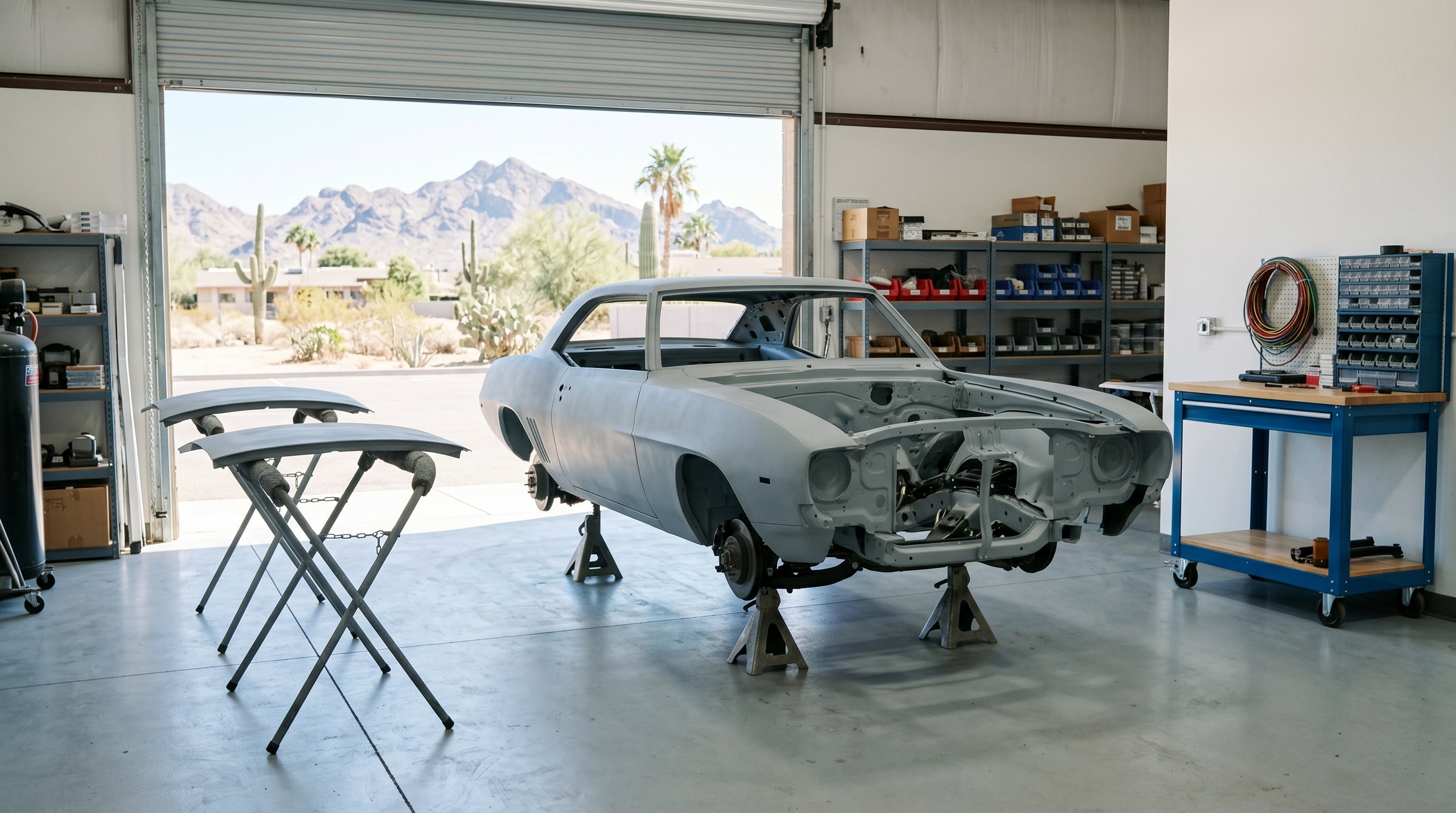
Plan the conversion as part of bodywork and paint, not after it. The trim holes get filled while the body is being worked anyway, and the glass goes in after paint, before final interior assembly. If you are sequencing a whole build, our build order guide walks the full timeline so you never pay to do a job twice.
Stock glass vs flush-mount on a Chevelle
| Factory setup | Flush-mount conversion | |
|---|---|---|
| Trim | Stainless and clips around windshield and backlight | Deleted, holes filled, paint meets glass |
| Seal | Rubber gasket, aging since the Nixon administration | Bonded urethane perimeter, modern car standard |
| Glass | Original or reproduction, gasket-set | DOT-certified, produced with Pilkington, application specific |
| At speed | Trim edges and gasket lips in the airstream | One smooth surface, quieter cabin |
| The read | Nicely restored | Designed, finished, built on purpose |
Your kit is on the shelf
For years, Chevelle flush glass meant a phone call and a wait. Not anymore. The 1968 to 72 Chevelle flush-mount glass kit covers the third-generation cars with DOT-certified, trimless front and rear glass, American made, and the 1966 to 67 Chevelle flush-mount glass kit does the same for the second generation. Pick your kit, schedule your bodywork, done.
Two notes before you order. First, the kits cover the standard hardtop applications, so sedan, wagon, El Camino, and convertible builds should call 480-748-2000 and we will confirm the right glass for the body before anything ships. Second, if you love your stainless and just need fresh factory-style glass, we also stock a 1968 to 72 Chevelle OEM-style windshield, which keeps the original look while solving the fifty-year-old-glass problem.
If there is more than one classic in your garage, the flush-mount DOT glass collection carries the whole kit lineup, and our roundup of the best glass kits for classic builds shows where the Chevelle sits in the family.
While the glass is out: the rest of the Chevelle catalog
A glass-out, paint-stage Chevelle is the perfect moment to plan the interior, and the 68 to 72 cars happen to be one of the deepest platforms in our hand-laid fiberglass line. All of it is built in our Phoenix shop and designed to work together.
Start at the doors with our 1968 to 72 Chevelle door panels and matching kick panels, then carry the lines up the A-pillars, which matter twice as much on a flush-glass car since the pillar meets paint instead of trim. The 1970 to 72 dash insert cleans up the gauge story, and down the middle you can run either the fiberglass console or the steel center console depending on how your build leans. In back, the package tray and custom steel rear seat finish the cabin to the same standard as the glass.
And for the 1966 and 1967 cars: your glass is already handled by the 1966 to 67 kit, and the parts line for the second generation is growing right alongside it, starting with new 66 to 67 trunk panels fresh out of molds in the shop. Keep an eye on the 1966 to 67 Chevelle collection, because that family is getting more love this year.
Questions Chevelle owners ask us
Does Fesler make flush-mount glass for the Chevelle?
Yes, and it is on the shelf. The 1968 to 72 kit and the 1966 to 67 kit are both in the store, DOT certified, trimless, front and rear, American made. Hardtops order straight from the product page. Other body styles, call 480-748-2000 to confirm spec first.
Which years and bodies are covered?
Off-the-shelf kits cover 1968 to 1972 and 1966 to 1967 cars in the standard hardtop application. Sedans, wagons, El Caminos, and convertibles should call so we confirm the right glass for the body before shipping.
Is the glass DOT certified?
Yes. Everything in our glass program is DOT-approved safety glass with the certifications etched in, produced through our Pilkington partnership. No exceptions.
What about my 1966 or 1967 Chevelle?
Order the 1966 to 67 Chevelle flush-mount glass kit straight from the store. The second-generation parts line is growing fast too, with new trunk panels leading the way.
Can I keep my stainless trim and still upgrade the glass?
Yes, two ways. The trim ring route keeps brightwork with upgraded glass, covered in our flush-mount vs trim ring guide, and our OEM-style Chevelle windshield gives you fresh factory-correct glass with the original look intact.
Is a convertible different?
Yes, simpler. A convertible conversion is windshield-focused since the rear window lives in the top. Call before ordering so we spec the front glass correctly for your car.
When in the build should glass happen?
Trim hole filling happens during bodywork, and the glass bonds in after paint, before final interior assembly. Plan it into the body and paint phase, not as an afterthought.
Get your kit
The 68 to 72 Chevelle earned its place at the center of muscle car culture, and flush glass is the single change that moves one from nicely restored to genuinely finished. Grab the 1968 to 72 kit or the 1966 to 67 kit, browse the full 1968 to 72 Chevelle catalog while you are at it, and if your body style is anything other than a hardtop, call 480-748-2000 first and we will spec it together.

Leave a comment
This site is protected by hCaptcha and the hCaptcha Privacy Policy and Terms of Service apply.