
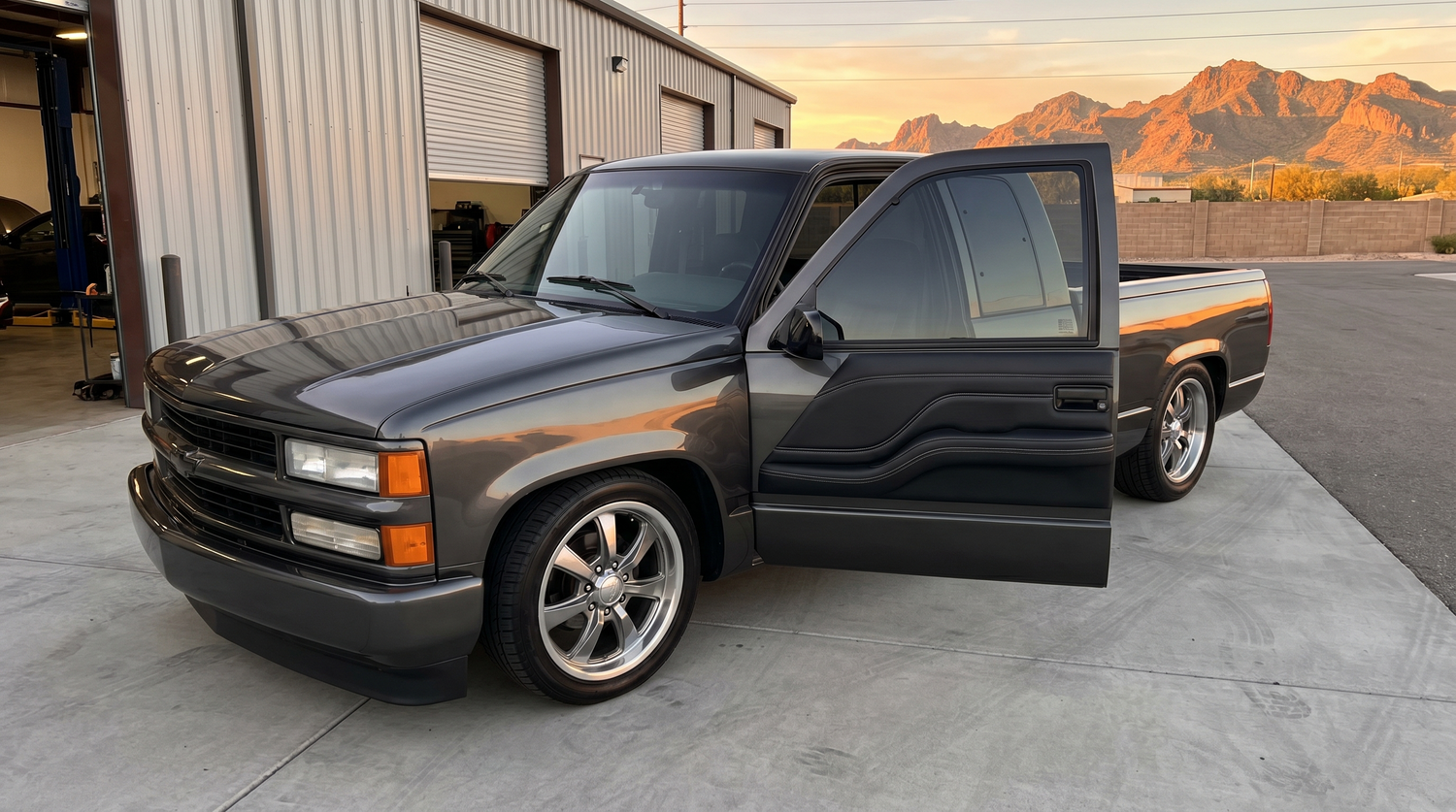
Two door panels can look identical in product photos and live completely different lives in your car. One holds its shape through a decade of Arizona summers, takes leather like it was born for it, and feels like part of the body when you close the door. The other starts relaxing back toward the flat sheet it came from the first July it spends in a parking lot.
The difference is not the design. It is the material and the way it was made. This is the honest comparison between hand-laid fiberglass and vacuum-formed ABS plastic, the two ways most aftermarket interior panels get built, including the parts where each one wins.
The quick answer
Hand-laid fiberglass is built up in layers of glass fiber and resin inside a mold, which makes a rigid, heat-stable, repairable panel with thickness exactly where the builder puts it. Vacuum-formed ABS is a heated plastic sheet pulled over a form, which makes a fast, cheap, lightweight panel that is thinnest at its corners and never stops remembering it used to be flat. For a build that lives in real heat, gets upholstered, and is meant to last decades, fiberglass is the better bones. For a budget refresh or a mild climate, ABS has a legitimate place. The rest of this post is the reasoning.
What each material actually is
Hand-laid fiberglass starts with a mold, usually pulled from a real body so the panel inherits the true shape of the car it fits. Layers of glass fiber mat get wetted with resin and laid into that mold by hand, one on top of the next, building thickness. More layers go where the panel needs strength: mounting points, speaker areas, long unsupported spans. The part cures as one rigid piece, then gets trimmed and finished. The process is slow and it is labor, which is why the word hand-laid means something.
Vacuum-formed ABS starts with a flat sheet of thermoplastic. The sheet gets heated until it softens, then vacuum pulls it down over a form until it takes the shape. It cools, it gets trimmed, and it is done in minutes. That speed is the entire business model. It is a perfectly good process for a lot of products. The question is whether a classic car interior in the real world is one of them.
The heat test, also known as Phoenix
We build interiors in a city where a parked car becomes an oven for five months a year, so heat behavior is not a footnote to us. It is the first exam.
Fiberglass is a thermoset. The resin cures through a chemical change that does not reverse, so the panel that comes out of the mold in January is the same shape after its hundredth summer. Heat cycling does not loosen its grip on its geometry.
ABS is a thermoplastic, which means heat is how it was shaped and heat is how it loses that shape. Every hot-cold cycle invites a thin formed panel to relax toward its flat-sheet origins. In practice that shows up as edges curling away from the door, faces that oil-can when you press them, sagging around speaker cutouts, and mounting holes that elongate until the clips pull through. Owners in mild climates may never see it. Owners in Phoenix, Vegas, Texas, and Florida see it on schedule.
Where the thickness goes
Here is a physics detail that explains a lot of cracked panels. When a heated sheet stretches over a deep form, the material thins as it stretches, and it stretches most at the corners and deep draws. So a vacuum-formed panel is thinnest exactly where the shape is most dramatic, which is also exactly where stress concentrates. The sharp sculpted corner that looked great in the product photo is the weakest point on the part.
Hand layup inverts that. The builder decides where material goes, so corners and mounting bosses can carry extra layers instead of fewer. A hand-laid panel is strongest where it needs to be strongest, because a person made that choice on purpose, panel by panel.
Rigidity, or the thunk factor
Close the door on a well-built classic and you want a thunk, not a rattle. Panel rigidity is a bigger part of that than most people expect. A rigid fiberglass panel couples to the door as one structure, which is also why it makes a far better platform for audio. Speakers want a stiff baffle. Mount a driver in a flexing thermoplastic panel and the panel absorbs the music as wobble. Mount it in rigid fiberglass and the energy goes into the air where it belongs. If you are planning sound, that pairs directly with the rest of the acoustic work in our sound deadening guide and the door-build thinking in the OBS speaker and door panel guide.
What your trimmer will tell you
Ask any upholsterer which substrate they want under leather and you will get the same answer. A rigid panel holds foam and hide in tension, so the upholstered shape stays crisp for decades. Fiberglass also takes adhesives well, can be sanded for tooth, and has enough thickness to accept screws and fasteners where the trim work needs them. Thin thermoplastic fights the trimmer: adhesives are pickier, there is nothing to bite into, and any future warp in the substrate telegraphs straight through the leather you paid for. If you are choosing hides and materials right now, our interior materials guide and complete leather guide cover the layer that goes on top. The point here is that the layer underneath decides how long the top layer looks right.
Repairs, mods, and the long game
Builds evolve. Speakers change sizes, switches move, accidents happen. Fiberglass welcomes all of it. You can cut it cleanly, patch it with glass and resin so the repair becomes part of the structure, reshape an area, and refinish it invisibly. A cracked ABS panel is a different story: plastic repairs on thin formed parts are temporary at best, and the usual fix is buying the panel again. Over a twenty-year ownership, repairability quietly becomes one of the biggest differences between the two materials.
Where ABS is honestly fine
Fair is fair. Vacuum-formed panels make sense in a few real situations. A strict-budget refresh where something clean today beats something permanent next year. A garage-kept car in a mild climate that never bakes. Simple, shallow shapes where the thinning problem barely applies. And race interiors where panels are temporary equipment, not furniture. If that is your situation, an ABS panel will serve you and we will not pretend otherwise. Our case is simply that a keeper build, in real weather, wearing real upholstery, deserves bones that match the ambition.
Side by side
| Hand-laid fiberglass | Vacuum-formed ABS | |
|---|---|---|
| Heat behavior | Thermoset, holds shape through heat cycles | Thermoplastic, relaxes and warps with cycling |
| Thickness | Placed by the builder, reinforced where stressed | Thinnest at corners and deep draws |
| Rigidity | High, great speaker and trim platform | Flexes, oil-cans on long spans |
| Upholstery | Ideal substrate, sands, glues, accepts fasteners | Workable but picky, warps telegraph through |
| Repairs | Cut, patch, reshape, refinish invisibly | Cracks are usually a replacement |
| Cost and speed | More labor, costs more, built to keep | Fast and cheap, the honest advantage |
How we build ours
Every Fesler interior panel is hand-laid fiberglass, built in our Phoenix shop, from molds developed off real bodies. We reinforce the mounting points, finish the edges, and design every piece to be upholstered or painted to show standard, because that is what the builds wearing our name demand. The line runs deep: first gen Camaro door panels, second gen Camaro door panels, 1967 to 72 C10 door panels, Chevelle door panels, plus kick panels, A-pillars, dashes, consoles like the Chevelle fiberglass console, package trays, and hard headliners like the C10 headliner. If you are mapping a whole cabin, the interior-first upgrade path shows how the pieces sequence, and the Camaro door panel buyer's guide goes deep on one platform.
Questions builders ask about panel materials
Is fiberglass better than ABS for door panels?
For a long-term build in real heat, yes. Fiberglass holds its shape permanently, carries thickness where stress lives, and makes the better upholstery and speaker platform. ABS wins on price and speed, which matters for some projects.
Will fiberglass panels warp in a hot car?
No. Cured fiberglass is a thermoset, so summer heat cycles do not change its shape. That is the core reason we build with it in Phoenix.
Can fiberglass panels be upholstered?
Yes, and trimmers prefer it. The rigid surface holds foam and leather in tension, takes adhesives well, and accepts fasteners, so the finished shape stays crisp for decades.
Can I cut fiberglass panels for custom speakers or switches?
Yes. Fiberglass cuts cleanly and any modification can be reinforced with glass and resin so the change becomes part of the structure. That flexibility is one of its biggest long-term advantages.
Are fiberglass panels heavy?
Heavier than thin ABS, lighter than people assume, and in a classic car or truck the difference is rounding error. You are trading ounces for decades of shape.
When does ABS make sense?
Budget refreshes, mild climates, garage queens, simple shallow shapes, and temporary race interiors. It is a legitimate material with an honest place. It is just not how we build keepers.
Build on better bones
Upholstery gets the compliments, but the substrate decides how long the compliments last. If your interior is meant to outlive trends and survive summers, start with panels that cannot forget their shape. Browse the full Fesler fabrication line, find your platform, or call the shop at 480-748-2000 and tell us what you are building. We lay this glass by hand every day, and we are happy to talk you through exactly what goes into yours.

Leave a comment
This site is protected by hCaptcha and the hCaptcha Privacy Policy and Terms of Service apply.