
Glass & Camaro
First-gen and second-gen fitment, the look it changes, where it falls in the build, and why the right kit goes in without sanding the body to make it fit.
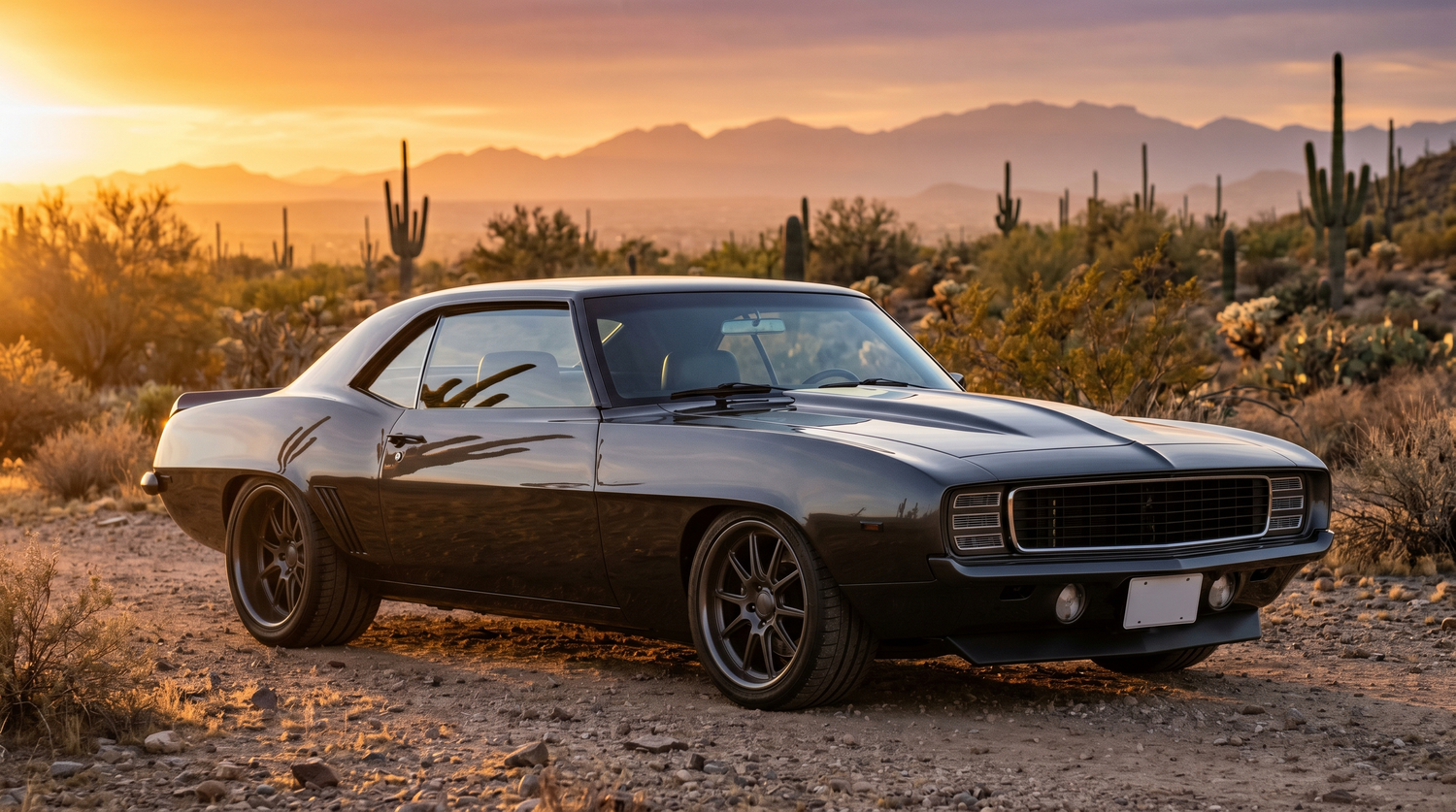
Park two first-gen Camaros side by side. Same color, same wheels, close to the same stance. One of them looks tight and modern, like it could have rolled out of a high-end builder's shop last week. The other looks like a clean, correct restoration. Most people standing in front of them can feel the difference instantly and cannot tell you what it is.
It is the glass. One car has a polished trim ring framing every piece of glass, the same way it left the assembly line. The other has flush-mount glass that sits down into the body with no chrome reveal, the way a modern car does. Once you have seen the flush look on a Camaro, you cannot unsee the trim ring on every other one. This is the complete guide to that upgrade across the entire first and second generation, from the 1967 launch cars through the last 1981 second-gen.
What flush-mount glass actually is
Quick version, because we go deep on the concept elsewhere. Factory classic glass sits on top of the body opening and is held in place with a rubber gasket and a stainless or chrome reveal trim that frames the glass from the outside. Flush-mount glass is bonded so the surface of the glass sits nearly even with the surrounding sheet metal, with no external trim ring breaking up the line. The result is the smooth, frameless face you see on every current production car.
The difference is structural, not just cosmetic, and it changes how the car looks, seals, and carries weight. We lay out the full comparison in flush-mount versus trim ring glass, including when keeping the original trim is the right call. For this guide, what matters is how it lands on a Camaro specifically.
First-gen Camaro: 1967 to 1969
The first-generation F-body is the car most people picture when they hear the word Camaro, and it is one of the most rewarding platforms for this upgrade. The first-gen has a relatively upright windshield and a clean rear backlite, and pulling the trim rings off both transforms the front and rear faces of the car at the same time.
On the windshield, the flush look cleans up the most visible surface on the car, the one people see first as it comes toward them. On the rear glass, deleting the reveal trim tightens up the back of the car and lets the roofline flow into the deck without a chrome frame interrupting it. The three model years share the core body, so the upgrade reads the same across a 1967, a 1968, and a 1969, even though those years differ in trim, grille, and tail.
Coupe and convertible owners both have a path here, though the convertible is its own conversation because the rear glass and top stack work differently. If you are building a hardtop, the front and rear flush glass is the headline change. Either way, the weight conversation is real: trading heavy framed assemblies for clean bonded glass takes mass off the car, and on a first-gen that is being built to handle, every pound matters.
Second-gen Camaro: 1970 to 1981
The second generation is a longer, lower, more dramatic shape, and it wears flush glass beautifully. The big difference visually is the windshield. The second-gen has a more steeply raked windshield and a large rear backlite, so deleting the trim has an even bigger effect on how modern the car looks. The frameless front glass on a second-gen Camaro is one of the cleanest looks in the entire muscle-car world when it is done right.
The second-gen ran a long time and changed along the way, from the early split-bumper cars through the later federal-bumper years, and the Fesler catalog splits the run so you are matching glass to the right portion of the generation. You will see it organized as the 1970 to 1974 second-gen and the 1975 to 1981 second-gen, which lines up with how the body and glass openings evolved across the generation. Build a 1973 and a 1979 and you are working with the same flush philosophy, matched to the correct era of the car.
On a first-gen the flush look modernizes a familiar shape. On a second-gen it makes an already aggressive car look like it was drawn yesterday.
DOT certified, and why that is not optional on a street car
This is the line that separates a real upgrade from a problem waiting to happen. The glass in a street-driven Camaro should be DOT-certified laminated automotive glass, the same category of safety glass the federal standard requires on the road. A lot of what gets sold to classic owners, especially polycarbonate and uncertified panels, does not carry that certification, and that creates real issues with safety, clarity over time, and even insurance.
Fesler flush-mount kits use Pilkington laminated glass and carry DOT certification, which means the part that makes your car look modern is also the part that behaves correctly in heat, sun, and a collision. We explain exactly what the stamp means and how to verify the glass in your build in what DOT certified glass actually means. If a deal on glass looks too good and cannot tell you whether it is certified, that is your answer.
Does it leak, does it whistle
The two questions every builder asks before spending the money. The honest answer is that flush-mount glass, installed correctly, does not leak and does not create wind noise. The failures people hear about almost always trace back to the install and the surface it was bonded to, not the glass itself. A clean opening, proper urethane, and a sound pinch-weld with no rust under the bond line are what make the difference between a perfect seal and a wet carpet.
We answer the full list of buyer questions, including the downsides, in does flush-mount glass leak. The short version for your Camaro: this is a proven upgrade when the body prep is right, which leads directly to the next point.
Where glass falls in the build
Timing matters more than people expect. Glass goes in after bodywork and paint are done, because the opening, the cowl, and the pinch-weld all need to be correct and finished before anything gets bonded in. Trying to fit flush glass to an opening that has not been properly prepped is how you end up chasing leaks and gaps later.
The sequence that keeps you from paying twice looks like this:
- Body and metalwork first. The glass openings need to be straight and rust-free, especially the pinch-weld the glass bonds to.
- Paint and final prep next. The surface the glass meets should be finished, not bare or in primer.
- Glass after that, so it goes into a clean, final opening once.
- Interior last, because a clean glass install protects the cabin from water and the new flush look raises the bar on everything inside.
Weight, sun, and the pro-touring angle
If your Camaro is being built to actually drive hard, flush glass is not only a styling move. Trading heavy framed glass assemblies for clean bonded glass takes weight off the car, and on a first or second-gen built around handling, that fits the whole philosophy. The flush look is also a signature of the modern restomod and pro-touring world, the same world of lowered stances, forged wheels, and clean bodywork. If you are still sorting out where your build sits on that spectrum, our pro touring versus restomod builder's guide maps the whole thing out and where the glass fits in.
Why we build with Pilkington
The glass in a Fesler kit is Pilkington laminated, made to a fitment standard that means it goes into the car the way it is supposed to, without grinding on the body to force it to seat. The phrase we use around the shop is no sanding, and we mean it as a standard rather than a slogan. A flush kit that requires you to butcher the opening to make it fit is not engineered, it is approximated. The whole point of doing this on a Camaro is a result that looks intentional, and that starts with glass that was designed to fit the opening it is going into.
The interior that earns the glass
Here is the thing nobody warns you about. The day you install flush glass, the inside of the car has nowhere to hide. Clean, modern glass draws the eye straight into the cabin, and a tired or dated interior suddenly looks more tired than it did before. The glass and the interior are a matched set. Fesler builds a full line of Camaro interior across every generation, from door panels and consoles to leather, so the cabin can live up to the new face of the car. If you want the upgrade to read as one finished build rather than a great windshield bolted to an old interior, plan them together.
Build the cleanest Camaro in the lot
DOT-certified Pilkington flush-mount glass, engineered to fit your Camaro without sanding the body to make it work.
Shop flush-mount glass First-gen Camaro Second-gen CamaroRelated reading: Flush-mount vs trim ring glass · Does flush-mount glass leak · DOT certified glass explained · Chevelle flush-mount glass guide. Fitment and availability vary by year and body style. Confirm the correct kit for your exact car before ordering, or call the shop and we will help you match it.

Leave a comment
This site is protected by hCaptcha and the hCaptcha Privacy Policy and Terms of Service apply.