
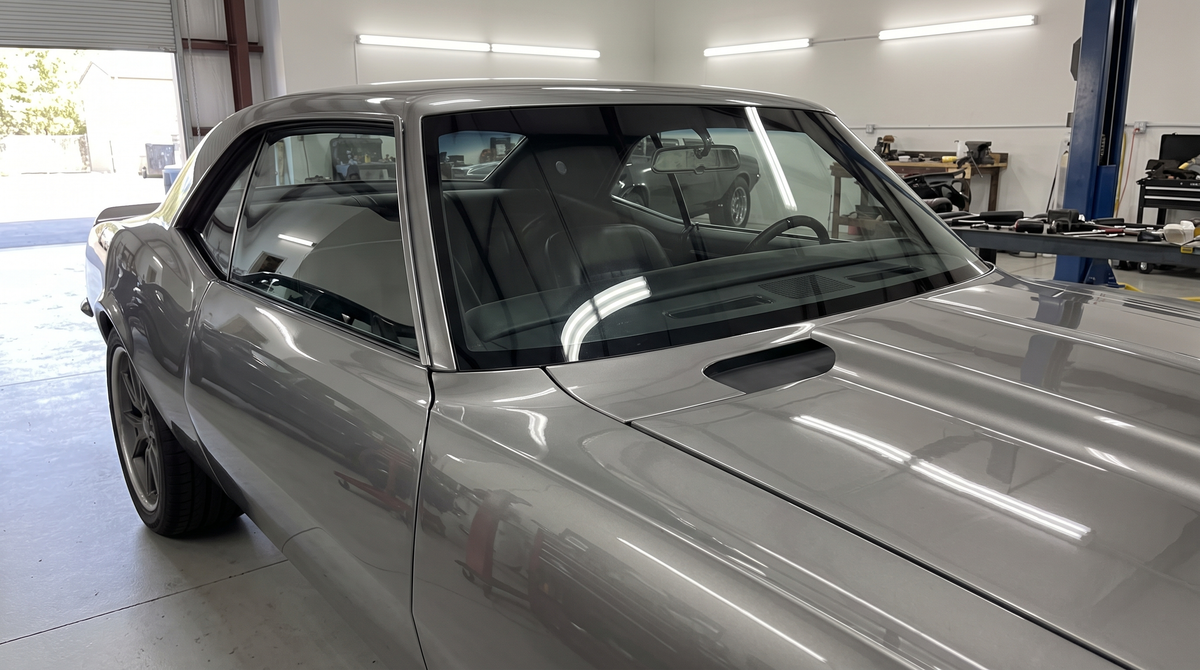
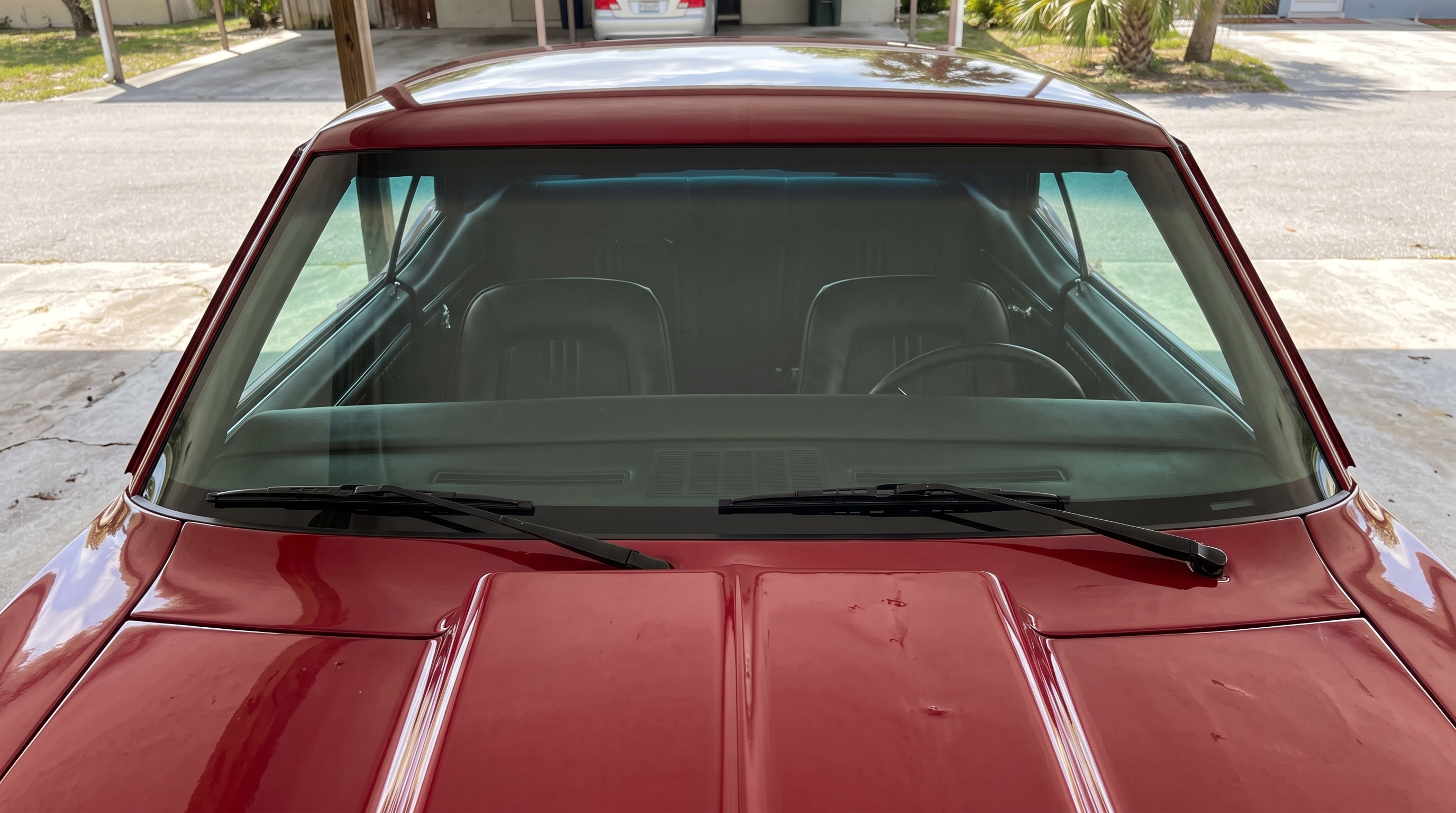
A cracked, sun-baked dash has three real fixes. A drop-in fiberglass overlay covers the entire dash face and installs in an afternoon. A dash insert replaces just the gauge bezel area, usually because you are changing gauges. A full restoration means stripping the dash out, repairing the steel, and re-padding or re-covering it properly.
The right answer depends almost entirely on one question: are you changing your gauges? Here is how we walk builders through it.
What is a fiberglass dash overlay?
An overlay is a hand-laid fiberglass shell molded to the shape of your dash that drops over the original and mounts using existing hardware. It ships in raw gel coat, ready for your upholstery shop to cover in leather or vinyl, or ready for paint if you want a body-color dash.
It solves the problem most builders actually have, which is a factory pad that has split down the middle from fifty summers of UV, along with the twenty small scars underneath it. It does not require you to pull the dash, pull the windshield, or find a re-padding shop with a mold for your car.
The other thing an overlay does, which people underestimate until they see it, is change the shape. The factory pad on most of these cars was designed around 1968 crash standards and 1968 taste. An overlay lets you clean up the lines and lose the humps.
What is a dash insert, and how is it different?
An insert replaces only the gauge cluster bezel area. You reach for one when you are installing aftermarket gauges and the factory bezel will not accept them, or when you want a clean modern panel instead of a chrome-trimmed 1969 bezel with a fake wood applique.
This is the piece most people need when they order a Dakota Digital system and discover the new cluster does not simply fall into the old hole. An insert makes that transition look designed rather than improvised.
Overlay and insert are not either-or. On plenty of builds they run together, with the overlay handling the pad and the insert handling the gauge opening.
When does a full dash restoration make sense?
Three situations, and only three in our experience.
- The car is going to be judged. Concours and originality classes want the factory dash, the factory grain, and the factory bezel. An overlay is the wrong tool for that car.
- The steel underneath is damaged. An overlay covers cosmetic damage. It does not fix a dash frame that has been hacked up for a previous stereo install, rusted through at the cowl, or bent. Metal has to be metal before anything goes over it.
- You want the exact factory look and nothing else will do. Legitimate preference. Budget for it and find a shop with a proven mold for your car, because a bad re-pad looks worse than a cracked original.
The honest downside of full restoration is that it is the slowest and most expensive path, it often means pulling the windshield, and quality varies enormously between shops.
What do the three options cost?
Fesler dash overlays are $699, and inserts run $299 to $499 depending on the platform. Add upholstery labor for the overlay, which is a straightforward job for any competent trim shop since the piece arrives ready to cover.
A quality full dash restoration is usually the most expensive of the three by a wide margin once you account for removal, metal work, re-padding, and reinstallation, and the timeline is measured in weeks rather than days because the dash leaves your shop.
The practical framing: on a driver or a restomod, the overlay is the better value nine times out of ten. On a car headed to a judged class, the overlay is not an option regardless of price.
Which Fesler dash parts fit your car?
- 1969 1st Gen Camaro Dash, hand-laid fiberglass overlay, drop-in fit, $699
- 1969 1st Gen Camaro Dash Insert, $399
- 1970-81 2nd Gen Camaro Dash, overlay, $699
- 1970-72 Chevelle Dash Insert, $499
- 1967-72 C-10, Blazer, and Suburban Dash Insert, $299
- 1967-72 C-10, Blazer, and Suburban Digital Dash Insert, $299
Note that the first-gen Camaro dash is a 1969-specific part. That is not us being difficult, it is that 1969 got a different dash from the earlier cars. We cover the whole first-gen year-by-year situation in 1967 vs 1968 vs 1969 Camaro, what actually interchanges.
Should you pick your gauges first?
Yes, and this is the sequencing mistake we see most. The gauge decision determines the insert, the insert determines how the overlay is finished, and the finish determines what your trim shop does. Work that chain backward and you will be cutting a finished piece.
If you are still deciding, our Dakota Digital buyer's guide walks through VHX, HDX, RTX, and GRFX, and the full Dakota Digital lineup is on the site.
What else should you plan at the same time?
A dash coming apart is the moment to run wiring, add sound deadening on the firewall and under the cowl, and sort out your HVAC. All three are miserable jobs later and easy jobs now. Our sound deadening guide covers placement.
It is also the natural time to think about the pieces on either side of the dash. A-pillars and kick panels are what make a dash read as part of a designed interior instead of a single upgraded component surrounded by fifty year old plastic. We laid out that whole sequence in dash planning 101.
Quick answers
Do I have to remove the windshield to install an overlay? No. That is one of the main reasons builders choose an overlay over a re-pad.
Does it come covered in leather or vinyl? No. It ships in raw gel coat so your trim shop can match it to the rest of your interior.
Can I paint it body color instead? Yes, and it looks excellent on the right build. Talk to your painter about prepping gel coat.
Will an overlay hide a hacked up radio hole? Cosmetically, usually yes. Structurally you should still fix the metal if the dash frame was cut.
Does an overlay work with factory gauges? Yes, though most people installing one are also upgrading gauges, which is where the insert comes in.
How long does it take to install? Most builders report an afternoon for the drop-in fit, with the upholstery work happening before it goes in.
Shop Fesler dash overlays and inserts or browse the full interior lineup.

Leave a comment
This site is protected by hCaptcha and the hCaptcha Privacy Policy and Terms of Service apply.