
When did cars get flush glass? In two steps. Automakers started gluing windshields to the body in the 1960s, but on muscle cars like the Chevelle a stainless reveal molding still covered the edge. Glass that sits flush with the body to cut drag went mainstream with the aero cars of the 1980s, including the 1982 Audi 100, the 1986 Ford Taurus and GM's 1988 full-size pickups. The muscle cars and trucks most of us build were designed before any of that, which is why their glass still sits in rubber and chrome until somebody changes it.
If you already know you want the look, our Fesler flush-mount DOT glass collection has every kit we make. If you want to know how the factories got there, and why your Chevelle or C10 never did, read on.
When did cars get flush glass? The short timeline
Bonded glass and flush glass get used as if they mean the same thing. They do not. Bonding is how the glass is held. Flush is where it sits. They took hold in different decades.
| 1903 | French chemist Edouard Benedictus drops a plastic-coated flask that shatters but stays in one piece, the accident that leads to laminated safety glass |
|---|---|
| 1927-32 | Ford Model A, one of the first production cars with safety glass in the windshield |
| 1953 | Cadillac Eldorado introduces the wraparound windshield |
| 1963 | GM tries adhesive-bonded windshields on some Buick Specials and Oldsmobile F-85s |
| 1964 | Bonded windshields become standard on all GM intermediates, Chevelle included |
| Jan 1, 1970 | FMVSS 212, the federal windshield retention standard, takes effect for passenger cars |
| 1979 | NHTSA counts adhesive bonding on all domestic cars |
| 1982 | Audi 100 (sold here as the Audi 5000) launches with pin-mounted flush side windows and a 0.30 drag coefficient |
| 1986 | Ford Taurus arrives with windows and door handles flush with the body |
| 1988 | GM's GMT400 full-size pickups (the OBS) get sedan-style doors with flush window glass |
Before bonding: glass in a rubber gasket
The earliest windshields were ordinary window glass, and they hurt people when they broke. Safety glass was the answer. Benedictus made his discovery in 1903, filed his patent in 1909 and formed the Triplex company in 1911. By the late 1920s the Ford Model A was one of the first production cars to carry safety glass in the windshield.
How the glass was held did not change nearly as fast. For decades it was set in a rubber or neoprene seal. A 1985 NHTSA evaluation of windshield installation methods describes the pre-1963 setup simply: the windshield sat inside a rubber gasket or molding, and that gasket was attached and sealed to the body opening.
Styling kept moving anyway. The 1953 Cadillac Eldorado introduced the wraparound windshield, and the years that followed brought more curved glass and a lot of bright trim. But the glass itself still lived in rubber. If you have a 1967-72 Chevy or GMC truck, you know this system well. Reproduction windshield weatherstrip for those trucks is still sold today, cataloged by whether it has a groove for bright trim.
1963 to 1979: bonded, but not flush
GM led the switch to bonding. According to NHTSA, adhesive-bonded windshields went onto some 1963 Buick Specials and Oldsmobile F-85s as a trial, became standard on all GM intermediates for 1964, and had spread to all domestic cars by 1979. The adhesive varied: butyl rubber tape, polysulfide, thiokol or polyurethane.
The same report gives the plain business reason. Bonding was a less costly way to install a windshield, and it saved a little weight. Steele Rubber Products, a restoration seal maker, traces the next step: GM switched to butyl tape in the mid-1960s, and urethane adhesive gradually took over from the mid-1970s until it became standard practice in the 1980s.
Safety pushed it along too. Federal Motor Vehicle Safety Standard 212, which requires most of the windshield's edge to stay attached in a frontal barrier crash, took effect for passenger cars on January 1, 1970. NHTSA's 1985 evaluation estimated that adhesive bonding cut the risk of ejection through the windshield opening by about half in American cars.
The switch was not clean or quick. NHTSA notes that rubber gaskets carried on well past 1970 at Ford, Chrysler and most foreign makers, and that Ford actually went back from bonding to rubber when the 1970 Maverick replaced the Falcon.
Here is the part that matters for builders. Bonded did not mean flush. NHTSA lists the Chevelle among the GM intermediates bonded from the start, yet a 1968-72 Chevelle windshield is still framed by a bright reveal molding, held on by clips. Reproduction polished stainless windshield molding sets for the 1968-72 Chevelle, and molding clip kits for the 1967-69 Camaro and Firebird, are still sold today for exactly that reason. The factory had moved on from rubber. It had not moved on from trim.
Why did automakers go flush in the 1980s?
Air. Once fuel economy became a priority, drag mattered, and windows set level with the body were one of the tools designers used to cut it.
Audi 100, 1982
The third-generation Audi 100 launched in September 1982 with a 0.30 drag coefficient on the base model. Audi describes it as a record drag coefficient. Its pin-mounted flush side windows were a key part of that drag reduction. Americans knew the car as the Audi 5000.
Ford Taurus, 1986
Ford launched the Taurus on December 26, 1985, as a 1986 model. Its windows and door handles sat flush with the rest of the car, its bumpers were blended into the body, and it was rated at a 0.32 drag coefficient. Its design drew on the Audi 100 and Ford's own Tempo.
GM's OBS trucks, 1988
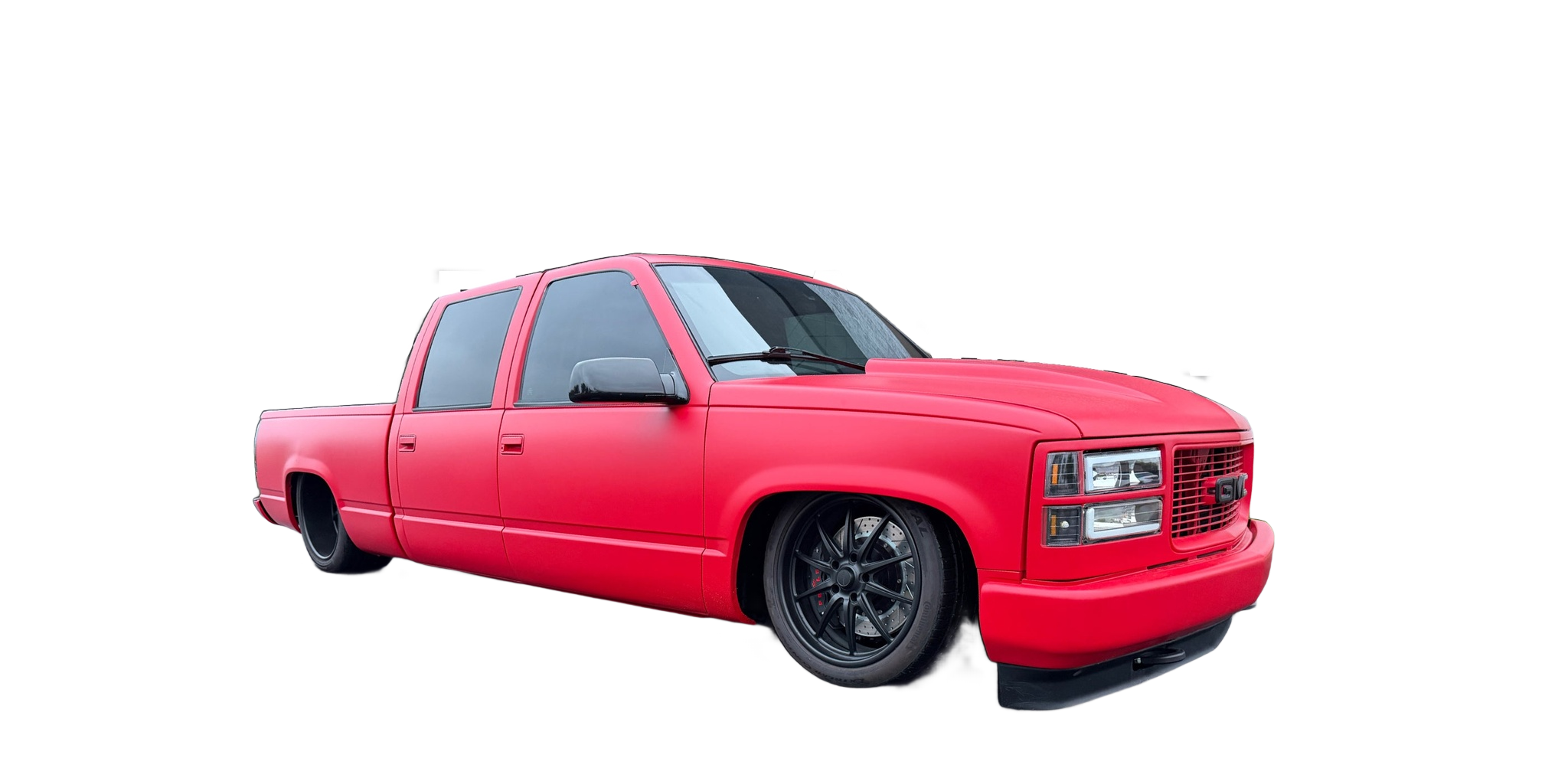
GM introduced the GMT400 pickups in April 1987 for the 1988 model year. The body was shaped to improve aerodynamics for better fuel economy, with a flush grille and front bumper and sedan-style doors carrying flush window glass. If you are building one, our post on why the OBS is the next squarebody covers the platform.
We are careful with the word "first" here. Plenty of cars were part of this shift, and the record is not tidy. What the sources support is simple: by the late 1980s, flush glass had reached mainstream American cars and trucks.
Why did classic cars keep gaskets and trim?
Because nobody went back. A 1969 Camaro or a 1972 C10 body was designed around a gasket or a reveal molding. When the factories changed how they built new cars, the old ones stayed exactly as built.
The restoration world kept it that way, for good reason. Correct weatherstrip, trim and clips are still reproduced so a car can go back to how it left the factory, and for a numbers-matching or concours build that is still the right call. Our flush-mount vs trim ring glass post walks through when to keep the trim.
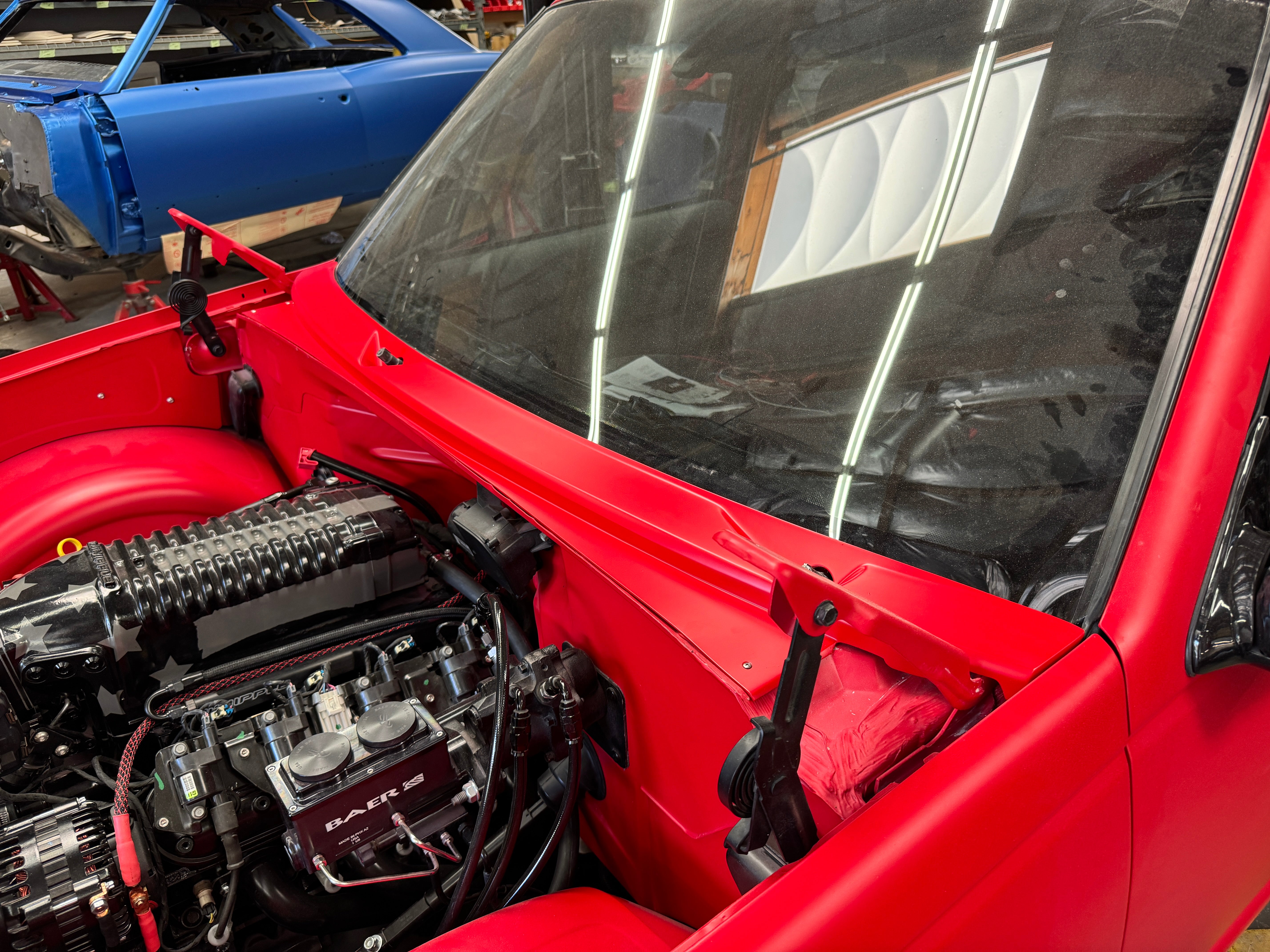
Going flush on a classic is not as simple as leaving the trim off. With no molding to cover the edge, the glass has to be sized for that opening with an even gap all the way around, and finished so it can bond directly to the body.
How flush-mount kits bring the look to a classic
A Fesler flush-mount kit takes the bonded, flush approach the factories settled on and applies it to a body that was never designed for it. The glass is purpose-sized to bond within the original opening with a clean, even gap. It uses a frit band, primer and automotive urethane, with no exterior trim and no rubber weatherstrip.
Our flush-mount glass is made in North America with our partner Pilkington USA. Windshields are DOT-certified laminated glass and rear glass is tempered. Each design is prototyped, molded, test-fit, manufactured and test-fit again, so the glass fits as delivered without sanding. Our product pages note that reproduction shells may need body work for the glass to fit, and glass is non-returnable. Call us before you order if your car is on a reproduction body.
A few things carry over from what the factories learned:
- Use urethane, not butyl tape. Our product pages list professional install only, with automotive urethane and the correct primers.
- Check the marks. FMVSS 205 requires automotive glazing to meet ANSI/SAE Z26.1 and carry the DOT symbol and a manufacturer code. Our post on DOT certified glass for classic cars explains how to read them.
- Prep matters. A bonded windshield only seals as well as the surface under it. See does flush-mount glass leak and who installs flush-mount glass before you book the install.
For a sense of cost, the 1967-72 C10 front and rear kit was listed at $1,899 when this was written. For the rest of the platforms we cover and how each kit fits, start with our flush-mount glass guide for classic cars and trucks.
Frequently asked questions
When did cars get flush glass?
In two steps. GM began bonding windshields to the body on some 1963 Buick Specials and Oldsmobile F-85s, and NHTSA found adhesive bonding on all domestic cars by 1979, but on cars like the 1968-72 Chevelle a stainless reveal molding still covered the edge. Flush glass set level with the body to cut drag came in the 1980s, with cars like the 1982 Audi 100, the 1986 Ford Taurus and GM's 1988 full-size pickups.
Was the Audi 100 the first car with flush glass?
We would not call it the first. What is well documented is that the 1982 Audi 100 used pin-mounted flush side windows that cut aerodynamic drag, and Audi describes its 0.30 drag coefficient as a record.
Is a bonded windshield the same thing as flush glass?
No. Bonding is how the glass is held, with urethane or another adhesive instead of a rubber gasket. Flush is where the glass sits. The 1968-72 Chevelle is a good example: a bonded windshield with a stainless reveal molding framing the edge.
Why did classic cars keep rubber gaskets and chrome trim?
Their body openings were designed around a gasket or a reveal molding, and the factories never went back and redesigned those cars. Reproduction weatherstrip and trim for them is still made to the original design, so going flush takes glass made for the job.
Is flush-mount glass on a classic street legal?
It can be. Federal standard FMVSS 205 requires automotive glazing to meet ANSI/SAE Z26.1 and carry the DOT symbol and a manufacturer code. Fesler flush-mount windshields are DOT-certified laminated glass, and the rear glass is tempered.
The factories figured out flush glass more than forty years ago. Your classic can have it too. Browse the full Fesler flush-mount DOT glass collection, or call us at 480-748-2000 and tell us what you are building.
Sources: NHTSA, An Evaluation of Windshield Glazing and Installation Methods for Passenger Cars, DOT HS 806 693, 1985 (gasket and bonding history, GM 1963-64 dates, 1979 adoption, FMVSS 212 timing, ejection finding, cost reason); eCFR, 49 CFR 571.205 and 571.212 (glazing marks and windshield retention standards); Wikipedia, Laminated glass, Windshield, Ford Model A (1927-1932), Cadillac Eldorado, Audi 100, Ford Taurus (first generation) and Chevrolet C/K (fourth generation) (dates and design details); Audi (Audi 100 C3 record drag coefficient); Steele Rubber Products (butyl tape to urethane transition); Classic Industries (1968-72 Chevelle windshield molding, 1967-69 Camaro and Firebird molding clips, 1967-72 GM truck windshield weatherstrip).


Leave a comment
This site is protected by hCaptcha and the hCaptcha Privacy Policy and Terms of Service apply.