
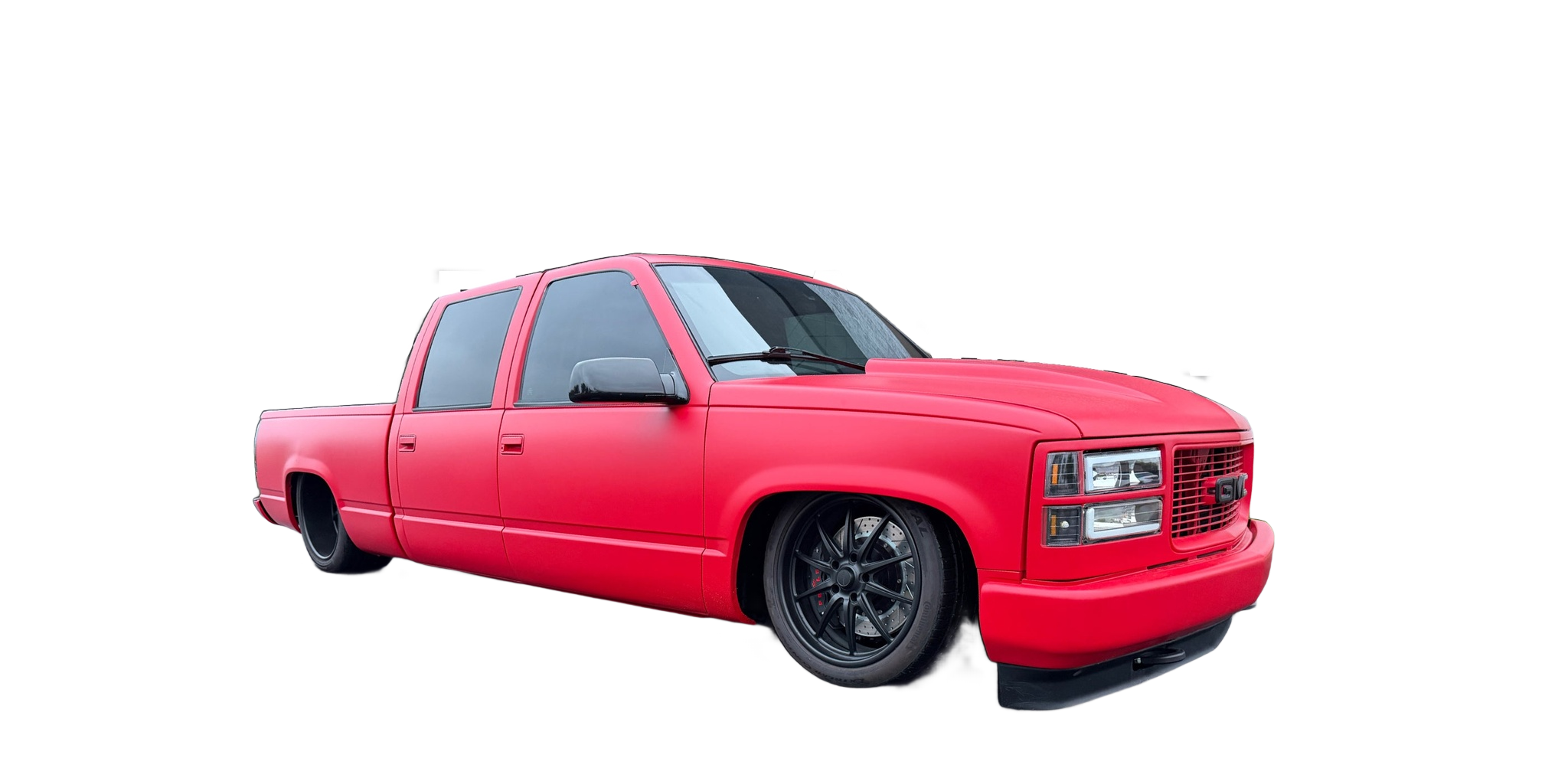

Texas is the best state in America to build and own a hot rod. New Jersey is the worst. And California, the state that invented the entire hobby, finished 44th out of 50.
We scored all 50 states on six things that actually decide whether a build is easy or miserable: how the state titles a modified car, what it makes you do for emissions and inspection, what it costs to keep registered, what its equipment laws say about exhaust and tint and ride height, whether the roads eat your metal, and whether there is anyone nearby who can help you build the thing. Here is the whole picture, and the method behind it, so you can argue with us on an informed basis.
How we scored all 50 states
Six factors, weighted. Every state got a 0 to 10 on each, then a weighted composite. The weighting is ours and it is a judgment call, which is exactly why we are showing it to you instead of hiding it.
- Titling and registration, 20 percent. Does the state have a street rod or custom vehicle class? Is there a workable path for a specially constructed car? And critically, does the historic plate actually let you drive?
- Emissions and inspection, 20 percent. Is there testing at all, and where? Is the classic exemption a rolling 25 years or a fixed year that never moves? Is there an annual safety inspection? Can you swap an engine without a referee?
- Annual cost to own, 15 percent. What it costs to keep a finished, driven build registered, plus sales tax on parts.
- Equipment laws, 15 percent. Exhaust noise, window tint, ride height, and whether anyone actually enforces it.
- Climate and preservation, 15 percent. Road salt exposure, freezing days, and the sun damage that comes with the dry states.
- Ecosystem, 15 percent. Shops, fabricators, auctions and events. A perfect law book is worth less if nobody within 300 miles can align your chassis.
We used a tile grid rather than a real map on purpose. On a geographic map, six of the ten worst states are small enough in the Northeast that you would barely see them, which would hide the single clearest pattern in the data.
The 10 best states to build a hot rod
The winners share a pattern. No annual safety inspection, either no emissions testing or a rolling exemption that your car eventually ages into, a registration class that treats a modified car as legitimate, and no statute telling you how low your car can sit.
| Rank | State | Score | What earns it |
|---|---|---|---|
| 1 | Texas | 91.2 | Safety inspection for non-commercial vehicles ended January 1, 2025. Rolling 25 year emissions exemption, testing in four metros only. Street rod and custom vehicle classes in statute. Classic plates carry no use restriction. |
| 2 | Florida | 85.8 | No emissions testing anywhere since 2000 and no safety inspection. Street rod and custom statute adopted 2007. Enormous auction and event density. Loses points to humidity and coastal air. |
| 3 | Tennessee | 83.8 | Ended emissions testing statewide in January 2022. No inspection. Antique plates allow general transportation on Saturdays, Sundays and federal holidays, which almost no other state permits. |
| 4 | Arizona | 82.2 | No safety inspection, testing only in the Phoenix and Tucson areas, no ride height law, and the best rust climate in the country. Held back by an emissions cutoff frozen at 1966. |
| 5 | Montana | 81.0 | No emissions, no inspection, no sales tax, permanent registration after 11 years, and the cleanest specially constructed titling framework in the country. An objective 95 decibel exhaust standard instead of an officer's opinion. |
| 6 | Iowa | 80.2 | No testing, no inspection, street rod statute adopted 2008, and an antique plate whose use restriction applies only to trucks and motorhomes. Passenger cars are unrestricted. |
| 7 | Georgia | 79.8 | The antique plate statute affirmatively says the plate may be used for general transportation. Rolling 25 year exemption, testing in 13 Atlanta counties only. |
| 8 | New Mexico | 78.5 | The most permissive front window tint law in America at 20 percent, emissions testing in exactly one county, no ride height statute. Thin shop and event density is the only real drag. |
| 9 | Oklahoma | 78.0 | No emissions, no inspection, no height law, 25 percent tint. Quietly one of the least regulated places in the country to own a modified car. |
| 10 | Kansas | 77.8 | No emissions, no inspection, and an antique plate that costs a one time fee and is never renewed, with antique property tax fixed at a flat annual figure. |
Texas is not a close call. It is the only state that scores at or above 8.5 on all six factors, and the elimination of the non-commercial safety inspection in January 2025 removed the last real friction point. A modified car in Texas is a legal category, not a problem to be managed.
The 10 worst states to build a hot rod
The bottom of the table is a regional story. Nine of the ten worst are in the Northeast or Mid-Atlantic, where annual statewide inspection, salt, and registration classes written for unmodified cars all stack on top of each other. The tenth is California.
| Rank | State | Score | What sinks it |
|---|---|---|---|
| 41 | Maine | 54.2 | Annual statewide safety inspection and heavy salt. It does have real Custom Vehicle and Street Rod plate classes, which is why it is not lower. |
| 42 | Virginia | 53.2 | Annual state police inspection, a statute setting passenger car bumper height between 14 and 22 inches, a 3 inch body lift cap, and the heaviest vehicle property tax in the country if you cannot use antique plates. |
| 43 | Delaware | 52.5 | Statewide emissions in all three counties since 2023, a fixed pre-1968 exemption that never moves, biennial inspection, and an antique plate that bars general transportation. |
| 44 | California | 51.2 | Best climate and best ecosystem in America, undone by a referee process for engine swaps, an exemption frozen at 1975, and a statute that makes a properly lowered car illegal on its face. |
| 45 | Pennsylvania | 50.2 | Annual safety inspection with no age exemption at all. Antique plates escape emissions but not the yearly inspection, and occasional transportation is capped at one day per week. |
| 46 | Massachusetts | 48.2 | State regulation limits any change in vehicle height to 2 inches from stock in either direction. That is the most aggressive anti-lowering rule in the country, and it is aimed squarely at this hobby. |
| 47 | Vermont | 45.8 | Annual statewide inspection including a visual emissions check on every vehicle regardless of age. Full exemption only for model year 1940 and earlier. |
| 48 | Rhode Island | 45.2 | Statewide inspection, 70 percent front tint, a 4 inch lift cap, and an antique class that requires the car not be used primarily for transportation. |
| 49 | New York | 43.8 | Annual safety and emissions statewide, exhaust fines reaching $1,000 under the SLEEP Act, and the only operating municipal noise camera program in the country. |
| 50 | New Jersey | 42.5 | A fixed 1995 emissions cutoff that never moves, no aftermarket front tint at all, no street rod or custom class despite repeated bills, and historic plates that require the vehicle be unaltered from the manufacturer's original design. |
New Jersey earns last place on one sentence of statute. The historic registration class, the only friendly option in the state, requires the vehicle to be unaltered from the manufacturer's original design. Every car we build parts for is disqualified by definition. A state can be worse on taxes or salt, but no other state writes hot rods out of its own hobby registration.
Why California finished 44th
This is the result that will start arguments, so here is the arithmetic. California scored a perfect 10 on ecosystem, the only state that did. It scored 9 on climate. It has more shops, more fabricators, more parts and more events than anywhere else, and Los Angeles has the best driving weather in America by a wide margin. On the two factors that reward a car culture, California is untouchable.
It scored 1.0 on emissions and 1.5 on equipment laws.
Every engine swap has to go through a Bureau of Automotive Repair referee, and the installed engine must be the same model year as the chassis or newer. The car is then tested against the donor vehicle's standards. Emissions related aftermarket parts need a CARB executive order number. The classic exemption is frozen at 1975 and does not roll, so a 1976 car will never age out of testing, ever. Vehicle Code section 24008 says no part of the body may sit below the bottom of the wheel rim, which describes most of the cars in this hobby. Front window tint is capped at 70 percent. Senate Bill 712, which would have exempted cars 35 years and older from smog checks, died in Assembly Appropriations on August 29, 2025.
So the state that gave the world the dry lakes, the Deuce coupe and the entire aftermarket now runs the most restrictive regime in the country for building one. That is not a political point. It is what happens when a regulatory system designed around new cars is left to apply to old ones for fifty years without a rolling exemption.
What if your state is in the middle?
Thirty states landed between 11th and 40th, and for most builders that is fine. The middle is not a bad place to be. It generally means one of three things: you have county level emissions testing but a rolling exemption you will age into, or you have an annual inspection but permissive equipment laws, or you have great laws and a rough winter.
A few worth calling out. Nevada missed the top 10 by a rounding error and has the best climate score in the group. Michigan has no emissions testing and no inspection, and its historic plate treats Memorial Day weekend through Labor Day as exhibition use, which is a summer of legal driving on a plate that costs $30 for ten years. Illinois offers an Expanded Use Antique plate that buys unrestricted driving from March 1 through November 30. North Carolina has deep motorsports infrastructure and a clean historic plate exemption, dragged down by annual inspection and market value property tax.
Maryland deserves a warning. In July 2025 the state moved historic tag eligibility from a rolling 20 years to a fixed 1999 model year cutoff, and roughly 72,000 vehicles lost eligibility overnight. Lawmakers restored a rolling 25 year standard in the 2026 budget, but it does not take effect until July 2027 and there is no grandfathering for the people who already lost their tags. If you want a reason to read your own state's pending legislation, that is it.
The vehicle tax trap almost everyone gets backwards
Ask a room of builders which states tax you on the value of your car and you will get a long list. The list is wrong, because there are two completely different kinds of value based vehicle tax and they treat a restomod in opposite directions.
Most states that appear to tax vehicle value actually key the tax to the original manufacturer's list price, then depreciate it by age. Arizona, Nevada, Colorado, Montana, Minnesota, Michigan, Iowa, Nebraska, Maine, Massachusetts, New Hampshire, Wyoming, Kansas, Mississippi, Indiana, Utah and Connecticut all work this way. A 1969 Camaro listed for roughly $2,726 when it was new. After fifty seven years of depreciation you land on the statutory minimum. Your $150,000 build pays almost nothing.
Only six states tax the current market value of the car every year: Virginia, North Carolina, South Carolina, Missouri, Kentucky and Alabama. Those are the ones that can actually hurt, and in a high rate Virginia locality the annual bill on a six figure car runs into the thousands. Even then, antique plates defuse most of it. South Carolina exempts antique registered cars outright, North Carolina caps the assessment at the lower of true value or $500, Connecticut caps at $500, Kansas charges a flat annual figure.
Here is the trap, and it is the opposite of what people expect. If you title a finished build as a specially constructed or current model year vehicle with a declared value of $150,000, the cheap states become the expensive ones. Arizona would assess a percentage of that declared figure and send a bill in the thousands for year one. The same car titled as a 1969 pays the minimum. How the car is titled matters more than which state you are in.
Your historic plate might not let you drive the car
This is the most consequential thing in the entire index and the least discussed. Historic and antique plates are cheap almost everywhere. What varies enormously is whether they let you actually drive. A state with a $10 plate that bans general transportation is not a friendly state, it is a state that will license your car as a museum piece.
| State | What the historic or antique plate actually allows |
|---|---|
| Georgia | Statute says the plate may be used for general transportation. The clearest permission in the country. |
| Connecticut | No use restriction, at 20 years, plus a capped assessed value for property tax. |
| Iowa | Use restrictions apply to trucks and motorhomes only. Passenger cars are unrestricted. |
| Texas | Antique plates are limited to exhibitions and parades, but Classic plates at 25 years carry no use restriction at all. Most people never learn there are two options. |
| Tennessee | Club and parade use, plus general transportation on Saturdays, Sundays and federal holidays. |
| Michigan | Not general transportation, except that Memorial Day weekend through Labor Day is deemed exhibition use. |
| Illinois | Standard antique plates are restricted, but an Expanded Use plate buys unrestricted driving March 1 through November 30. |
| Missouri | 1,000 personal miles per year, and you are expected to carry a written mileage log in the car. |
| South Dakota | 4,000 miles per year, no commuting, no commercial use. |
| Pennsylvania and Vermont | Occasional transportation defined as no more than one day per week. |
| Wisconsin | Antique plates are display and parade only, and special interest plates are barred from the highways during the month of January. |
| New Jersey | Solely for exhibition and educational purposes, and the vehicle must be unaltered from original. |
Read your own state's language before you assume the cheap plate is the right plate. If the car is a driver, a restricted historic plate can be a worse deal than standard registration, and in several states the restriction is enforceable with fines and revocation.
Where Arizona landed, and why it is not number one
We are an Arizona company, so let us deal with this directly. Arizona finished fourth, not first, and we are not going to pretend otherwise to flatter our own zip code.
What Arizona gets right is real. No safety inspection at all. Emissions testing only in the Phoenix and Tucson areas, so most of the state is untouched. No ride height statute, which matters enormously for a hobby built on stance. Vehicle license tax keyed to original list price, so a classic pays the floor. And the best preservation climate in the country, plus a winter auction and event season that brings the industry here.
What holds it back is one number. The Arizona emissions exemption is fixed at model year 1966 and earlier. It does not roll. A 1970 Chevelle in Maricopa County does not age out of testing the way it would in Texas, Georgia or Ohio, and it never will under current law.
And we owe you a correction on the thing every dry state brags about. Arizona does use road salt. ADOT applies sodium chloride and magnesium chloride in the high country, on I-17 and I-40 around Flagstaff, which averages over 200 freezing days a year. The honest claim is that the Valley is a rust free environment, not that the state does not salt. Phoenix averages eight freezing days annually.
The other honest caveat runs the opposite direction. The materials testing industry runs its benchmark outdoor exposure sites in Arizona and Florida specifically because they are the harshest places on earth for the stuff your car is made of. Arizona receives roughly 20 percent more sunlight than Florida, summer air temperatures reach 115 degrees, and dark surfaces can exceed 160 degrees. Phoenix gets around 211 clear days a year against 66 for Cleveland. Metal survives here. Dash pads, weatherstrip, wiring insulation, single stage paint and vinyl do not. That is why we spend so much time on sealing and protecting cars in this climate, and it is a real cost of the number four ranking.
What we could not measure
Three things we wanted and could not get, stated plainly so you can weight our conclusions accordingly.
State by state road salt tonnage is not public. The authoritative dataset is collected from state DOTs annually but is not openly published. We used the salt belt definition that automakers themselves use when they scope corrosion recalls, which covers 22 states plus the District of Columbia, because it has warranty and legal weight behind it rather than being our own line on a map.
Nobody publishes specialty shop counts by state in a usable form. Our ecosystem score leans on counted events and auctions from published 2026 schedules plus population, which understates states that host one enormous event rather than several medium ones. Mississippi, Minnesota and Kentucky are all better than their score suggests for that reason.
Laws change, and several are in motion right now. New Hampshire repealed inspection and emissions effective January 2026 and it is tied up in federal litigation. North Carolina has legislation removing most emissions counties that is not yet effective. Louisiana repeals its inspection sticker January 2027. We scored current law as of September 2026. Check your own state before you make a decision on our say so.
Quick answers
What is the best state to own a classic car? Texas, on our index. No safety inspection since January 2025, a rolling 25 year emissions exemption, testing limited to four metros, dedicated street rod and custom vehicle registration classes, and Classic plates with no use restriction.
Which states have no emissions testing at all? Twenty two, including Florida, Tennessee, Michigan, Minnesota, South Carolina, Montana, Wyoming, Iowa, Kansas, Oklahoma, Arkansas, Alabama, Mississippi, Idaho and Washington. Idaho, Tennessee and Washington all ended their programs within the last several years and are still listed as testing states by a lot of outdated articles.
Is a rolling exemption better than a fixed year? Enormously, and it is the single most important line in your state's code. A rolling 25 year exemption means your car eventually ages out forever. A fixed cutoff like California's 1975 or New Jersey's 1995 means a car one year too new is tested for the rest of its life.
Do I need antique plates to skip emissions? It depends on the state. Many exempt by model year regardless of plate. Others tie the exemption to the historic plate, which then brings a use restriction with it. Getting this backwards is how people end up with a car they cannot legally drive to work.
Does the Montana LLC trick still work? It only ever worked if the car was genuinely garaged in Montana. States are now prosecuting. California charged 14 people in March 2026 over roughly $20 million in unreported vehicle purchases, Utah pursues back taxes with a 100 percent penalty, and Tennessee has brought felony charges. Treat it as a legal question for your own attorney, not a hack.
Does salt really matter that much? AAA has estimated road deicers cause around $3 billion a year in rust damage nationally, averaging roughly $490 a repair. That figure comes from a consumer survey rather than inspection data, so treat it as directional. The mechanism is not in dispute.
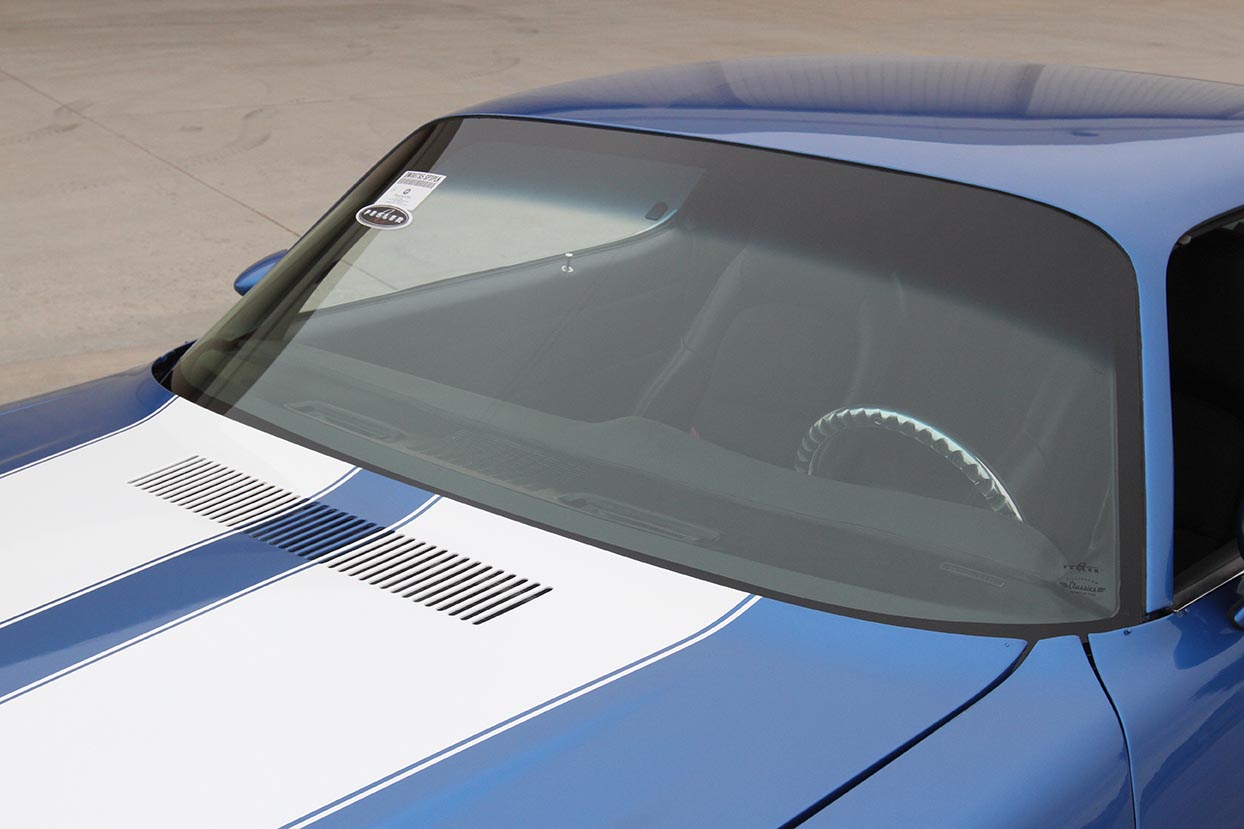
Wherever you build, the parts have to fit. Shop Fesler flush-mount glass, see how flush-mount glass actually works, or talk to us about your build.



Leave a comment
This site is protected by hCaptcha and the hCaptcha Privacy Policy and Terms of Service apply.