The car that became the definitive American muscle car started life as a defensive move. Chevrolet did not set out to build a legend in 1964. It set out to plug a hole in the lineup that Ford had been exploiting for two years.
1964: the hole in the lineup
Ford's 1962 Fairlane invented the successful mid-size formula: bigger than a compact, smaller than a full-size, priced where families lived. Chevrolet had nothing between the Chevy II and the Impala, and dealers felt it. The answer was the 1964 Chevelle, built on GM's new A-body platform with a 115 inch wheelbase, sized within an inch of the beloved 1955-57 Chevy on purpose. Chevrolet was openly invoking its own greatest hit.
The gamble worked immediately. Over 300,000 first-year Chevelles rolled out, and the Malibu SS trim planted a flag: this family car had intentions. The El Camino rode along on the same body, beginning the truck-car partnership that would shadow the Chevelle its entire life.
1965: the Z16 tells the future
The 1965 Z16 package is one of the great what-ifs made real: 201 cars built with the new 396 big block, boxed frame, and heavy-duty everything, seeded to celebrities and dealers to test whether America wanted a big engine in a mid-size Chevy. America did. The SS 396 became a full production model in 1966, and the muscle car arms race had its most consistent soldier.
1966-67: the sweet spot years
The 1966 restyle gave the Chevelle flared fenders and a faster roofline, and 1967 refined it further with a cleaner grille and new safety equipment. These cars hit a balance the hobby still treasures: big block power available, size still tidy, and styling that reads as pure mid-60s GM confidence. There is a reason we chose a 1967 as the foundation for our own Fesler Maliblu build. When the 66-67 body is right, nothing else looks quite like it.
1968-70: the shape everyone means
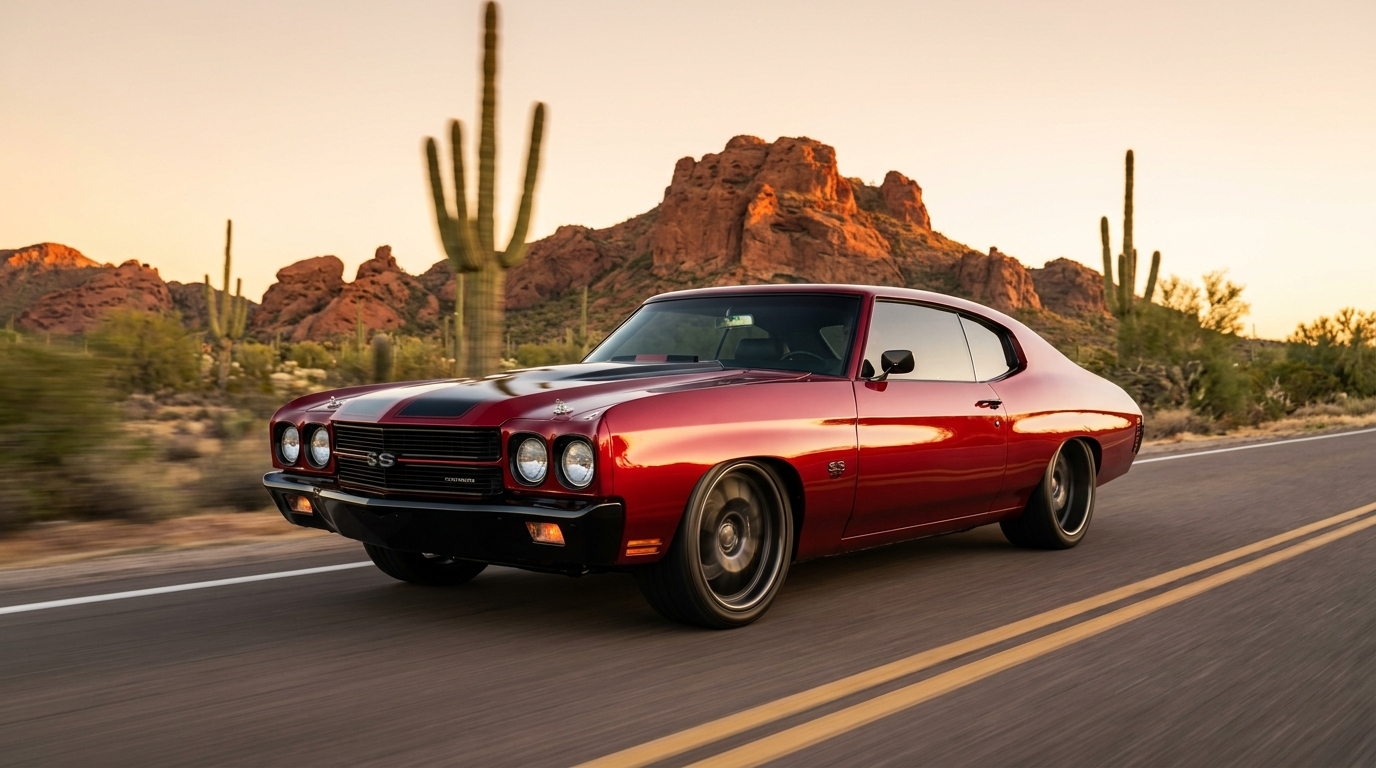
GM redrew the A-body for 1968 with a shorter 112 inch wheelbase for coupes, long hood, short deck, and a semi-fastback roof. Then 1970 arrived and settled every argument. The restyled front end, the cowl induction hood, the stripes, and underneath it, the LS6 454 rated at 450 horsepower, the highest factory rating of the entire muscle car era. The 1970 SS 454 was the loudest statement in a year full of them, made sweeter by the fact that GM had just lifted its own displacement cap on mid-size cars.
When someone says the word Chevelle, the 1970 is almost always the car in their head. Auction results have agreed for decades; LS6 cars sit permanently in the muscle car blue chip tier.
1971-72: the long goodbye
Compression dropped in 1971 as GM prepared for unleaded fuel, and 1972 switched to net power ratings that made every engine look weaker on paper than it was. The cars stayed handsome, singular-headlight 1971-72 front ends have aged beautifully, and today these years are the value play of the classic Chevelle run: same body, same big block availability, friendlier buy-in. The 1973 colonnade redesign closed the book on the Chevelle everyone builds.
Why builders still start with a Chevelle
Fifty years on, the 1964-72 Chevelle might be the most complete build platform in the hobby. The A-body aftermarket supports everything from restoration to full pro-touring chassis swaps. The engine bay swallows any powerplant Chevrolet ever made plus every LS and LT that came after. And the proportions, especially 1968-72, take modern stance and wheels like the car was designed around them, a big part of why Chevelles anchor the pro-touring vs restomod conversation we mapped earlier this year.
Fesler's contribution is the glasshouse. Our DOT-certified flush-mount kits cover both classic bodies, 1966-67 and 1968-72, deleting the bright trim and bonding the glass the way modern cars do. On the 1968-72 semi-fastback roofline the effect is dramatic; the whole greenhouse becomes one uninterrupted surface. The full breakdown lives in the Chevelle flush-mount glass guide, and for restorations staying factory-correct, we also stock the OEM-style 1968-72 windshield.
Chevelle history FAQ
What years did Chevrolet build the classic Chevelle?
1964 through 1972, across three body designs: 1964-65, 1966-67, and 1968-72. The nameplate continued to 1977, but the 1973 redesign ended the era collectors mean by classic Chevelle.
What was the most powerful factory Chevelle?
The 1970 SS 454 with the LS6, rated at 450 horsepower, the highest factory rating of the original muscle car era.
Is an El Camino a Chevelle?
Mechanically yes; from 1964 on, the El Camino shared the A-body chassis and most Chevelle sheet metal ahead of the doors. Most Chevelle parts, including our 1968-72 flush glass windshield fitment, carry over. Confirm your specific application with the shop.
Which Chevelle year is the best to build?
1970 carries the crown and the price tag. The 1971-72 cars deliver the same body for less. The 1966-67 cars are the connoisseur's pick. There is no wrong answer, which is the whole point of the platform.
Sixty years after Chevrolet built a car to answer Ford, the Chevelle answers to nobody. If yours is headed for a build, start the conversation with the glass guide or call the shop in Phoenix.

Leave a comment
This site is protected by hCaptcha and the hCaptcha Privacy Policy and Terms of Service apply.