
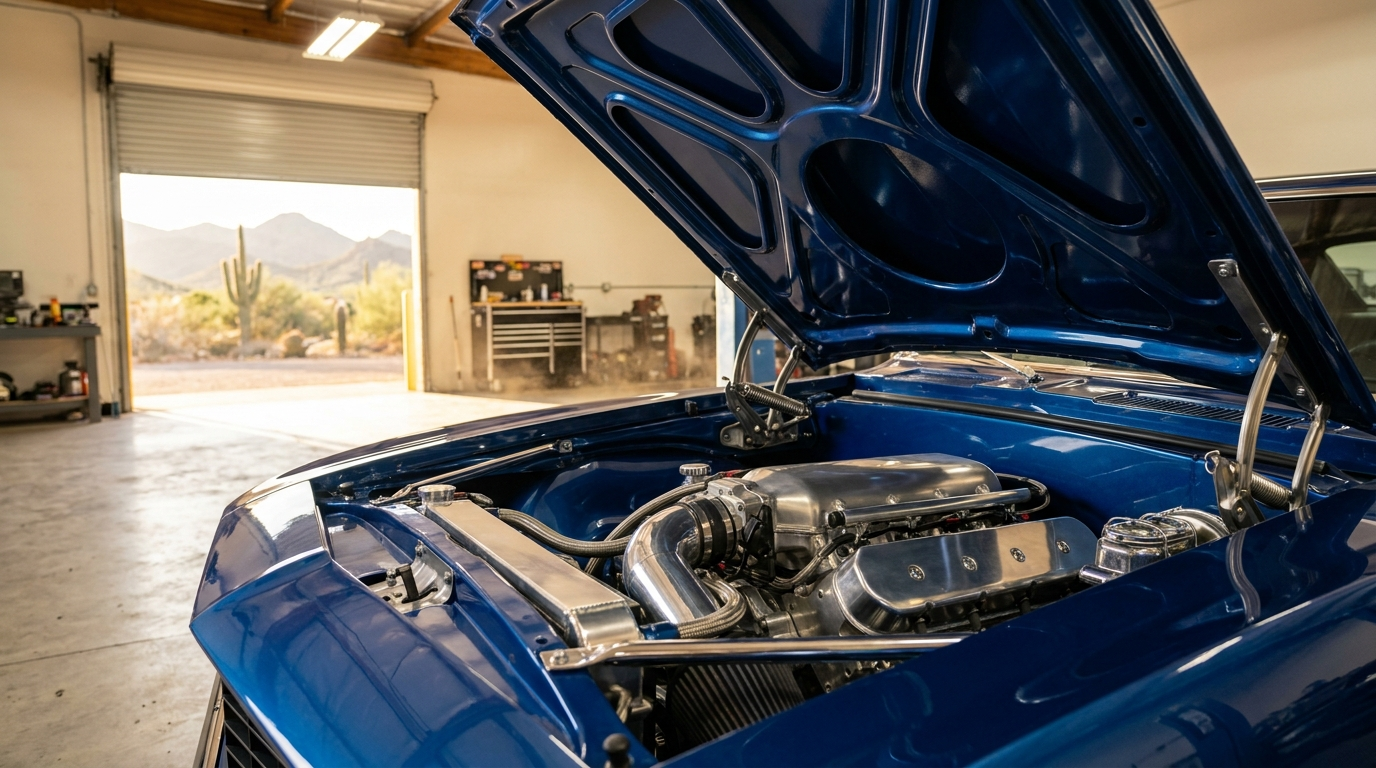
Walk into any car show, mention an LS swap near the wrong lawn chair, and you will get a sermon in either direction. The internet has turned this into a religious war, which is a shame, because for any specific car it is actually a straightforward decision. You just have to ask the right questions in the right order.
We build both kinds of cars at Fesler. Numbers-matching restorations and LS-powered pro-touring machines roll out of the same Phoenix shop, so we have no side in the war. Here is the framework we walk customers through.
Question 1: What is the car?
This settles most cases immediately. A numbers-matching LS6 Chevelle, a real Z/28, a Boss Mustang, any rare documented drivetrain: the original engine is a load-bearing part of the car's identity and value. Pulling it costs you money and history at the same time. Store it if you must swap, but understand what you own first; our appraisal guide explains how documentation drives value.
A base 307 Chevelle, a six-cylinder C10, a small block truck built in the hundreds of thousands? There is no shrine to protect. These are the cars the LS was born for, and nobody serious will ever ding the build for it.
Question 2: How will you actually use it?
Be honest, because your answer costs money either way. Sunday mornings and cars-and-coffee within 20 miles of home: a healthy original drivetrain does that beautifully, carburetor and all. Road trips, Power Tour, daily summer driving in Arizona: fuel injection that cold starts, idles in traffic at 115 degrees, and returns 20 mpg on the highway changes your relationship with the car. The whole promise of pro-touring, the one we laid out in pro touring vs restomod, is a classic you drive without excuses. The LS family is the cheapest reliable path to that promise.
Question 3: What does the math say?
A quality LS swap done right, engine, transmission, wiring, cooling, fuel system, and labor, is not the junkyard-motor bargain forum posts suggest. Done professionally it is a five-figure line item, as we broke down in what a frame-off really costs. Meanwhile, rebuilding the small block that came in the truck can cost less and preserves the story. The swap pays you back in usability, not resale, on common cars, and it can cost you at resale on rare ones. Run the numbers for your car, not the internet's car.
Question 4: Can you live with the compromises of either path?
Original means carburetor rituals, points or early electronic ignition, heat soak, and drum-brake-era supporting systems unless you upgrade around the engine anyway. Swap means fabrication, wiring integration, and a build that is down for months if done right. Neither path is free of headaches; they are just different headaches on different days.
Question 5: Does the rest of the build match the decision?
This is the one people miss, and it is where builds go wrong. A 600 horsepower LS in a truck with a cracked dash, factory bench seat, and 50 year old glass is not a finished build; it is an engine with a car attached. The cars that win shows and bring strong money are coherent: drivetrain, chassis, interior, and glasshouse all built to the same standard.
That is where our work comes in, whichever engine you choose. Flush-mount glass modernizes the body the way the LS modernizes the drivetrain, on C10s, Camaros, Chevelles, and the rest of the line. A Dakota Digital cluster gives a swapped car gauges that actually talk to the new engine. And a Fesler interior makes the cabin match the capability. An original-drivetrain car benefits from every one of those same upgrades; clean design has no engine requirement, something our clutter-free build philosophy makes clear.
The short version
Rare and documented: keep it original, or at minimum keep the drivetrain on a stand. Common and driven: swap without guilt. In between: decide how far from home you want the car to feel safe, and let that answer choose the engine. Then build the rest of the car to match, because coherence, not the engine badge, is what separates great builds from loud ones.
LS swap FAQ
Does an LS swap hurt a classic car's value?
On rare, numbers-matching cars, yes, meaningfully. On common cars built in volume, a professionally executed swap typically helps saleability to drivers, though it rarely returns its full cost. The buyer pool changes more than the price.
Can I reverse an LS swap later?
If the swap was done cleanly and you kept the original drivetrain and parts, yes. Keep everything, label everything, and photograph the car before teardown.
What about swapping in a modern crate engine instead of a junkyard LS?
Crate power, LS or the newer LT family, buys warranty and known condition for more money. For a car you intend to keep, it is usually the better long-term spend than a mystery-mileage takeout.
Is an LS swap street legal?
Emissions rules vary by state and by the car's model year. In Arizona, vehicles older than 1967 are exempt from emissions testing statewide, and requirements for later classics depend on county and registration type. Verify your situation before building.
Whichever side of the engine bay debate you land on, the car deserves to be finished, not just fast. When you are ready to build the rest of it, start with the builder's guide to Fesler parts or call the shop.

Leave a comment
This site is protected by hCaptcha and the hCaptcha Privacy Policy and Terms of Service apply.