
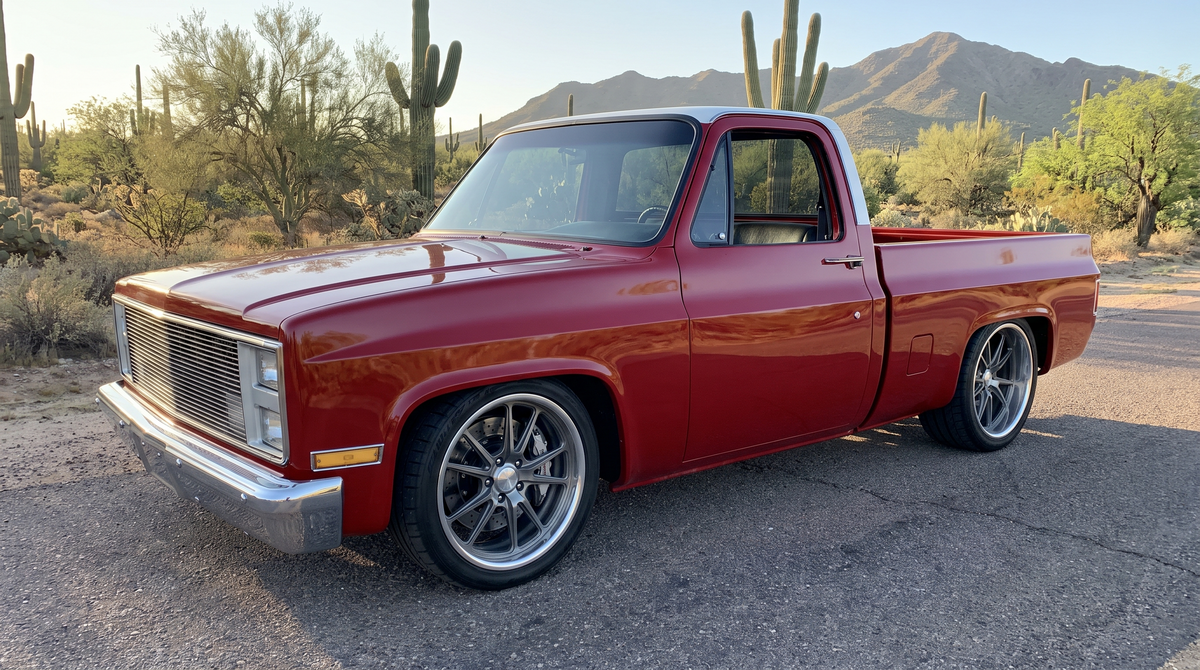
Ask anybody at a cars and coffee why American cars got ugly and you will hear the same answer. 1973. The five mile per hour bumper law. If you drive a Squarebody, a 1967 to 1972 C10, a K5 Blazer or any other pickup, that rule has nothing to do with your truck. It never did. The federal bumper standard covered passenger cars from its first day in 1972, and the current version, 49 CFR Part 581, still excludes trucks and multipurpose passenger vehicles by name.
So the chrome bumper on a 1973 C10 is chrome because Chevrolet wanted it that way, not because a regulator allowed it. And while we are at it, the bumper rule barely changed how cars looked in 1973 either. The year you can actually see is 1974, and the rule was not even the main reason the muscle car era ended. Here is the timeline, with the paperwork.
Did the 5 mph bumper law apply to trucks?
No. Not in 1973 and not today.
The first federal bumper rule was Federal Motor Vehicle Safety Standard 215, Exterior Protection, which took effect September 1, 1972 for the 1973 model year. It applied to passenger cars. In 1976 NHTSA folded it into a new standard under a different law, the Motor Vehicle Information and Cost Savings Act, and that is the Part 581 bumper standard still on the books. Section 581.3 of that regulation reads, today, that it applies to passenger motor vehicles other than multipurpose passenger vehicles and low speed vehicles. A pickup is a truck. A Blazer or a Suburban is a multipurpose passenger vehicle. Neither is a passenger car in the eyes of the standard.
If you want it from the agency directly, look at NHTSA's 2009 Federal Register notice on a petition from the Insurance Institute for Highway Safety. IIHS had asked, in July 2008, that the bumper standard be extended to light trucks, vans and SUVs. NHTSA put it plainly: the bumper standard does not apply to vehicles classified as trucks, because they are not passenger motor vehicles, or to multipurpose passenger vehicles. You do not petition to extend a rule to vehicles it already covers.
You will find websites that say light trucks had to comply starting in 1974. That is wrong, and the regulation text and the IIHS petition both say so. It is still legal to sell a new pickup in this country with no federally rated bumper at all.
What did the 1973 bumper standard actually require?
Much less than people think. NHTSA's own summary of the standard's history spells it out by model year.
- 1973: a 5 mph front and 2.5 mph rear barrier impact. Only safety related parts had to survive: headlights, fuel system, exhaust, hood and trunk latches. The bumper itself was allowed to be destroyed.
- 1974 through 1978: 5 mph front and rear, plus a 3 mph corner pendulum hit. Still safety related parts only.
- 1979: the same speeds, now with no damage allowed to exterior surfaces, except the bumper face bar and its fasteners. This was Phase I of the Part 581 rule.
- 1980 through 1982: Phase II. The face bar itself finally got a damage limit, no more than three quarters of an inch of permanent deviation and no dent deeper than three eighths.
- 1983 onward: rolled back to 2.5 mph front and rear and back to the Phase I damage rules. That is still the standard today.
So the rule that everybody blames for killing chrome bumpers did not protect the bumper at all until model year 1979, and did not protect the bumper face until 1980. And it only ever protected passenger cars.
Why does 1974 look so different from 1973?
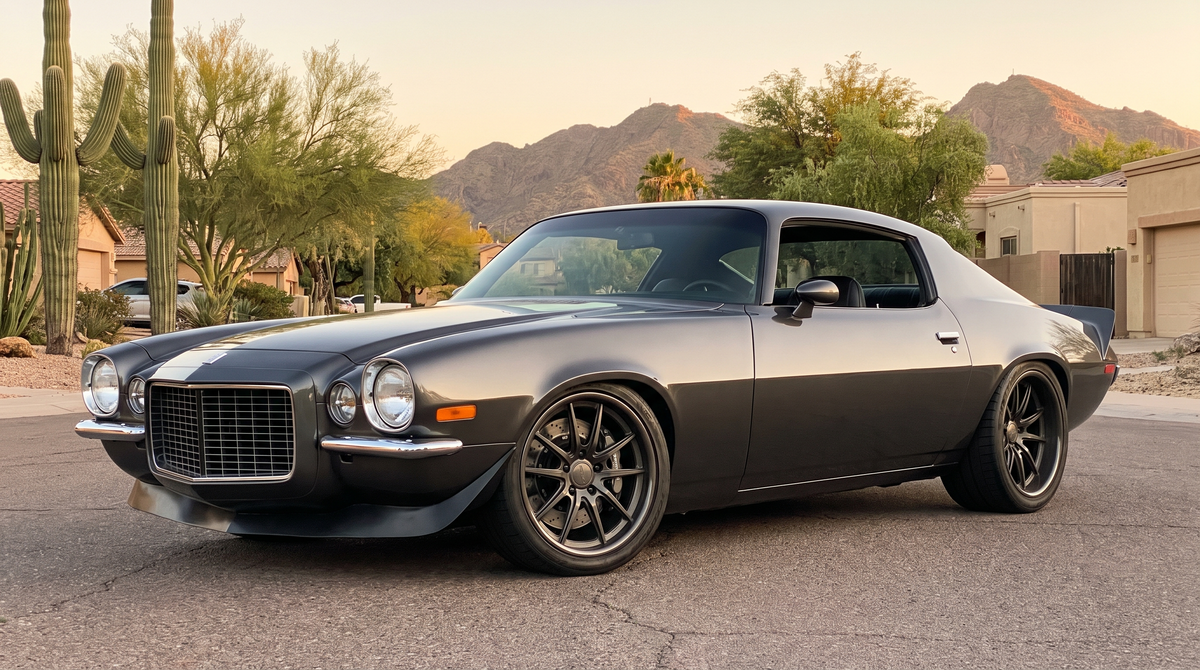
Because 1974 is the year rear bumpers were held to 5 mph, and the year most of Detroit's designs caught up to the front rule with a full restyle. The 1974 Camaro grew seven inches longer, thanks to new bumpers required to meet the federal standard and a forward sloping grille, and put on more than two hundred pounds. The 1973 Camaro, by contrast, kept its 1970 body and a chrome bumper that simply absorbed a 5 mph hit well enough for the headlights to survive.
If you want one car that shows the whole timeline in a single walk-around, look at a 1973 Corvette. Body color urethane in front, because fronts were regulated for 1973. Chrome in back, because rears did not get the 5 mph requirement until 1974. It is the only year Chevrolet built the car that way. For 1974 both ends went to urethane.
Meanwhile, go look at a 1973 and a 1974 C10 side by side. Same bumper. Same truck. The Squarebody launched for 1973 and ran through 1987 with a chrome or painted bumper the whole time, and nothing in the federal register ever touched it. We tell that whole story in our Squarebody history.
Was the bumper rule what really ended the muscle car era?
No. It arrived late to a pile-on already in progress. The bumper rule gets blamed because it is the one you can see from across a parking lot, but by the time it took effect the performance market was already coming apart for other reasons.
- Insurance surcharges, 1970 and 1971. Car and Driver ran "The Insurance Squeeze" in April 1970, an editorial against the new performance car surcharges. A USAA piece reprinted in May 1971 laid out the industry's side: a 30 percent surcharge on high performance cars under 4,000 pounds with a weight to horsepower ratio of 10.5 to 1 or better, effective with the 1971 models. Both were written before the bumper rule existed.
- The Clean Air Act of 1970. GM cut compression ratios across the board for 1971 so its engines could run on low lead fuel, and horsepower went with it.
- Gross to net horsepower, 1972. The industry switched from advertising gross ratings to SAE net for 1972. Every engine looked weaker on paper without a single mechanical change. We cover what that did to the 402 big block in our 396 that was really a 402 article.
- The bumper standard, model year 1973. Fourth in line.
- The oil embargo, October 1973. Then gas got scarce and expensive, and that finished the job.
Why does this make the Squarebody the honest one?
Your truck sat all of it out. Which is a decent argument for the Squarebody being the most honest thing Chevrolet built that decade. It was not styled around a crash test. Nobody redesigned its nose to satisfy a pendulum. It just got built, for fifteen model years, on a product schedule that answered to nobody but the truck buyer.
That is also why these trucks make such clean pro touring platforms today. When you start subtracting the trim, the rubber and the chrome, what is underneath is a shape that was already right. The same goes for the OBS truck that came after it, which we cover in our OBS guide.
What does Fesler make for the 1973 to 1987 Squarebody?
We make flush mount DOT glass for it. Our 1973 to 1987 Squarebody flush mount glass kit is trimless, rubberless and urethane bonded, front and rear, made in America, and it is the single biggest visual change you can make to one of these trucks without touching a body panel. The same kit family exists for the 1967 to 1972 C10.
Behind the glass, our Squarebody door panels are hand laid fiberglass that ship in raw gel coat for your trim shop to cover, and they are the starting point for the whole cabin. If you are planning a full interior, read our Squarebody build sequence guide first so the glass and the interior go in the right order. And if you are building a Blazer, which is a multipurpose passenger vehicle and just as exempt from the bumper rule as the pickup, our K5 Blazer glass guide covers the fitment.
Quick answers
Did the 1973 5 mph bumper law apply to pickup trucks? No. FMVSS 215 and its successor, 49 CFR Part 581, apply to passenger cars only. Trucks and multipurpose passenger vehicles like the Blazer and Suburban are excluded by the text of the regulation.
Are trucks required to have 5 mph bumpers today? No. The standard still excludes trucks and multipurpose passenger vehicles. In 2008 the IIHS petitioned NHTSA to extend it to light trucks, vans and SUVs, which confirms they were never covered.
What did the 1973 bumper rule protect? Safety related parts only: lights, fuel system, exhaust and latches, in a 5 mph front and 2.5 mph rear barrier hit. The bumper itself could be destroyed. No damage rules for body panels arrived in 1979 and for the bumper face in 1980.
Why do 1974 cars look different from 1973 cars? Rear bumpers went to 5 mph for 1974 and most automakers restyled to meet it. The 1974 Camaro grew seven inches. The 1973 Corvette is the split year, urethane front and chrome rear.
Is the bumper rule why muscle cars died? It contributed, but it came fourth. Insurance surcharges in 1970 and 1971, the 1971 compression cuts under the Clean Air Act and the 1972 switch to net horsepower ratings all came first. The October 1973 oil embargo came after.
Is the 5 mph bumper standard still in force? Only at 2.5 mph. It was rolled back for the 1983 model year and remains 2.5 mph front and rear under 49 CFR 581.5.
Shop everything Fesler makes for the 1973 to 1988 Squarebody or browse flush mount DOT glass for every platform.

Leave a comment
This site is protected by hCaptcha and the hCaptcha Privacy Policy and Terms of Service apply.