
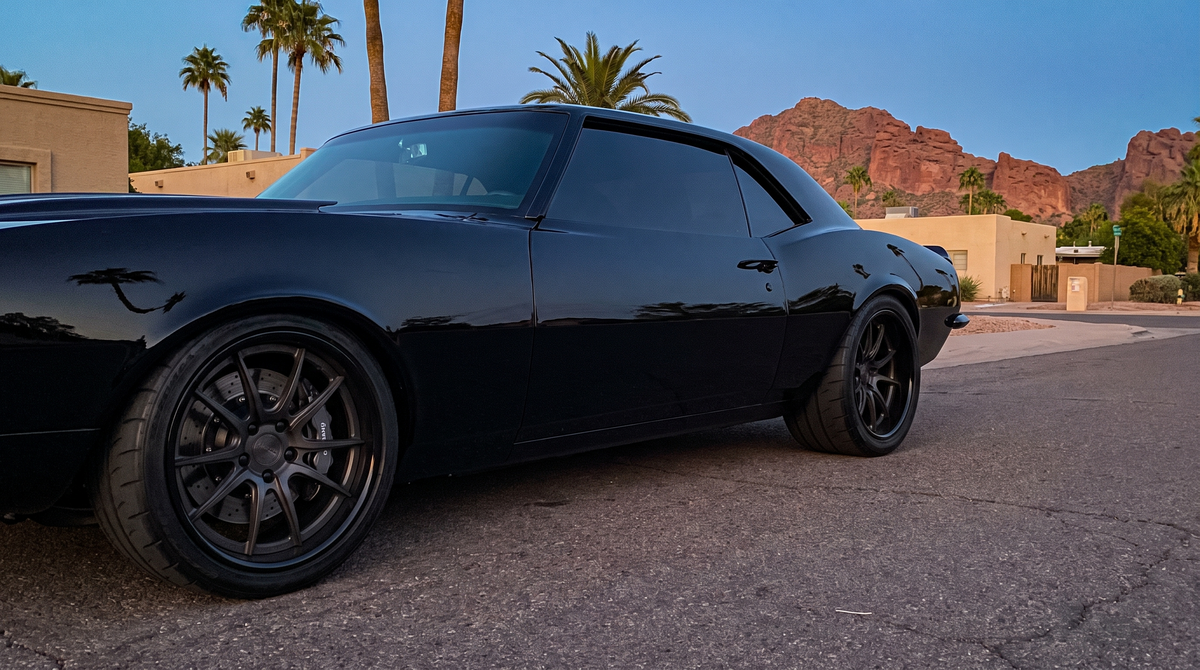
Go look at the driver door on a 1967 Camaro. There is a little triangular pane at the front of the glass, in its own chrome frame, on a pivot. Crack it open at speed and it scoops air straight at your face. Now look at a 1968. It is gone. One clean sheet of glass, edge to edge, and it never came back. Not in 1969, not on the second generation, not ever.
What replaced it was a system GM called Astro Ventilation. Here is where the vent window came from, what GM built to replace it, why nobody can tell you the real reason it was dropped, and why your truck kept one for years after your car lost it.
What was a vent window for in the first place?
Ventilation, before there was any other kind. The pivoting front pane goes back to 1933, when GM offered what it called No Draft Individually Controlled Ventilation across its lines, later renamed Ventipane. Rolling the main window down at speed fills the cabin with wind and noise. A small pane pivoted a few degrees scoops a stream of air at the driver instead, and cracked the other way it pulls stale air out. On a hot day with no air conditioning, that was the whole climate control system.
It also solved a mechanical problem. A shorter main glass is easier to seal and easier to keep tracking straight, and the division post gives it a channel to ride in. That is part of why trucks kept it so long, which we covered in our C10 vent window delete article.
What was GM Astro Ventilation?
Astro Ventilation was a flow-through ventilation system, and it is what let GM remove the vent window from the 1968 Camaro and Firebird without leaving the driver to cook.
The mechanism, as the Camaro Research Group documents it, works in two halves. Fresh air comes in through inlets at each end of the dash, fed from the plenum behind the wiper grilles at the base of the windshield. Air leaves the cabin through plastic grilles hidden in the upper door opening area of the rear quarter panels, behind rubber flappers that only open one direction. Air can get out but never back in. Moving car, pressure at the cowl, low pressure at the quarters, and the cabin breathes on its own with every window shut.
On the 1967 to 1969 Camaro it was standard equipment. It does not appear anywhere on the RPO list for those years, which is exactly what you would expect for something with no cost option attached. The same system arrived for 1968 on the Corvette and on the Caprice coupe, so do not let anybody tell you the F-body was first. They all launched together in the fall of 1967 and no source establishes an order.
Did it work? On the Corvette, Ate Up With Motor's C3 history says critics complained it never worked very well. We have not found a verified period road test on the Camaro system, so we will not invent one.
Why did GM remove the vent windows in 1968?
Nobody knows. There is no statement from GM. Not one. The change is documented. The date is documented. The system that replaced it is documented. The reason is not, and the reasons you will read online are all guesses wearing a confident voice.
Here are the usual suspects and how they hold up.
- Styling. Plausible. One less piece of glass in the door meant one more uninterrupted line down the side of the car, and GM was chasing exactly that in the late 1960s. Nobody at GM said so on the record.
- Air conditioning. Plausible and probably part of it. According to Hagerty, less than one quarter of new cars in 1965 had air conditioning, and by 1973 more than 70 percent did. A car with AC does not need a scoop. But air conditioning was still an extra cost option on the 1968 Camaro, so it cannot be the whole story.
- Cost. A pivot, a frame, a latch, a seal and a second pane cost more than one sheet of glass. Plausible. Undocumented.
- Turbulence and leaks. A February 1976 Popular Science piece said vent windows provide unmatched ventilation but that air turbulence and leakage outweigh the benefits. That is a real citation, but it is eight years after the fact and not about GM's decision.
- Evaporative emissions rules. Wrong on the calendar. Evaporative controls arrived in California for the 1970 model year and federally for 1971, two and three years after the vent window was already gone. And they govern fuel vapor, not cabin air.
- Carbon monoxide. The people who repeat this one put the word presumably in the middle of the sentence. That is the source admitting it is a guess.
So when somebody at a show tells you why GM did it, ask them where they read it. The best available answer is some mix of the first three, and that is a theory.
Did every car lose its vent windows in 1968?
No, and this matters if you drive a truck. The change was model by model, not corporate. Other GM cars kept vent windows for years, some makes offered them into the 1970s, and the general disappearance of front vent windows is usually put at the 1980s, once air conditioning was close to universal.
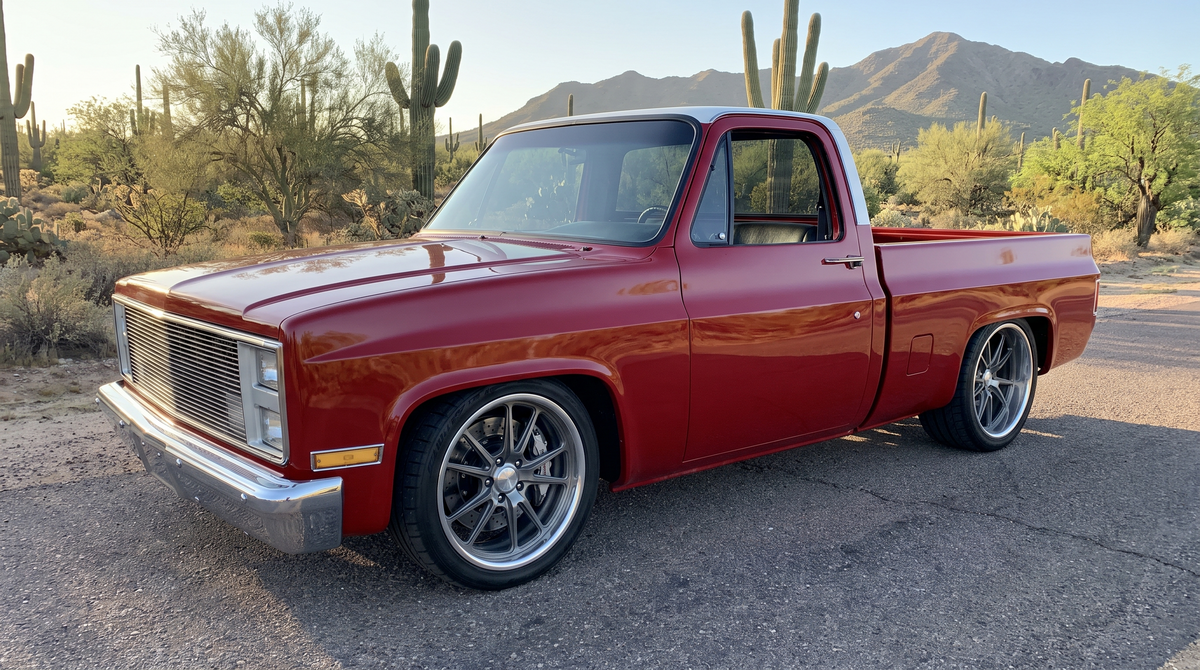
Chevrolet trucks are the clearest example. The 1967 to 1972 C10 kept its pivoting vent window through the end of the run, five model years after the Camaro dropped it. The all new 1973 Squarebody is where the pickup went to one piece door glass. So the same company that deleted the vent window on its pony car in 1968 was still building it into its pickup in 1972. It was a decision about a car, not about vent windows.
How do you tell a 1967 Camaro from a 1968 by the door?
Go check yours right now. If the front pane pivots, you have a 1967 door. If it is one piece, 1968 or later. It is the fastest tell on a first generation Camaro and it works from across the street.
Two more if you want to be sure. Open the door and look at the hinges. A 1967 uses three bolts per hinge. 1968 and 1969 use four, and the three years of doors do not swap. And on very early 1968 cars, look near the bottom edge of the door glass for an Astro-Ventilation logo in fired-on white ceramic paint. The Camaro Research Group records that logo being dropped around November or December 1967, and also records mixed sets of glass on documented cars. If it is there, the glass is early 1968. If it is missing, that proves nothing.
The 1968 car also gained the rear quarter extractor grilles, the exit side of Astro Ventilation, plus side marker lights under FMVSS 108, effective January 1, 1968. The rest of the year to year changes are in our first gen Camaro history.
What does this have to do with flush mount glass?
Whatever GM's reason was, what the 1968 Camaro got out of it was one more uninterrupted line down the side of the car, and that is what every builder is chasing today.
On a first or second generation Camaro, the rubber gasket and the chrome reveal around the windshield and back glass are the last two interruptions left. Those are the two we delete. Our 1967 to 1969 Camaro flush mount glass kit and 1970 to 1974 kit bond DOT certified glass straight to the body, so paint meets glass in one flat seam. Both fit the Firebird. Our Camaro flush mount glass guide covers every year from 1967 through 1981.
And if you drive a 1967 to 1972 C10, the truck that kept the vent window, we make the piece GM never did: one piece door glass that deletes the vent window and its frame. Here is how that kit came together. For the cabin behind the glass, our Camaro interior collection covers every generation.
Quick answers
What year did the Camaro lose its vent windows? 1968. The 1967 Camaro has a pivoting front vent pane in a chrome frame. From 1968 the door glass is one piece, and the vent window never returned on any Camaro.
What is Astro Ventilation? GM's flow-through ventilation system introduced for 1968. Fresh air enters through inlets at each end of the dash, fed from the cowl plenum, and exits through one-way grilles in the upper rear quarters. It was standard on the 1968 and 1969 Camaro and Firebird.
Why did GM get rid of vent windows? No documented reason exists. Styling, cost and the spread of air conditioning are the usual explanations and are plausible, but GM never said. The evaporative emissions theory is wrong on the dates.
Was the Camaro the first car with Astro Ventilation? No claim can be made. The 1968 Camaro, Firebird, Corvette and Caprice coupe all got it the same model year, and no source establishes which came first.
Did Chevy trucks lose their vent windows in 1968 too? No. The 1967 to 1972 C10 kept vent windows through 1972. The 1973 Squarebody is where the pickup went to one piece door glass.
How can I tell a 1967 Camaro door from a 1968? A 1967 has the pivoting vent window and three bolt hinges. A 1968 has one piece glass and four bolt hinges. Early 1968 glass may also carry a white Astro-Ventilation logo, but its absence proves nothing.
Shop Fesler flush mount DOT glass or browse everything we make for the 1967 to 1969 Camaro.

Leave a comment
This site is protected by hCaptcha and the hCaptcha Privacy Policy and Terms of Service apply.