
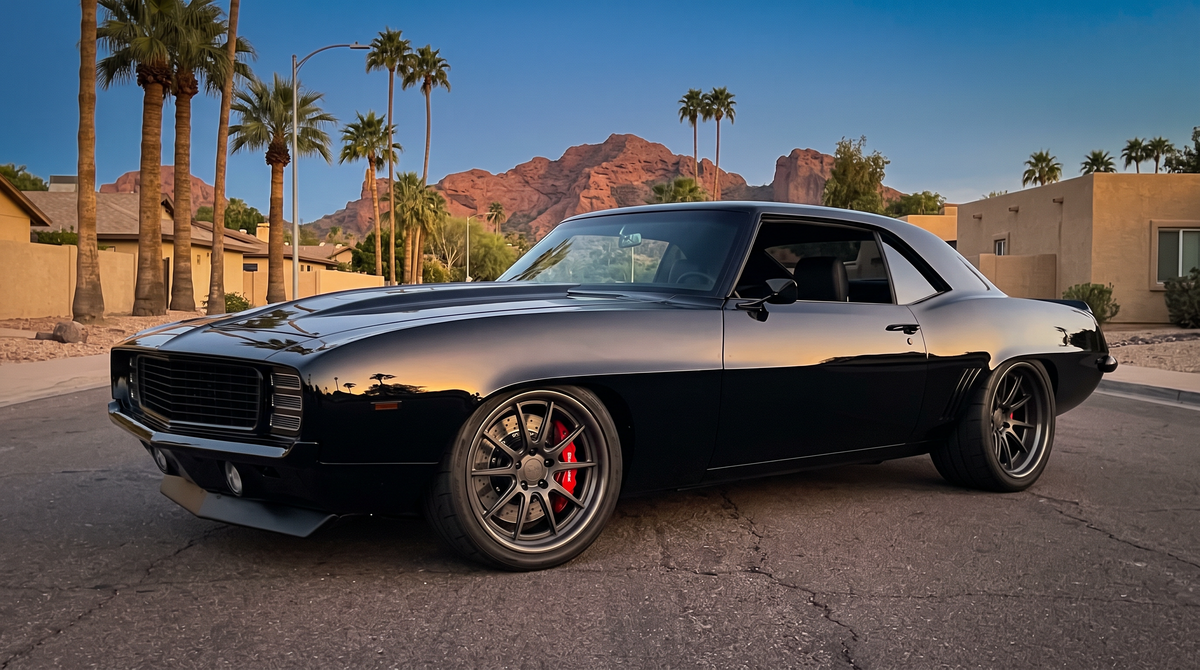
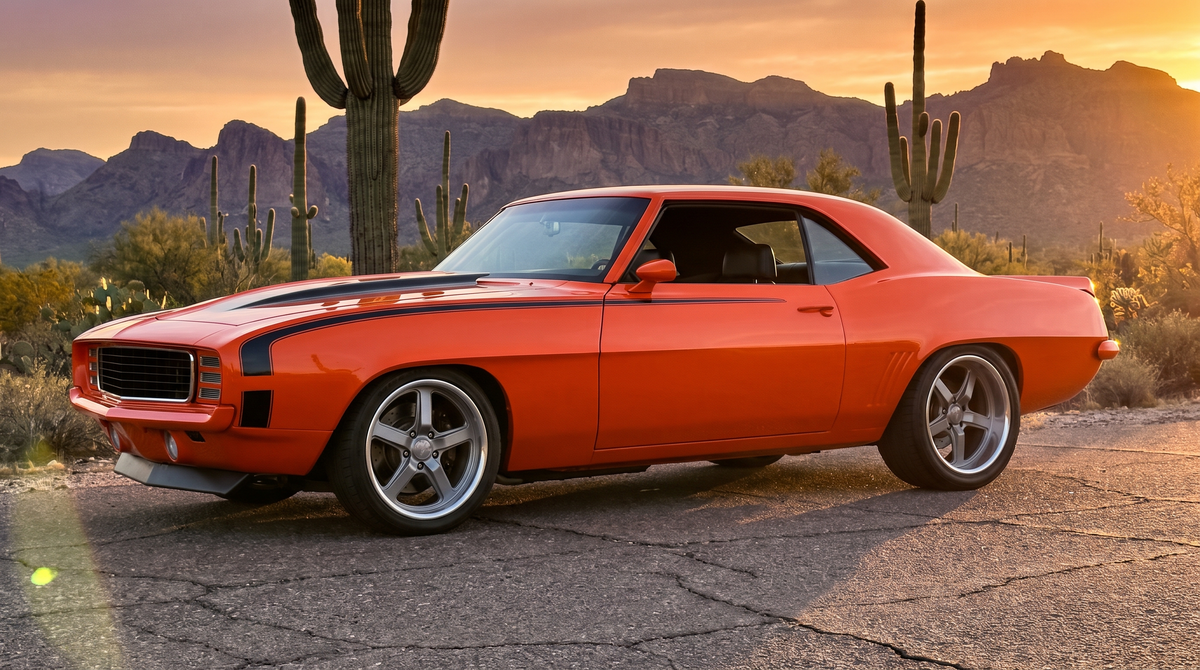
Chevrolet planned to stop building 1969 Camaros in July of 1969. They were still building them in November. Production ran from August 1968 through November 1969, roughly sixteen months, which makes 1969 the longest model year the Camaro has ever had. That was not a plan. It was a rescue, and the reason was a set of broken stamping dies, not the strike most people blame.
The same delay is why the second generation car did not reach dealers until late February 1970, and why so many people call it a 1970 and a half. Chevrolet never did. Every one of those cars was built, titled and VIN coded as a 1970. Here is what actually happened, and why it matters if you own either car.
Why was the 1969 Camaro model year so long?
Because the 1970 car was not ready. Chevrolet intended to close out 1969 production in July 1969 and turn the assembly plants over to the all new second generation Camaro for a normal fall launch. During final die tryout at Fisher Body, the draw dies for the new rear quarter panels failed. Fisher could not pull a quarter panel without defects, and the dies had to be redesigned and rebuilt from scratch.
That is not a part you can improvise around. On the second generation car the quarter panel is most of the shape, from the door back to the tail. With no quarters there was no car, so Chevrolet kept the 1969 line running. The Camaro Research Group puts the delay at four to five months and states the 1969 model year end was moved from July 1969 to November 1969 because the 1970 Camaro was not ready for release.
Was the 1970 Camaro delayed by a strike?
No. This is the part that gets repeated most and it is wrong. You will hear the 1970 delay blamed on a GM strike, and the timing feels close enough that people accept it. But the big GM walkout was the 67 day corporate wide strike that started in September 1970, and it hit the 1971 model launch, not the 1970 one. By then the second generation Camaro had already been on sale for seven months.
The 1969 extension was pure tooling. It cost Chevrolet about five months of the new car, and it gave the old car a longer life than it was ever supposed to have.
How many 1969 Camaros were built?
Model year production closed at 243,085 cars. That is the best year the first generation ever had, ahead of 1967 and 1968, and the extended calendar is a big part of why. The car everybody chases today exists in the numbers it does partly because its replacement was late.
One correction while we are here. That 243,085 is the first generation record, not the all time Camaro record. The 1979 car sold more. If someone tells you 1969 was the best selling Camaro ever, they have the generation right and the history wrong.
When did the 1970 Camaro go on sale?
February 26, 1970, almost five months into what should have been its model year. Build information for the new car was released to the assembly plants that February, the first cars were built, and the public got its first look with barely half a selling season left.
Buyers noticed the timing, and the nickname followed. People started calling the car the 1970 and a half. It stuck hard enough that the AMT model kit still carries it on the box, which is probably why it has outlived every other bit of dealership slang from that year.
Is a 1970 and a half Camaro a real model year?
No. Chevrolet never used the term. Not in a brochure, not on a window sticker, not on a build sheet. Every second generation car built in 1970 was a 1970 model, full stop. If you own one, your title says 1970 and your title is right.
Go look at your own paperwork if you want the proof. The VIN on a second generation car built in 1970 carries a 0 in the model year position. There is no half. There is no special early 1970 code. The nickname is a calendar observation that hobbyists turned into a model designation, and it has caused more registry confusion and more mislabeled auction listings than it deserves.
Where the nickname does earn its keep is as shorthand. When someone says 1970 and a half, they are telling you the car is a true 1970 build with the early details, not a 1971 or 1972 with a 1970 title. Use it that way and everyone understands you. Just do not write it on a title application.
How do you tell a late 1969 Camaro from an early one?
This is where the long model year gets interesting for an owner. Sixteen months of production means a 1969 built in August 1968 and a 1969 built in November 1969 are both 1969 Camaros, and they are more than a year apart. Running changes happened. Trim tag build dates, component date codes and casting dates all shift across that span, and the very last cars were being built alongside the first weeks of 1970 pilot work.
If you want to know where your car falls, start with the trim tag on the cowl. The build date is stamped there as a month and week code. Then check the glass. Factory windshields and rear glass carry a date code in the bug, and on a late car it should read late 1969. We walk through the whole thing in how to read the windshield bug date code. A November 1969 date on a first generation Camaro is not a replacement piece. It is exactly what a late build should have.
For everything that changed between the three first generation years, and what carries over between them, see 1967 vs 1968 vs 1969 Camaro, what actually interchanges. If you want the broader story of how the first generation came to be and where it sits in the restomod world today, our first gen Camaro history covers it.
What does the long model year mean for a first gen or second gen build?
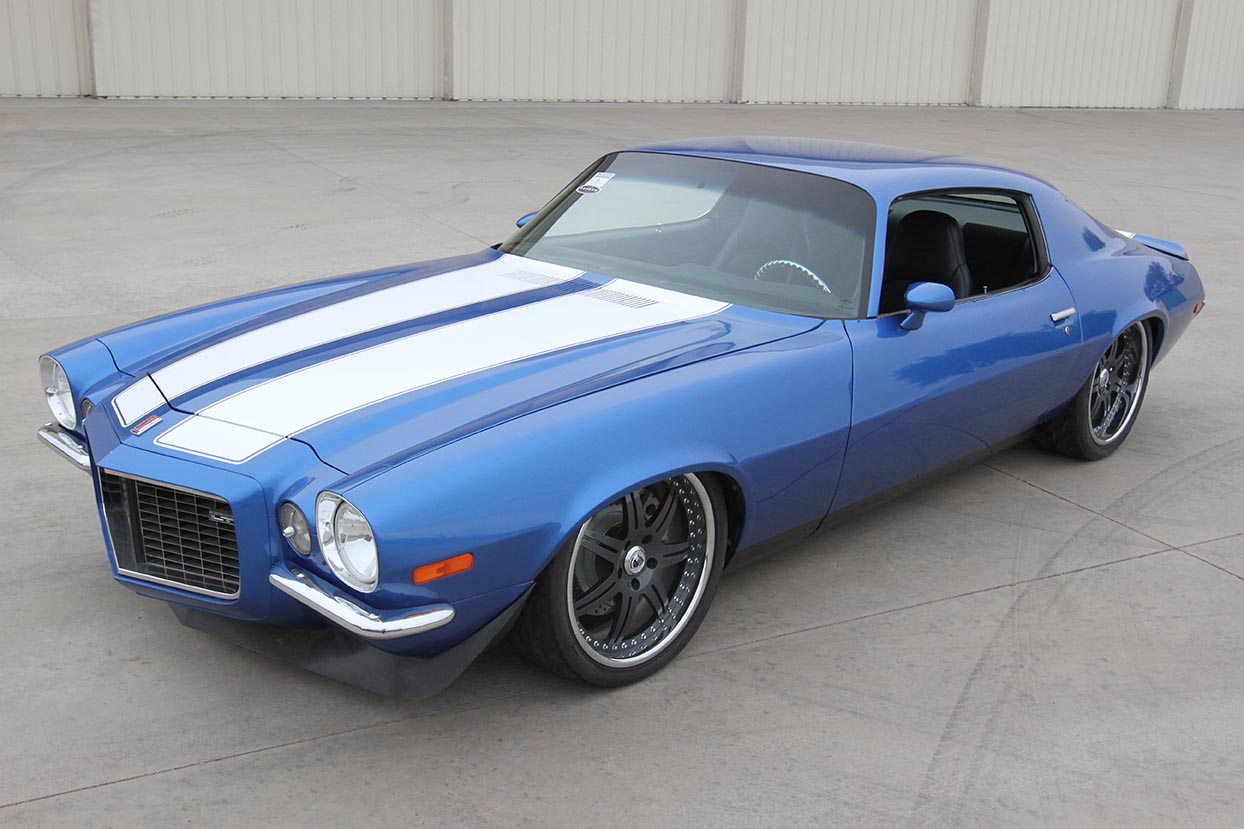
Two cars, one broken set of dies. The 1969 got a longer life than it was ever supposed to have. The 1970 got a short first year and a nickname it never earned. Both of them are mostly glass and shoulder, and that is where we come in.
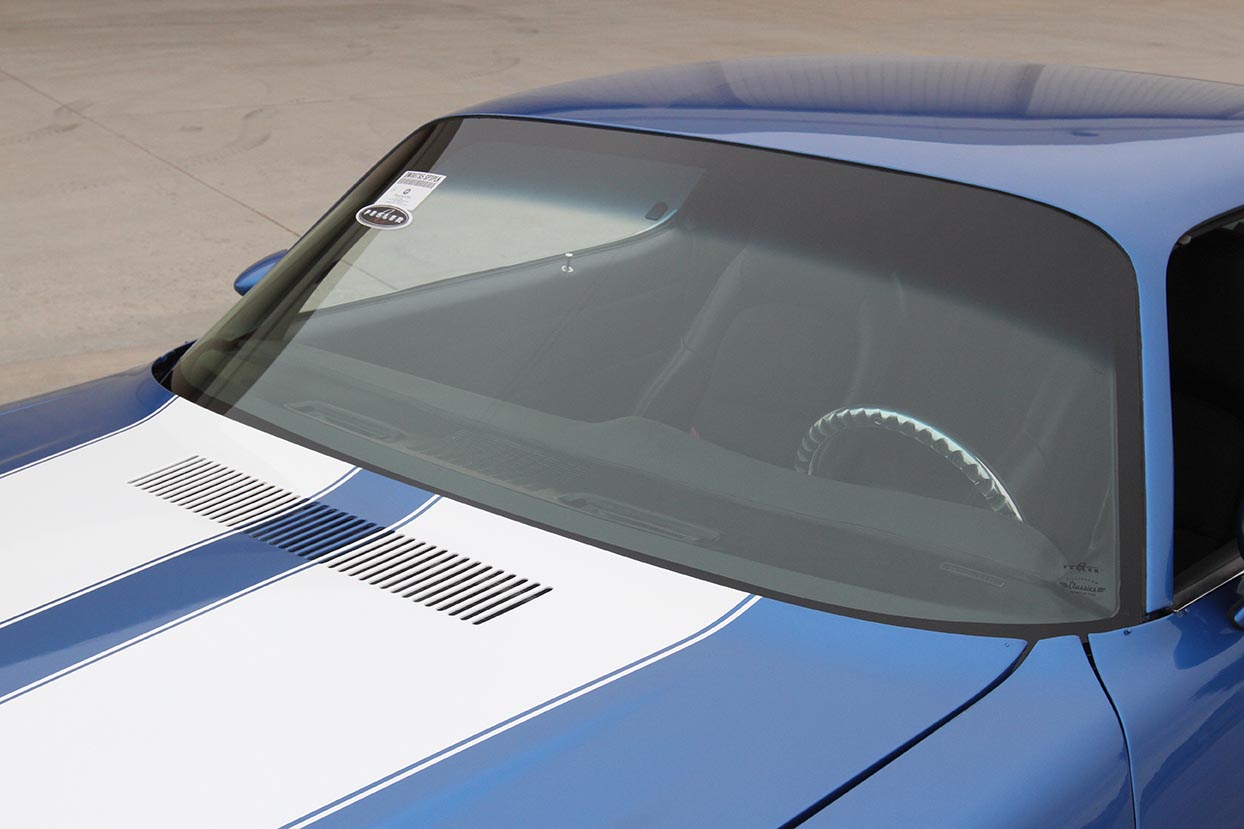
On a first gen, the windshield and the rear glass sit in stainless trim and a rubber gasket that has been shrinking for over fifty years. On a second gen, the long wraparound backlight is the whole back half of the design, and the trim around it is the busiest line on an otherwise clean car. Either way, the first thing people notice on a finished build is usually not the paint. It is whether the glass sits in a chrome frame or sits flush.
Our flush mount DOT glass deletes the trim and the gasket and bonds the glass straight to the body. Paint meets glass in one flat seam. We make a 1967-69 Camaro flush mount glass kit that covers every first generation year, early 1969 and late 1969 alike, and a second generation kit that covers the 1970 through 1974 cars, 1970 and a half included, because the glass opening does not care what the nickname is. The full fitment breakdown by year, including the second gen backlight change later in the run, is in our Camaro flush mount glass guide.
The interior side is the same story. Our hand laid fiberglass door panels, consoles and dash pieces are molded to a specific car, and a late build 1969 uses the same panels as an early one. If you are not sure what your car needs, ask us before you order. A real person answers.
Quick answers
How long was the 1969 Camaro model year? Production ran from August 1968 through November 1969, roughly sixteen months, instead of ending in July 1969 as planned.
Why was the 1970 Camaro late? The draw dies for the new rear quarter panels failed during final tryout at Fisher Body and had to be rebuilt, delaying the launch four to five months.
Was the 1970 Camaro delayed by a strike? No. The 67 day GM strike started in September 1970 and affected the 1971 cars. The 1970 delay was a tooling failure.
When did the 1970 Camaro go on sale? February 26, 1970, about five months into the model year.
Is a 1970 and a half Camaro a real model year? No. Chevrolet never used the term. Every car was built and VIN coded as a 1970. The nickname refers to the late February introduction.
How many 1969 Camaros were built? 243,085, the highest total of the first generation but not the all time Camaro record, which belongs to 1979.
Shop Fesler parts for 1967-69 Camaro, 1970-74 Camaro, or browse all flush mount DOT glass.


Leave a comment
This site is protected by hCaptcha and the hCaptcha Privacy Policy and Terms of Service apply.