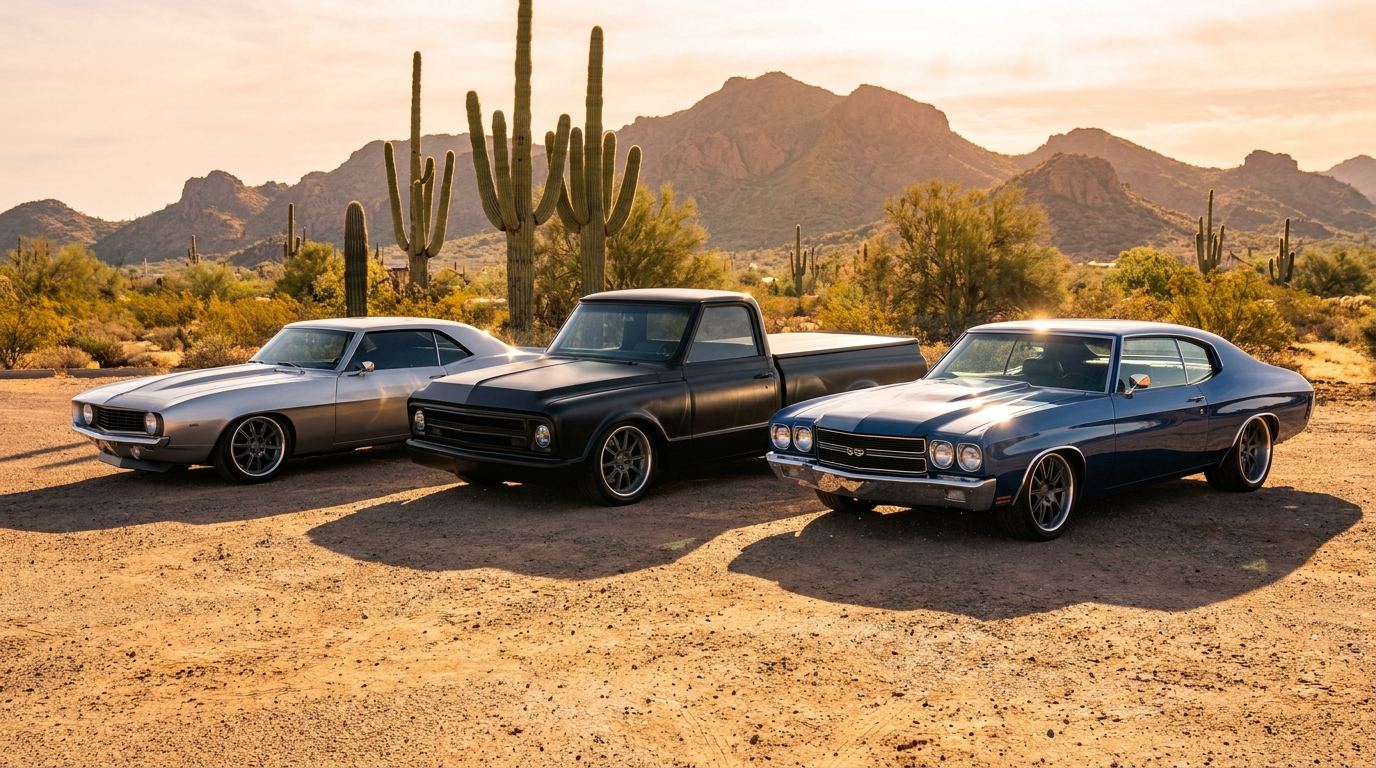
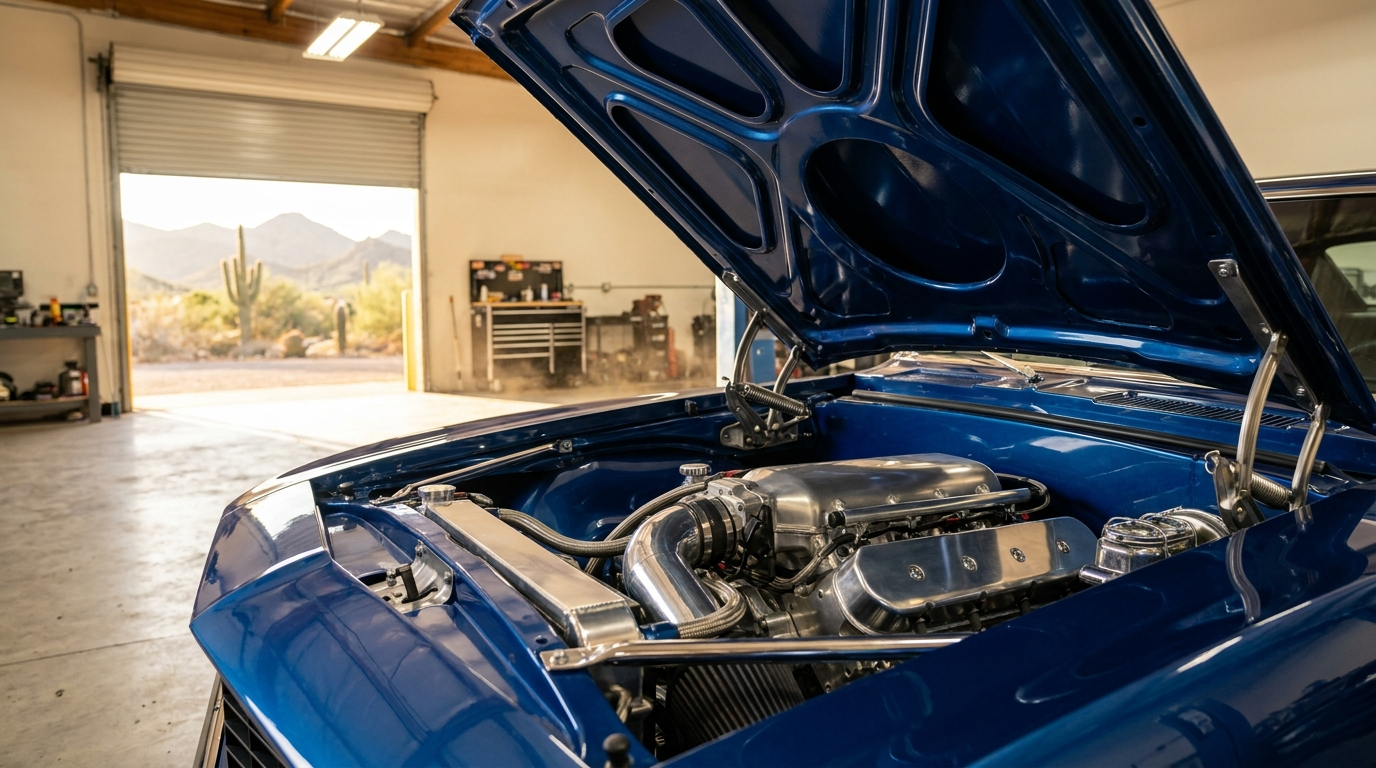
Every ranking list on the internet is written by someone who has never had to make the parts fit. This one comes from a Phoenix shop floor where these platforms sit on lifts every week. We ranked them on four things that actually decide how a build goes: aftermarket depth, buy-in cost, how hard the build fights you, and what the finished car is worth in money and grins.
If you want the philosophical groundwork first, read pro touring vs restomod. Otherwise, here is the 2026 list.
1. 1967-72 Chevy C10
Still the king, and the gap is not closing. The 67-72 C10 has everything: gorgeous proportions, a bottomless aftermarket from full chassis to flush-mount glass, engine bays that take any powerplant, and a market that keeps rewarding finished trucks. GM engineered these to ride like cars from day one, a story we told in the C10 history. Buy-in has climbed, but everything after the purchase is the easiest money you will spend in the hobby. If someone asks for one platform with zero asterisks, this is it.
2. 1968-72 Chevelle
The A-body does everything well. Big footprint for wide rubber, the deepest muscle car parts catalog outside the Camaro, and the 1970 body that still stops walking traffic at every show. Values run strong, which cuts both ways: costlier entry, but the finished car holds serious value, especially with the details done right, glass included. Our own Maliblu is the 66-67 version of the argument.
3. 1967-69 First-Gen Camaro
The defining pro-touring car, full stop; the movement was practically invented on this body. Aftermarket support is the best of any American car ever made, and the finished product is a blue chip. Why third, then? Because everyone already built one. Standing out in a sea of 69s takes real design discipline and real money, and clean starter cars are the most expensive on this list. Still magnificent, and the panic-to-icon history explains why it will never leave the podium. Glass, panels, dashes: we cover the whole greenhouse and cabin.
4. 1973-87 Squarebody
The value pick in trucks. Squarebody prices are still a full tier below the 67-72, the aftermarket matured fast, and the boxy body takes modern stance beautifully. The long production run means donor trucks are everywhere. The Squarebody upgrade guide lays out the exact build sequence we recommend.
5. 1988-98 OBS
The bullet with your name on it. Cheapest real buy-in on this list, modern enough to daily immediately, LS swaps that feel factory, and a value curve that is doing exactly what the Squarebody's did ten years ago; we made the full case in the OBS market piece. Interior decay is the weak point, and it is solvable with panels built better than GM's. Highest upside-per-dollar here, ranked fifth only because the show-field prestige is still catching up to the fundamentals.
6. 1970-81 Second-Gen F-Body
The sleeper of the list. Longest, lowest roofline of the muscle era, handling-oriented from the factory, and priced below what the design deserves. The Firebird side in particular is criminally undervalued next to equivalent Camaros. Fesler kits cover the full run, 1970-74 and 1975-81, and the flush treatment on that fastback roof is arguably the most dramatic on any car we do.
7. 1964.5-70 Mustang
The strongest non-GM entry. Enormous aftermarket, a fastback body everyone on earth recognizes, and Coyote swap paths that are fully mapped. It ranks here because the small early unibody demands more surgery for wide tires and big brakes than the GM iron above it. The Mustang flush glass guide covers the glasshouse side.
8. 1966-77 Early Bronco
The wildcard, and the highest finished values on the entire list; six-figure Broncos stopped being news years ago. It is a different flavor of pro-touring, more restomod SUV than apex hunter, but the formula is identical: modern chassis, modern power, coherent design. Rust and tub condition make or break the budget. Start with the restoration playbook and the new flush glass kit.
How to actually choose
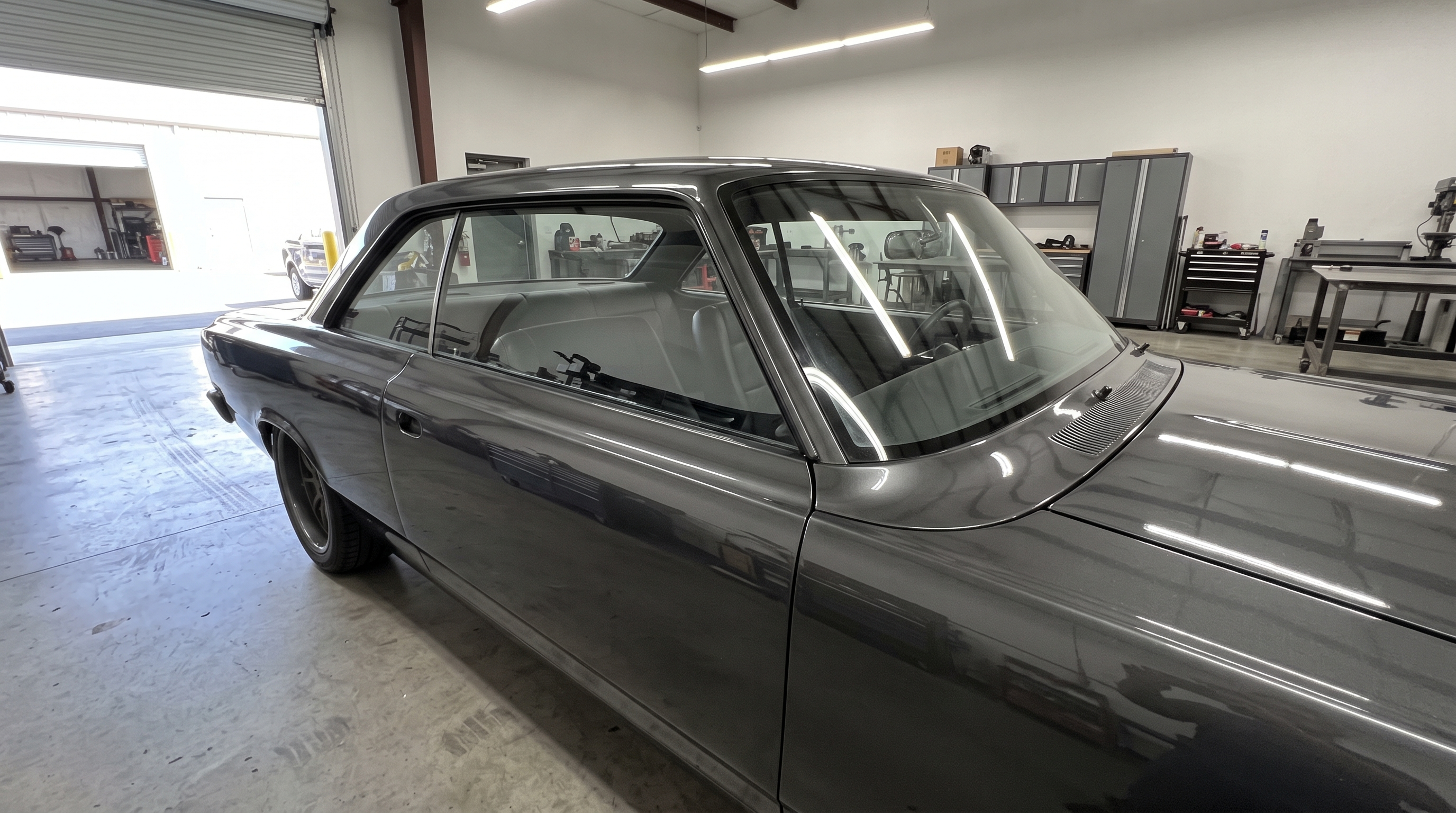
Ignore the ranking for a second. The right platform is the one whose finished version you can picture yourself driving on a Tuesday for no reason. Then apply the money rule: buy the best body you can afford, because sheet metal repair devours budgets that drivetrains never touch. And build in the right order, glass and bodywork decisions before paint, interior as a system, not a parts pile; the sequence is mapped in The Build Order.
Platform FAQ
What is the cheapest way into pro-touring in 2026?
An OBS or a Squarebody, no contest. Solid drivers still exist at real-world prices, and both platforms accept modern suspension and power without exotic fabrication.
Which platform holds value best?
First-gen Camaros, 1970 Chevelles, and early Broncos are the blue chips. Finished 67-72 C10s have joined them over the last decade.
Do trucks really count as pro-touring?
The market answered this. C10s run autocrosses, win Goodguys awards, and headline auctions. A truck built to handle is pro-touring, period.
What about Mopars, Novas, and everything else?
All buildable, some brilliantly. This list ranks the platforms with the deepest support in 2026; a great shop can execute the vision on rarer metal, including the Nova, which we make flush glass for.
Whatever you pick, pick it this year. Projects age better than intentions. When the platform is in the driveway, the builder's guide to Fesler parts is the next read, and the shop in Phoenix is the next call.

Leave a comment
This site is protected by hCaptcha and the hCaptcha Privacy Policy and Terms of Service apply.